

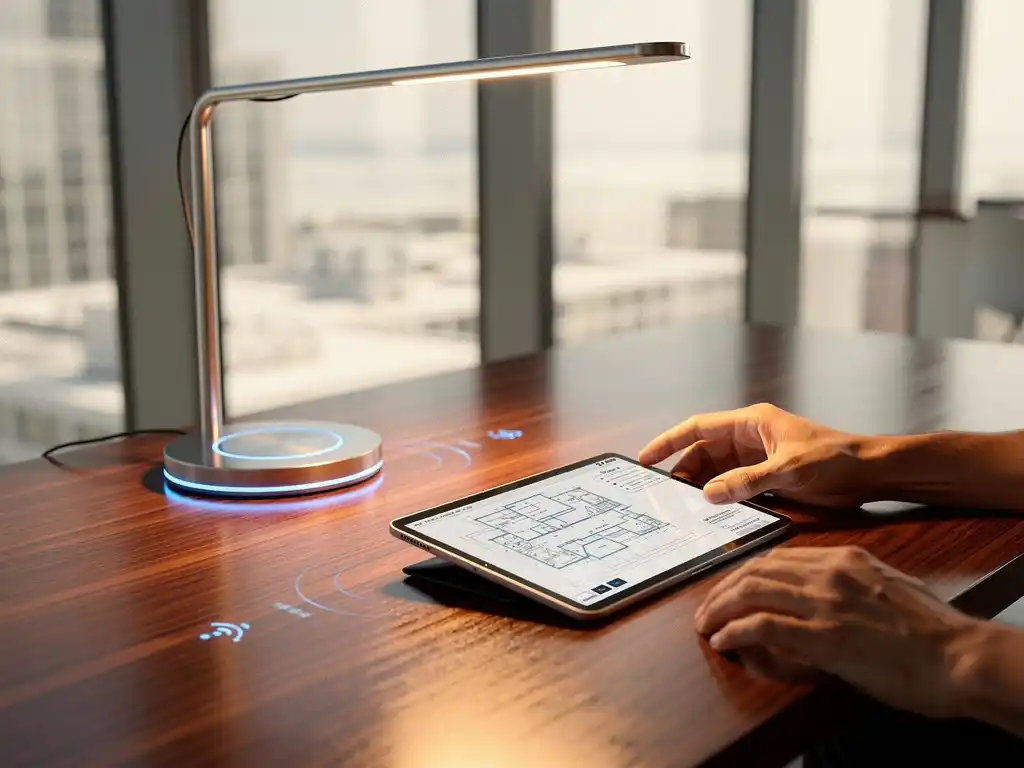
IoT offices are becoming increasingly popular, but the technical complexity of the various devices and systems that need to work together can be overwhelming. Interoperability standards form the backbone of a well-functioning smart office, where all devices communicate and work together seamlessly. For companies investing in smart office implementation costs, it is crucial to understand which standards ensure that their technology investment remains future-proof.
Choosing the right IoT standards not only determines the functionality of your smart office, but also the potential for future expansion and the total cost of ownership. A well-implemented IoT ecosystem with the right interoperability standards can boost productivity, reduce energy costs, and create a better work experience for employees.
What exactly are interoperability standards for IoT offices?
Interoperability standards for IoT offices are technical standards and protocols that ensure different smart devices, sensors, and systems within an office environment can communicate and work together, regardless of the manufacturer or brand. These standards define how data is exchanged, commands are transmitted, and devices recognize one another.
The primary purpose of these standards is to create a uniform “language” that all IoT devices can understand. Without interoperability standards, each device would operate in its own silo, leading to inefficient systems and high maintenance costs. Consider, for example, a situation in which smart lighting from Brand A cannot communicate with the climate control system from Brand B, even though both systems are located in the same office.
These standards cover various technical aspects, such as communication protocols, data formats, security requirements, and network architecture. They also ensure that new devices can be easily added to existing systems without the need for complex modifications.
Which IoT protocols are most commonly used in modern offices?
The most commonly used IoT protocols in modern offices are Wi-Fi, Zigbee, Z-Wave, Bluetooth Low Energy (BLE), LoRaWAN, and Thread. Each protocol offers specific advantages for different applications within the office environment, with Wi-Fi and Zigbee being the dominant choices for most implementations.
Wi-Fi remains the most popular protocol due to the existing infrastructure in offices and its high data speeds. It is ideal for devices that need to transmit large amounts of data, such as security cameras and conference systems. Zigbee is primarily used for sensors and smart lighting because it is energy-efficient and can form a mesh network.
Bluetooth Low Energy (BLE) is ideal for personal devices and beacons that provide location-based services, such as desk booking and in-office navigation. Z-Wave is less commonly used in offices, but can be valuable for specific applications, such as access control. LoRaWAN is suitable for large-scale deployments where devices need to communicate over long distances with minimal power consumption.
Thread is a relatively new protocol that is gaining increasing attention due to its robustness and integration with other standards. It combines the advantages of a mesh network with low latency and high reliability, making it ideal for critical office applications.
How do Matter and Thread improve office IoT integration?
Matter and Thread work together as a powerful combination, with Thread serving as the network protocol and Matter providing the application layer. This allows various IoT devices from different manufacturers to work together seamlessly within a single integrated ecosystem. This collaboration eliminates the traditional barriers between brands and platforms.
Thread functions as a reliable mesh network that is self-healing and offers low latency. If one device fails, other devices in the network can automatically find alternative routes to maintain communication. This is crucial for office environments where reliability is essential for productivity.
Matter, developed by the Connectivity Standards Alliance, provides a common application layer that can operate on top of various network protocols, including Thread, Wi-Fi, and Ethernet. The biggest advantage of Matter is that it allows devices from different manufacturers to work together as if they were made by the same company.
For offices, this means you can, for example, combine Philips smart lighting with Honeywell climate control and workplace sensors from a third-party manufacturer, all managed through a single central interface. This reduces system complexity and significantly lowers Smart Office implementation costs.
What challenges are involved in IoT interoperability in offices?
The biggest challenges facing IoT interoperability in offices are fragmentation of standards, security risks, network congestion, scalability, and the complexity of system integration. If not properly addressed, these challenges can lead to higher implementation costs and reduced system performance.
Fragmentation arises because different manufacturers use their own proprietary protocols and standards. This creates “islands” of functionality, where devices from different brands cannot communicate with one another. As a result, organizations are often forced to stick with a single supplier, which limits flexibility and increases costs.
Security poses a major challenge, as every device on the network can serve as a potential entry point for cybercriminals. Differences in security levels among devices can create weak links throughout the system. Furthermore, legacy devices that were not designed with modern security standards in mind leave the network vulnerable.
Network congestion occurs when too many IoT devices attempt to communicate simultaneously over the same network. This can lead to delays, device outages, and reduced performance of critical systems. Scalability becomes an issue as organizations grow and seek to add more devices without disrupting the existing infrastructure.
How do you choose the right IoT standards for your office environment?
Choosing the right IoT standards for your office environment starts with a thorough analysis of your current infrastructure, future needs, budget, and the specific use cases you want to implement. Prioritize standards that are widely accepted, future-proof, and compatible with your existing systems.
Start by assessing your current IT infrastructure and identifying which protocols are already supported. If you already have a robust Wi-Fi network, Wi-Fi-based IoT solutions can be cost-effective. For new installations, consider protocols such as Thread and Matter, which are designed for future expansion.
Consider the specific applications you want to implement. For energy management and smart lighting, Zigbee is often the best choice due to its low power consumption and mesh capabilities. For high-bandwidth applications, such as video conferencing and security systems, Wi-Fi 6 or Ethernet is the better option.
Also evaluate the total cost of ownership, including hardware, installation, maintenance, and future upgrades. Choose vendors that are committed to open standards and regular updates. Always test a small-scale implementation first before rolling out on a large scale, and make sure you have a migration plan in place in case you need to switch standards.
How Wout Monseurs Helps with Smart Office Implementation
At Wout Monseurs, we understand that the technical complexity of IoT interoperability can be overwhelming for companies looking to invest in smart office solutions. As part of our Smart Office services, we offer a comprehensive approach that combines the right technical choices with practical implementation.
Our Smart Office expertise includes:
- A thorough analysis of your existing infrastructure and future needs
- Advice on the most suitable IoT protocols and interoperability standards
- Implementation of integrated systems that work together seamlessly
- Smart booking systems for workspaces and meeting rooms
- Automatic desktop customization based on personal preferences
- Support for popular software solutions such as Microsoft Teams and Zoom
With over 60 years of experience in office design, we combine traditional expertise with cutting-edge technology. We ensure that your Smart Office implementation costs are transparent and that you receive a future-proof solution that evolves alongside your organization. Contact us for a no-obligation consultation about the possibilities for your office.
Frequently asked questions
How long does it take to implement a fully integrated IoT office?
The implementation time ranges from 4 to 12 weeks, depending on the size of the office and the complexity of the desired systems. A phased approach is often recommended, in which critical systems such as lighting and climate control are implemented first, followed by more advanced features such as workspace booking and automatic desk adjustment.
What happens if my existing IT infrastructure isn't compatible with modern IoT protocols?
In most cases, existing infrastructure can be upgraded using bridge devices or gateways that enable different protocols to communicate with one another. This is often more cost-effective than a complete replacement. A professional analysis can determine which upgrades are needed and how they can best be implemented.
How do I secure my IoT office network against cyber threats?
Implement a layered security approach that includes network segmentation, regular firmware updates, strong authentication, and monitoring. Set up a dedicated IoT network that is separate from your main network, use only devices from trusted vendors with proven security track records, and implement a centralized management system for security updates.
Can employees integrate their own devices with the office IoT system?
Yes, modern IoT systems often support BYOD integration through secure protocols such as Matter and managed access points. Employees can use their smartphones for workspace booking, desk adjustments, and climate preferences. However, this requires a clear BYOD policy and security guidelines to ensure network integrity.
What are the most common mistakes made when implementing IoT in offices?
Common mistakes include choosing proprietary systems without an exit strategy, failing to plan for sufficient network bandwidth, treating security as an afterthought, and not taking scalability into account. Employee training is also often underestimated, which can lead to low adoption rates for new systems.
How do I measure the ROI of my Smart Office investment?
Measure ROI by quantifying energy savings, increased space efficiency, reduced maintenance costs, and productivity gains. Typical savings include 20–30% on energy costs, 15–25% better space utilization, and 10–15% lower maintenance costs. Use dashboards to collect real-time data on space utilization, energy consumption, and system performance for accurate ROI calculations.
Is it possible to transition to newer IoT standards, such as Matter, in a phased manner?
Yes, a phased migration is often the best approach. Start by upgrading central systems to Matter-compatible devices and use bridge devices to integrate legacy systems. Plan the migration over 2–3 years, upgrading the most critical and frequently used systems first, followed by less essential devices.