

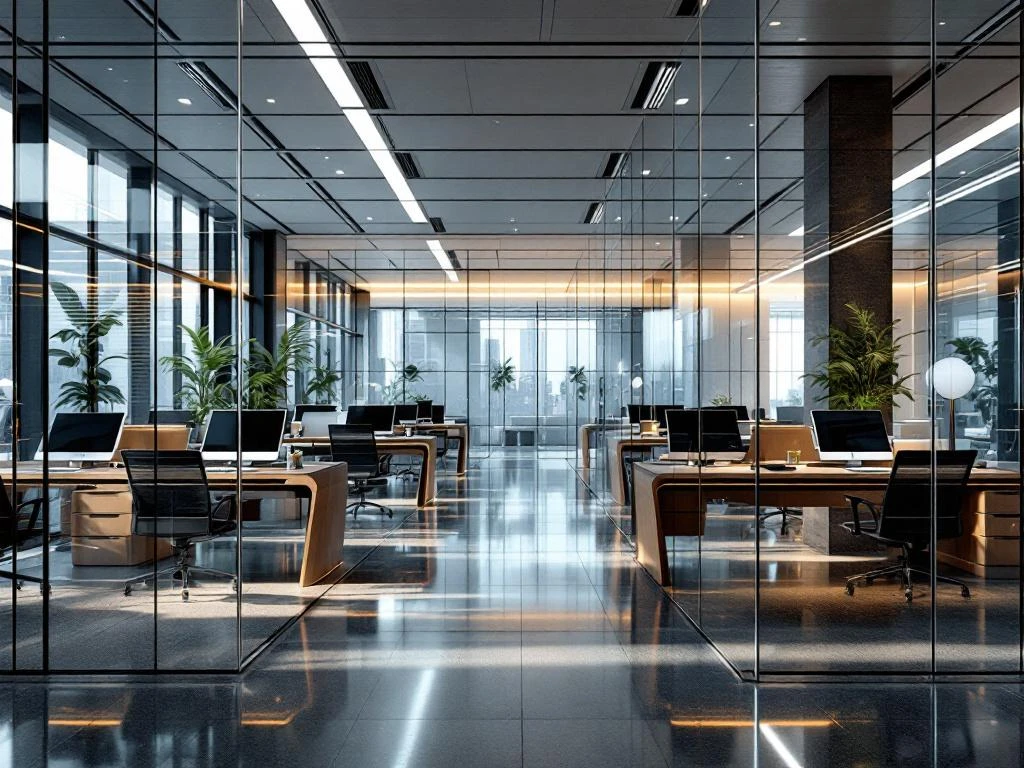
The latest innovations in commercial project design combine smart technology, flexibility, sustainability, and ergonomics to create modern workplaces. IoT sensors, modular furniture, circular materials, and intelligent sit-stand desks are transforming offices into productive, healthy environments that respond to hybrid working and employee well-being.
Which technological innovations are changing the modern workplace?
Smart technology is revolutionizing offices with integrated IoT systems that automatically optimize climate, lighting, and space utilization. Wireless charging stations in desks, app-controlled meeting rooms, and smart sensors that monitor occupancy are making workplaces more intelligent and user-friendly.
Automatic climate control adjusts temperature and air quality based on occupancy and activity. This increases comfort and saves energy. Smart lighting follows natural light cycles and dims automatically when there is sufficient daylight.
Integrated audiovisual systems make meetings easier. Wireless presentations, automatic camera tracking, and sound zones for different activities support hybrid collaboration. These technologies work together to create workspaces that adapt to users rather than the other way around.
How do flexible workspaces increase productivity?
Modular furniture and movable partitions make spaces adaptable to different working modes. Workstations can be transformed from individual focus areas to collaborative zones in a matter of minutes. This effectively supports hybrid working and varying team sizes.
Multifunctional spaces maximize office space by using the same square footage for meetings, focused work, and social interaction. Folding tables, mobile whiteboards, and stackable chairs enable quick reconfiguration.
Adjustable workstations allow employees to personalize their environment for optimal performance. Adjustable desks, mobile storage solutions, and flexible screen configurations support different working styles. You can adapt spaces to project needs without major renovations or investments.
Why is sustainability becoming increasingly important in office design?
Sustainable office design reduces environmental impact by applying principles of the circular economy. Recycled materials, modular design for reuse, and energy-efficient solutions reduce costs and improve the company's image among customers and employees.
Certifications such as Cradle to Cradle and GREENGUARD guarantee healthy materials without harmful emissions. This noticeably improves air quality and employee well-being. Sustainable offices attract talent that values social responsibility.
Circular project design means designing furniture for disassembly and reuse. Lease structures and take-back programs eliminate waste during office relocations. Local suppliers shorten transport distances and support the regional economy. This approach saves costs in the long term and demonstrates a commitment to sustainability.
Which ergonomic innovations improve well-being in the office?
Modern ergonomic solutions combine intelligent sit-stand desks with smart chairs that monitor posture and suggest adjustments. Anti-fatigue mats, adjustable monitor holders, and keyboard trays prevent RSI and increase comfort during long working days.
Sit-stand desks with memory functions automatically switch between sitting and standing positions. This improves blood circulation, reduces back pain, and increases alertness. Smart chairs adjust the lumbar support and armrests to suit your physique and movements.
Ergonomic accessories such as document holders, wrist rests, and footrests support natural body postures. Screen filters reduce eye strain and headaches. These innovations help prevent work-related complaints and increase job satisfaction. Investing in ergonomics reduces absenteeism and measurably increases productivity.
How Wout Monseurs assists with modern project design
Wout Monseurs integrates these innovations into complete project designs that combine technology, flexibility, sustainability, and ergonomics. We work with leading brands such as Interstuhl and Wini to create future-proof office solutions that perfectly match your corporate vision.
Our design process begins with a thorough analysis of work processes and future needs. We create 3D designs that visualize all innovations before implementation begins. From smart technology integration to sustainable material choices: we take care of the entire process.
With over 60 years of experience, we understand that successful project design goes beyond attractive furniture. It's about workplaces that inspire people, increase productivity, and support business goals. Want to know how these innovations can transform your office? Contact us for a no-obligation consultation.
Frequently asked questions
What are the costs of smart technology integration in office design?
The initial investment for IoT systems and smart technology varies between €2,000 and €8,000 per workplace, depending on the solutions chosen. These costs are recouped through energy savings (15-30% lower costs), increased productivity, and reduced absenteeism. Many systems are modularly expandable, allowing you to invest step by step.
How long does it take to implement a complete modern office design?
A complete project setup takes an average of 6-12 weeks, depending on the size and complexity of the office. The design phase takes 2-3 weeks, followed by production and delivery (3-6 weeks) and installation (1-2 weeks). We plan the implementation in such a way that business activities are disrupted as little as possible.
Can existing office furniture be integrated into a new flexible layout?
Yes, high-quality existing furniture can often be integrated by making it modular or supplementing it with flexible elements. We first assess its condition, ergonomic quality, and compatibility with new systems. This can reduce the total investment by 20-40% while still creating a modern, flexible workplace.
What maintenance requirements do smart office solutions have?
Smart systems require minimal maintenance: software updates (automatic), annual sensor checks, and periodic calibration of climate and lighting systems. Most suppliers offer maintenance contracts for €50-€150 per workstation per year. Preventive maintenance prevents malfunctions and maintains energy savings.
How do you measure the success of a new office design?
Success is measured through employee satisfaction surveys, productivity metrics (such as task completion and focus time), absenteeism rates, and energy consumption. Space utilization is also monitored via sensors to see whether flexible zones are being used effectively. Most companies see measurable improvements in these KPIs within 3-6 months.
What happens when an office with modular and sustainable furnishings is relocated?
Modular design is designed for reuse: 80-90% of the elements can be taken to a new location. Sustainable suppliers often offer take-back and relocation services. This saves considerable costs when moving and prevents waste. The flexibility makes it easy to adapt to new spaces without major new investments.
Are there subsidies available for sustainable office design?
Yes, there are various subsidy options, such as the MIA/Vamil scheme for sustainable investments and regional innovation subsidies for smart technology. Energy-saving measures may also qualify for the EIA (Energy Investment Allowance). We help identify applicable schemes and provide support with application procedures to optimize the investment.