

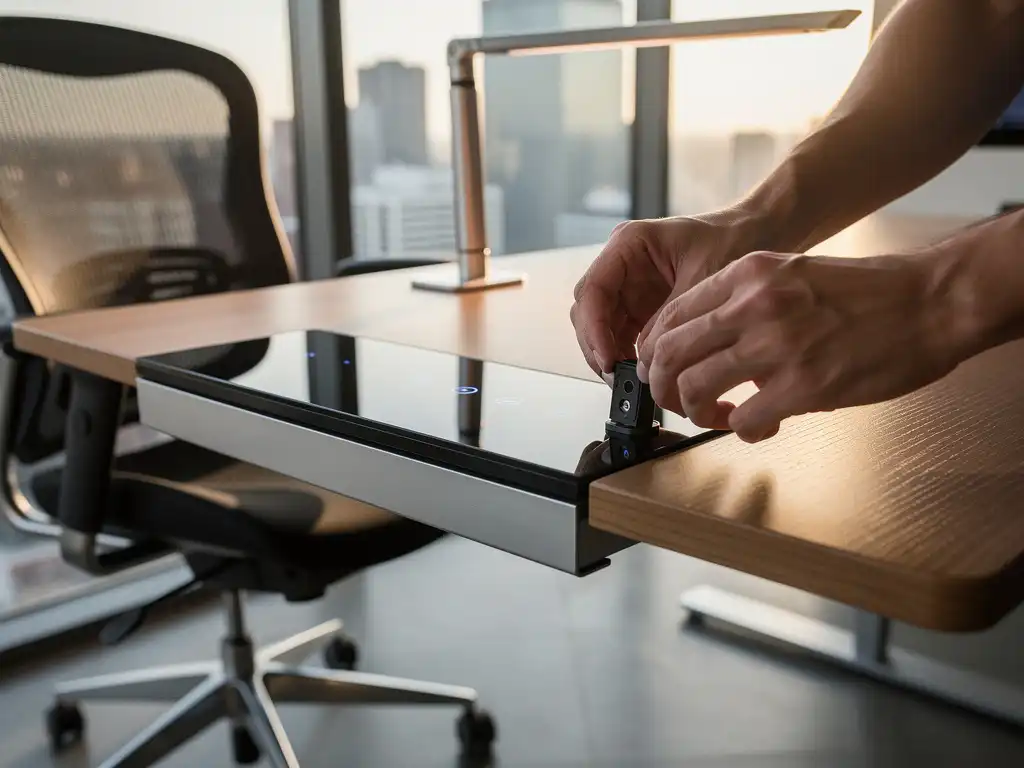
Smart office systems are transforming modern workplaces with automated technologies that enhance comfort, efficiency, and productivity. From intelligent lighting systems to advanced booking tools, these smart office solutions offer significant benefits but also require strategic maintenance to continue functioning optimally.
For organizations considering investing in smart office solutions, it is crucial to understand not only the upfront costs but also the ongoing maintenance costs. These costs determine the total cost of ownership and directly impact the return on investment of your smart office implementation.
What are smart office systems, and why do they require maintenance?
Smart office systems are integrated technological solutions that combine IoT sensors, automation, and data analytics to make workspaces smarter and more efficient. These systems include workspace booking tools, automatic desk adjustments, smart lighting, climate control, and conference technology.
Just like traditional office systems, smart office solutions require regular maintenance to continue functioning optimally. However, the complexity of these systems makes maintenance more critical than with standard office equipment. Sensors can become clogged with dust, software requires updates for security and functionality, and integration between different systems necessitates regular calibration.
In addition, smart systems often operate 24/7 to collect data and make automatic adjustments. This continuous operation leads to more wear and tear than in systems that are only active during business hours. Preventive maintenance prevents minor issues from escalating into costly breakdowns that can disrupt the productivity of the entire office.
How much does it cost to maintain smart office solutions each year?
The annual maintenance costs for smart office systems range from 8% to 15% of the initial investment, depending on the system’s complexity and scale. For an average smart office implementation costing €50,000, this translates to maintenance costs of between €4,000 and €7,500 per year.
These costs are broken down into various components. Software maintenance and licenses often account for the largest portion, with costs ranging from €2,000 to €4,000 per year for a medium-sized office. Hardware maintenance, including sensors and actuators, costs an average of €1,500 to €2,500 per year. In addition, there are costs for system integration, updates, and technical support, which can amount to €1,000 per year.
Larger implementations benefit from economies of scale, which reduces maintenance costs as a percentage of the investment. Smaller systems, on the other hand, have relatively higher maintenance costs because fixed costs—such as basic support contracts—are spread across fewer workstations.
What factors influence the maintenance costs of smart office systems?
The maintenance costs of smart office systems are determined by system complexity, the number of integrated components, usage intensity, environmental factors, and the chosen maintenance approach. More complex systems with greater integration require specialized knowledge and more expensive support.
The size of the system plays a crucial role. An office with 50 smart workstations has lower maintenance costs per workstation than a 10-workstation deployment, because fixed costs such as basic support contracts and system monitoring are spread across more units.
Environmental factors have a significant impact on maintenance frequency. Offices located in dusty environments or areas with heavy construction activity require more frequent sensor cleaning and calibration. The quality of the internet connection and IT infrastructure also determines the stability and maintenance requirements of cloud-based smart office components.
The chosen provider and the type of maintenance contract also make a difference. All-inclusive contracts are more expensive but offer predictable costs, while pay-per-incident models seem cheaper but can result in unexpected costs in the event of a breakdown.
What is the difference between preventive and corrective maintenance for office automation?
Preventive maintenance for office automation consists of scheduled, regular activities designed to prevent problems, whereas corrective maintenance involves reactive repairs following malfunctions. Preventive maintenance costs, on average, 60% less than corrective maintenance and prevents lost productivity.
Preventive maintenance activities include software updates, sensor calibration, battery replacement, system backups, and performance monitoring. These activities are performed according to a set schedule, such as monthly sensor checks and quarterly software updates. The goal is to identify potential issues before they lead to malfunctions.
Corrective maintenance, on the other hand, takes place when systems have already malfunctioned. This can range from replacing faulty sensors to restoring network connections. Corrective maintenance is not only more expensive due to its urgency, but it also causes a loss of productivity because employees are temporarily unable to use smart features.
A good balance between the two approaches is essential. Even with excellent preventive maintenance, corrective maintenance is sometimes necessary, but its frequency and impact can be significantly reduced by taking a proactive approach.
How can you reduce the maintenance costs of smart office systems?
You can reduce the maintenance costs of smart office systems by prioritizing preventive maintenance, entering into multi-year service contracts, building internal expertise, and implementing systems in a modular fashion. This approach can reduce maintenance costs by 20–30%.
Creating a maintenance schedule prevents minor issues from escalating into costly repairs. Regular cleaning of sensors, timely software updates, and proactive monitoring of system performance are relatively inexpensive measures that prevent costly breakdowns.
Multi-year service contracts often offer significant discounts compared to annual agreements. Suppliers value the security of long-term customer relationships and pass this on in the form of more favorable rates. In addition, this provides budget certainty for multi-year planning.
Developing in-house expertise for basic maintenance tasks reduces reliance on external technicians. Employees can be trained in simple tasks such as cleaning sensors, basic troubleshooting, and performing software updates. For more complex tasks, external expertise remains necessary.
How Wout Monseurs Helps Reduce Smart Office Maintenance Costs
We offer a comprehensive approach to smart office implementation that minimizes maintenance costs through strategic planning and proactive management. With over 60 years of experience in office solutions, we are able to design sustainable, cost-effective systems.
Our smart office services include:
- A thorough analysis of your needs to avoid over-engineered solutions
- Selection of reliable suppliers with favorable maintenance contracts
- Modular implementation that allows for phased expansion
- Training your employees in basic maintenance tasks
- Preventive maintenance schedules tailored to your specific systems
Thanks to our comprehensive approach to project design, we can seamlessly integrate smart office technology into your existing office environment. This prevents compatibility issues that could lead to higher maintenance costs down the line. Contact us for a no-obligation consultation on how we can optimize your smart office maintenance costs.
Frequently asked questions
How often should I clean the sensors in my smart office system?
Sensors should be cleaned every 2–3 months on average, but in dusty environments or offices with a lot of construction activity, this may need to be done monthly. Use a soft, dry cloth or compressed air to remove dust. Avoid using damp wipes, as they can damage the electronic components.
What happens if I don't sign a maintenance contract for my smart office systems?
Without a maintenance contract, you risk incurring higher costs due to unexpected repairs, longer downtime, and the loss of warranty coverage on many components. In addition, you won’t have access to software updates and technical support, which can lead to security risks and compatibility issues. The total costs could end up being 40–60% higher than with a preventive maintenance contract.
Can I install software updates myself, or do I always need a technician?
Many basic software updates can be performed by trained staff, especially for user-friendly systems with automatic update features. However, for critical system updates, firmware changes, or updates that affect integration between different systems, professional support is recommended to prevent system failures.
How can I determine in advance whether a smart office system will incur high maintenance costs?
Consider the number of different vendors and integrations, the complexity of the system, and the vendor’s track record in terms of reliability. Ask for references from similar implementations and the average maintenance costs. Systems with many proprietary components and little standardization typically have higher maintenance costs.
What are the first signs that my smart office system needs maintenance?
Early warning signs include slow response times, inconsistent sensor readings, frequent connection issues, incorrect automatic adjustments, and error messages in the dashboard. If employees complain about features not working or if the system requires manual intervention more often, it’s time for maintenance.
Is it possible to carry out smart office maintenance in phases to spread out the costs?
Yes, maintenance can be phased by performing maintenance on different systems at different times, provided this does not disrupt integration. You can also opt for a hybrid approach in which critical systems are maintained on a preventive basis and less essential components are maintained based on performance. This helps with budget management and minimizes disruption to daily operations.