

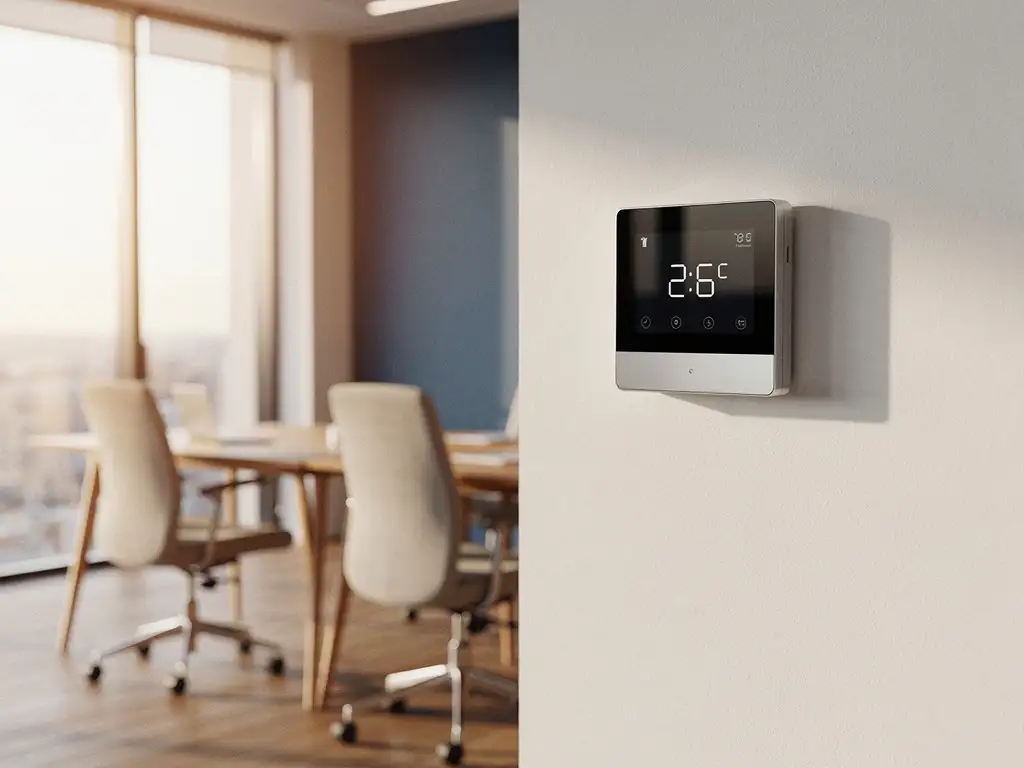
Smart climate control is revolutionizing the modern workplace by automatically optimizing temperature, humidity, and air quality. These smart systems use sensors and artificial intelligence to create an ideal working environment that adapts to occupancy levels, weather conditions, and individual preferences.
For companies investing in a healthy and productive work environment, smart office automation offers significant benefits. From energy savings to improved employee comfort, this technology transforms traditional offices into efficient, future-proof workplaces.
What is smart climate control, and how does it work?
Smart climate control is an automated system that uses sensors, algorithms, and IoT technology to automatically optimize the indoor climate based on real-time data, such as occupancy, outdoor temperature, and air quality.
The system consists of various components that work together. Temperature sensors continuously measure the ambient temperature in different areas of the office. Air quality sensors detect CO2 levels, humidity, and other parameters that affect air quality. Occupancy sensors track how many people are in each room.
The collected data is processed by a central control system that uses machine learning algorithms. These algorithms learn from usage patterns, weather forecasts, and energy consumption to make predictions. Based on this analysis, the system automatically controls heating, ventilation, and air conditioning systems.
Modern systems can even remember individual preferences. When an employee reserves a workstation through a desk-booking system, the climate control system automatically adjusts to that person’s preferred temperature. This level of personalization significantly increases comfort, without the need for manual intervention.
What benefits does smart climate control offer employees?
Smart climate control improves employee satisfaction by providing consistent comfort, reducing stress caused by temperature fluctuations, and optimizing air quality. This leads to higher productivity and lower absenteeism.
The main advantage is a constant, optimal temperature. Traditional systems often create cold and warm zones, causing some employees to feel uncomfortable. Smart systems eliminate these temperature differences by controlling each zone individually.
Improved air quality is another key benefit. The system monitors CO2 levels and automatically activates ventilation when the air becomes too stuffy. This prevents the afternoon slump often caused by poor air quality and keeps employees more alert throughout the day.
Personalization further enhances comfort. Employees can set their preferences via an app, and the system automatically adjusts when they enter their workspace. This personalized approach prevents arguments over the thermostat and ensures that everyone feels comfortable.
Noise reduction is an added benefit. Smart systems operate more efficiently and produce less noise than traditional HVAC systems, which constantly cycle on and off. This contributes to a quieter work environment where it is easier to concentrate.
How much energy does smart climate control save?
Smart climate control can reduce energy consumption by 20–30% by conditioning spaces only when they are occupied, optimizing temperatures based on outdoor conditions, and running equipment more efficiently using predictive algorithms.
The biggest savings come from zone-based climate control. Traditional systems heat or cool the entire office, regardless of occupancy. Smart systems automatically shut down zones when they are empty and adjust the intensity based on the number of people present.
Predictive conditioning improves efficiency. The system uses weather forecasts to anticipate temperature changes. On hot days, cooling starts gradually earlier, thereby avoiding peak loads. This is more energy-efficient than reactive cooling, which kicks in only after the temperature has already risen too high.
Optimizing operating hours yields significant savings. The system learns when the office is occupied and adjusts the climate control accordingly. Outside of office hours, the temperature is automatically adjusted to energy-efficient levels, while the building is gradually prepared for the upcoming workday.
Integration with other smart systems further boosts efficiency. When smart lighting detects that a room is empty, it automatically communicates with the HVAC system to save energy. This synergy between different systems maximizes energy savings.
How does smart climate control fit into modern office design?
Smart climate control integrates seamlessly with modern office design through wireless sensors discreetly embedded in furniture, smart thermostats that complement the interior design, and systems that automatically adapt to flexible workspace layouts.
Flexible workspaces require adaptive climate control systems. Modern office design is characterized by open spaces, flexible workspaces, and multifunctional zones. Intelligent climate control fits perfectly with this trend by adapting in real time to changing room usage.
Discreet sensors preserve the interior’s aesthetic appeal. Modern sensors are so small that they can be seamlessly integrated into ceilings, furniture, or decorative elements. This means that functionality does not come at the expense of visual design.
Smart thermostats serve as design elements. Modern touchscreen interfaces are sleek enough to function as decorative features, while offering comprehensive control over different climate zones. These devices complement high-end office interiors rather than detracting from them.
Integration with acoustic solutions is essential. Smart systems operate more quietly than traditional HVAC systems, making them a perfect fit for modern acoustic panels and sound-absorbing materials. This creates an optimal balance between comfort and a productive work environment.
Sustainability aligns with modern values. Companies that invest in high-quality, sustainable office furnishings also appreciate the eco-friendly aspects of smart climate control. The energy savings align with broader sustainability goals.
How Wout Monseurs Helps with Smart Climate Control
We integrate smart climate control as part of our Smart Office solutions, combining modern technology with our 60+ years of experience in office design. Our approach ensures that climate control systems align seamlessly with your workplace design and business objectives.
Our services include:
- A comprehensive analysis of your current and desired office layout to determine the optimal sensor placement
- Integration with existing office design and furniture for a discreet installation
- Integration with desk booking systems for personalized climate preferences
- Training your team in the use of smart climate control
- Ongoing support and optimization of system settings
As a family-owned business with a strong local presence, we understand that every workplace is unique. That’s why we offer customized solutions that align perfectly with your company culture and work processes. Contact us for a no-obligation consultation on how intelligent climate control can transform your office into a comfortable, energy-efficient work environment.
Frequently asked questions
What are the initial costs for installing a smart climate control system?
The investment costs range from €5,000 to €15,000 per 100 square meters of office space, depending on the complexity of the system and the existing infrastructure. This investment typically pays for itself within 2–3 years through energy savings and increased productivity.
Can smart climate control systems be installed in existing office buildings?
Yes, modern systems are specifically designed for retrofit installations. Wireless sensors and smart thermostats can be easily added to existing HVAC systems without major renovations. A professional assessment will determine the best approach for your specific situation.
How long does it take to install a smart climate control system?
A typical installation takes 1–3 business days for a standard office of 200–500 square meters. The exact duration depends on the number of zones, the complexity of existing systems, and any necessary adjustments to the office layout. Installation usually takes place outside of business hours to minimize disruption.
What happens if the system goes down or experiences technical issues?
Smart climate control systems have built-in backup functions that automatically switch to manual control. Most systems offer 24/7 remote monitoring and can often resolve issues remotely. For urgent malfunctions, a technician is usually available within 4 hours.
Can employees manually adjust the system if they are dissatisfied?
Yes, employees can use a user-friendly app to set their personal preferences and make temporary adjustments. The system learns from these adjustments and automatically adapts future settings. Smart wall panels are also available for local control.
Is smart climate control suitable for open-plan office layouts?
Smart climate control is ideal for open-plan offices because it can create different microzones within a single large space. Sensors detect local occupancy and temperature variations, allowing the system to condition different areas of the open space individually for optimal comfort.
What maintenance is required for smart HVAC systems?
The system requires minimal maintenance: a professional inspection twice a year, monthly filter replacement, and annual sensor calibration. Most maintenance tasks are automatically scheduled and reported through the system. This is significantly less than traditional HVAC systems, which require more frequent maintenance.