

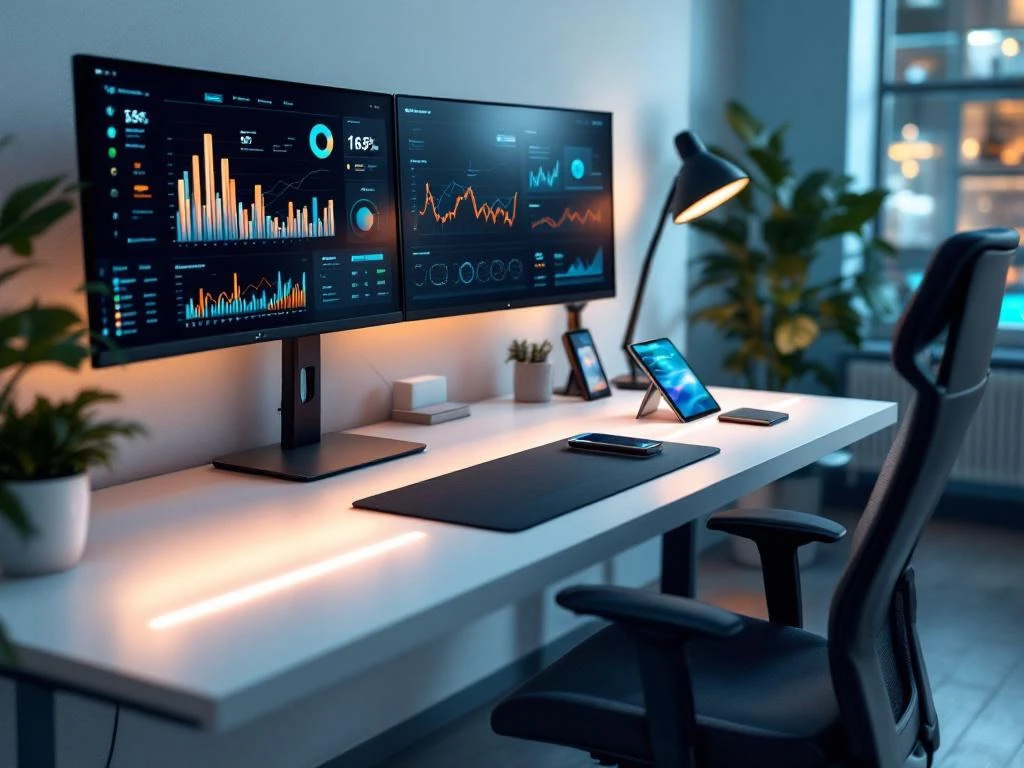
Smart workplaces are office environments that use digital technologies to make work more efficient, comfortable, and flexible. These smart office solutions combine sensors, automation, and data analysis to optimize work processes and better support employees. From smart lighting to digital meeting systems, the technology adapts to your needs.
What technology belongs in a smart workplace?
A smart workplace revolves around integrated technologies that work together to improve your daily work. IoT sensors form the basis by measuring movement, temperature, and air quality. This data automatically controls systems such as lighting, heating, and ventilation.
Smart lighting adjusts throughout the day. In the morning, you get bright, white light that keeps you awake. In the afternoon, it becomes warmer to relieve strain on your eyes. Presence sensors ensure that lights turn on and off automatically when you enter or leave a room.
Digital meeting systems make online collaboration effortless. With the push of a button, you can start a video call, share your screen, and take notes that are automatically shared. Wireless presentation systems allow you to display content directly from your laptop or tablet, without cables.
Smart desks remember your ideal sit-stand settings. You can set your preferences via an app, and the desk automatically adjusts when you arrive. Some desks even give you reminders to move after sitting for a long time.
What are the benefits of smart workplaces for employees?
Smart workspaces increase your productivity and well-being by automatically optimizing environmental factors. You no longer need to manually turn on lights, adjust the temperature, or search for an available meeting room. These minor annoyances disappear, allowing you to focus entirely on your work.
Flexibility increases enormously. You can reserve workspaces, meeting rooms, and parking spaces via an app. You can start working at home and come to the office later, knowing that a place is waiting for you. Hot desking becomes easy because the system knows where you are and activates your preferences.
Your health benefits from ergonomic automation. Smart desks remind you to move around. Air quality is constantly monitored and improved. Lighting follows natural rhythms, which is better for your sleep-wake cycle.
Stress is reduced because technical problems become less frequent. Meeting rooms are always ready for use. Your laptop automatically connects to screens and speakers. Climate control systems ensure a constant, comfortable temperature without you having to think about it.
How do you start creating a smart workplace?
Start with a thorough analysis of your current office equipment and work processes. Identify the daily annoyances your employees experience and which processes take up a lot of time. Make a list of priorities based on impact and costs.
Set a realistic budget and plan the implementation in phases. Start with simple upgrades, such as smart lighting or wireless presentation systems. These deliver quick results and are relatively inexpensive to install.
Involve your employees in the process from the outset. Organize workshops to discuss their wishes and concerns. Explain why you are making certain choices and how the new technology will improve their work. Change management is just as important as the technology itself.
Choose systems that work well together. A smart workplace is only effective if all components communicate with each other. Work with suppliers who have experience with integrated solutions and can offer long-term support.
Test new systems in a small part of the office first. Collect feedback from users and adjust settings before rolling out to the entire company. This phased approach prevents major problems and ensures better acceptance.
What does it cost to convert your office into a smart workplace?
The costs for a smart office transformation vary from €500 to €3,000 per workstation, depending on the desired functionalities. Simple upgrades, such as smart lighting and wireless presentation systems, cost around €500–1,000 per workstation.
Mid-range implementations with sensors, smart climate control, and digital meeting systems cost between €1,000–2,000 per workstation. These solutions offer a good balance between functionality and affordability for most companies.
Complete smart office transformations with advanced automation, AI-driven systems, and fully integrated platforms cost €2,000–3,000 per workstation. This investment is particularly worthwhile for larger offices with many meeting rooms and complex workflows.
Calculate the return on investment by taking energy savings, increased productivity, and lower maintenance costs into account. Smart systems can save 20–30% in energy and reduce the need for technical support. Most companies recoup their investment within two to four years.
Plan for extra budget for training, software licenses, and maintenance. Expect to spend about 15–20% of the initial investment per year on ongoing costs. Opt for modular systems that you can gradually expand as your budget and needs grow.
How Wout Monseurs assists with smart office solutions
We guide you from concept to realization in creating your smart workplace. Our team first analyzes your current situation and work processes to provide tailored advice. We look at your specific wishes, budget, and future plans.
Our experience with high-quality brands and years of expertise in office design ensure that all systems work together seamlessly. We not only design a functional workplace, but also create a pleasant working environment that fits your corporate culture.
After installation, we continue to support you with maintenance and updates. Technology is developing rapidly, and we ensure that your smart office solutions remain up to date. Our personal approach means that you always have a designated contact person for questions or adjustments.
Want to know how a smart workplace can improve your business? Contact us for a no-obligation consultation about the possibilities.
Frequently asked questions
How long does it take to implement a complete smart workplace?
A complete smart office implementation takes an average of 3-6 months, depending on the size of your office and the complexity of the systems. Simple upgrades such as smart lighting can be installed within 2-4 weeks, while integrated systems with sensors and automation require more time for configuration and testing.
What common mistakes should I avoid when implementing smart office technology?
The biggest mistake is choosing systems that don't work well together or are too complex for your employees. Also, avoid skipping change management—employees need to be involved in the process. Don't start too big: begin with a pilot project and gradually expand based on experiences and feedback.
Can I combine my existing office equipment with smart technology?
Yes, most smart systems are designed to integrate with existing infrastructure. For example, smart switches can upgrade your current lighting, and wireless presentation systems work with all modern laptops and tablets. A good supplier can assess which existing systems can be retained.
How do I train my employees to use smart office systems?
Organize hands-on workshops where employees can try out the systems themselves, combined with short instructional videos for later use. Appoint power users who can help colleagues, and provide clear manuals at each workstation. Most smart systems are designed to be intuitive, so extensive training is usually not necessary.
What happens if the technology fails or malfunctions?
Professional smart office systems have backup functions and can be switched over manually. Lighting and climate control continue to function at a basic level, and meeting rooms can still be used. Choose suppliers that offer rapid technical support and ensure you have a maintenance contract for critical systems.
How do I secure the data collected by smart systems?
Only work with suppliers who comply with GDPR regulations and use systems with end-to-end encryption. Establish clear privacy guidelines about what data is collected and how it is used. Opt for local data storage where possible and ensure regular security updates for all systems.
Can I gradually expand a smart workplace as my business grows?
Absolutely, modular smart office systems are specifically designed for scalability. Start with basic functionalities and gradually add sensors, automation, and advanced features. Choose cloud-based platforms that grow with your business and systems that can easily integrate new workplaces.