

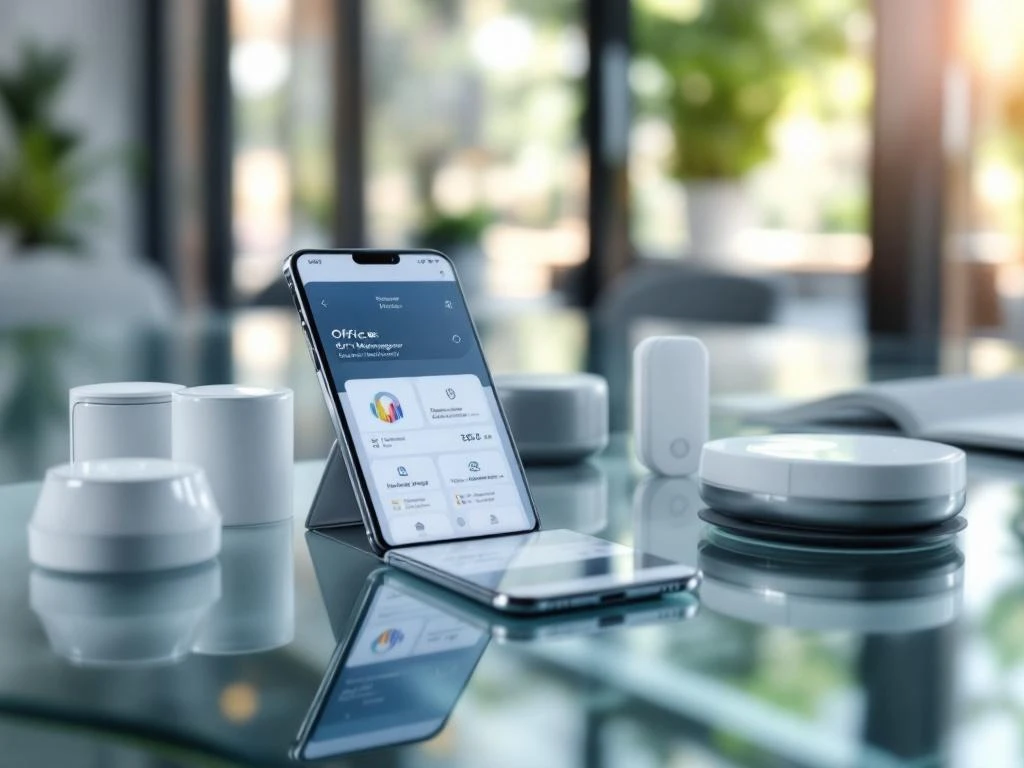
Smart office apps are digital applications that automate office processes and make workplaces more intelligent. These apps connect different systems, such as lighting, climate control, space management, and security, to increase efficiency and improve employee comfort. They use sensors, artificial intelligence, and data processing to optimize modern workplaces for productivity and sustainability.
What exactly are smart office apps and how do they work?
Smart office apps are software solutions that digitize and automate various office processes using sensors, Internet of Things (IoT) technology, and intelligent algorithms. These applications collect real-time data on space utilization, energy consumption, temperature, and other environmental factors to automatically adapt office environments to the needs of users.
Smart office apps operate based on a network of connected devices and sensors that continuously collect information. Motion sensors detect when people enter a room, temperature sensors measure the climate, and light meters determine the amount of natural light. This data is processed by algorithms that automatically make decisions about lighting, heating, ventilation, and other systems.
The apps communicate with various hardware components, such as smart thermostats, LED lighting systems, automated blinds, and security cameras. This integration creates an intelligent ecosystem that adapts to daily patterns and user preferences, saving energy and optimizing working comfort.
What advantages do smart office apps offer businesses?
Smart office apps offer companies significant cost savings by optimizing energy consumption, increasing employee productivity, and streamlining operational processes. Automatic climate control and smart lighting can reduce energy costs by 20–40%, while optimized space utilization reduces real estate costs.
Increased employee satisfaction is a key benefit of modern smart office technology. Employees experience greater comfort thanks to automatically adjusted temperatures, optimal lighting conditions, and efficient room reservation. This leads to improved focus, reduced stress, and higher productivity.
Smart office apps also improve collaboration within teams through integrated communication tools, smart meeting room management, and seamless technical support. Employees can easily find available rooms, reserve equipment, and quickly resolve technical issues via the apps.
For facility managers, these systems offer valuable insights into space utilization, energy consumption, and maintenance requirements. This data helps them make informed decisions about office layout, equipment replacement, and sustainability initiatives.
What types of smart office apps are available?
There are several categories of smart office apps available, each focusing on specific aspects of office automation. Space management apps help with reserving meeting rooms, workspaces, and facilities, while providing real-time information on availability and occupancy rates.
Climate control apps automatically regulate temperature, humidity, and ventilation based on occupancy and weather conditions. These systems learn from user patterns and adapt accordingly to provide optimal comfort while saving energy.
Security and access control apps manage who has access to different areas and when, monitor movements within the building, and integrate with alarm systems. They also offer features such as digital keys and visitor registration.
Facility management apps support equipment maintenance, inventory management, and cleaning scheduling. They can automatically generate maintenance requests based on usage data and help keep track of supplier information and contracts.
How do you choose the right smart office apps for your business?
Choosing smart office apps starts with a thorough analysis of your current office processes and identifying bottlenecks that technology can solve. Determine which aspects of your office environment need the most improvement, such as energy management, space utilization, or the employee experience.
Your existing IT infrastructure plays a crucial role in the selection process. Check whether your network, servers, and security systems are compatible with the desired smart office solutions. Some apps require specific hardware or network upgrades to function optimally.
Budget and implementation costs vary greatly between different systems. Calculate not only the purchase costs of software and hardware, but also installation costs, staff training, and ongoing maintenance costs. Many suppliers offer different packages that can grow with your business.
Ease of use is essential for successful adoption. Choose apps with intuitive interfaces that require little training. Test different solutions through demos or trial periods to determine which one best suits your team's working methods.
How we help with smart office systems
We offer complete smart office implementations that integrate seamlessly with your existing office layout and work processes. Our team analyzes your specific needs and designs a customized system that achieves optimal efficiency and employee comfort.
Our smart office services include:
- Comprehensive analysis of your current office environment and processes
- Advice on the most suitable technologies for your business
- Professional installation and configuration of all systems
- Training for your employees and ongoing technical support
With over 60 years of experience in office design, we combine traditional expertise with modern technology to create workplaces that are both functional and future-proof. Contact us for a no-obligation consultation about the possibilities of smart office technology for your organization.
Frequently asked questions
How long does it take to implement smart office apps in an existing office?
Implementation time varies from 2-8 weeks, depending on the complexity of your systems and the size of your office. A simple room booking app can be up and running within a few days, while a fully integrated smart office ecosystem with sensors and automation takes more time. We take a phased approach to minimize business disruption.
What happens to my data and privacy when using smart office apps?
Smart office apps mainly collect anonymous usage data such as space occupancy and energy consumption. All personal data is processed in accordance with GDPR guidelines and stored on secure servers. Most systems use aggregated data without individual identification, and you retain full control over what data is collected and shared.
Can smart office apps also work in older office buildings without modern infrastructure?
Yes, many smart office solutions are designed to work in existing buildings. Wireless sensors and cloud-based systems require minimal infrastructure changes. For older buildings, we offer retrofit solutions that utilize existing networks and can be expanded step by step as your needs grow.
What return on investment can I expect from smart office apps?
Most companies see a return on their investment within 1-3 years through energy savings (20-40%), increased productivity, and optimized space utilization. Concrete savings come from lower energy costs, more efficient space utilization, and reduced operating costs. We help you make a detailed ROI calculation based on your specific situation.
What if employees have difficulty adapting to new smart office technology?
Successful adoption starts with comprehensive training and gradual implementation. We offer hands-on workshops, user manuals, and ongoing support. By starting with simple functions such as room reservations and gradually adding more advanced features, employees can get used to the new technology step by step.
Can smart office apps integrate with our existing software such as HR systems or Microsoft 365?
Ja, moderne smart office platforms bieden uitgebreide integratiemogelijkheden via API’s en standaard connectoren. Populaire integraties omvatten Microsoft 365, Google Workspace, HR-systemen en bestaande beveiligingssoftware. Dit zorgt voor naadloze workflows waarbij werknemers hun vertrouwde tools kunnen blijven gebruiken terwijl ze profiteren van smart office functionaliteiten.
How do I maintain and update smart office apps after implementation?
Cloud-based smart office apps automatically update with new features and security patches. Hardware components such as sensors require minimal maintenance, usually only battery replacement every 2-5 years. We offer maintenance contracts that include proactive monitoring, updates, and 24/7 technical support, ensuring your systems always function optimally.