

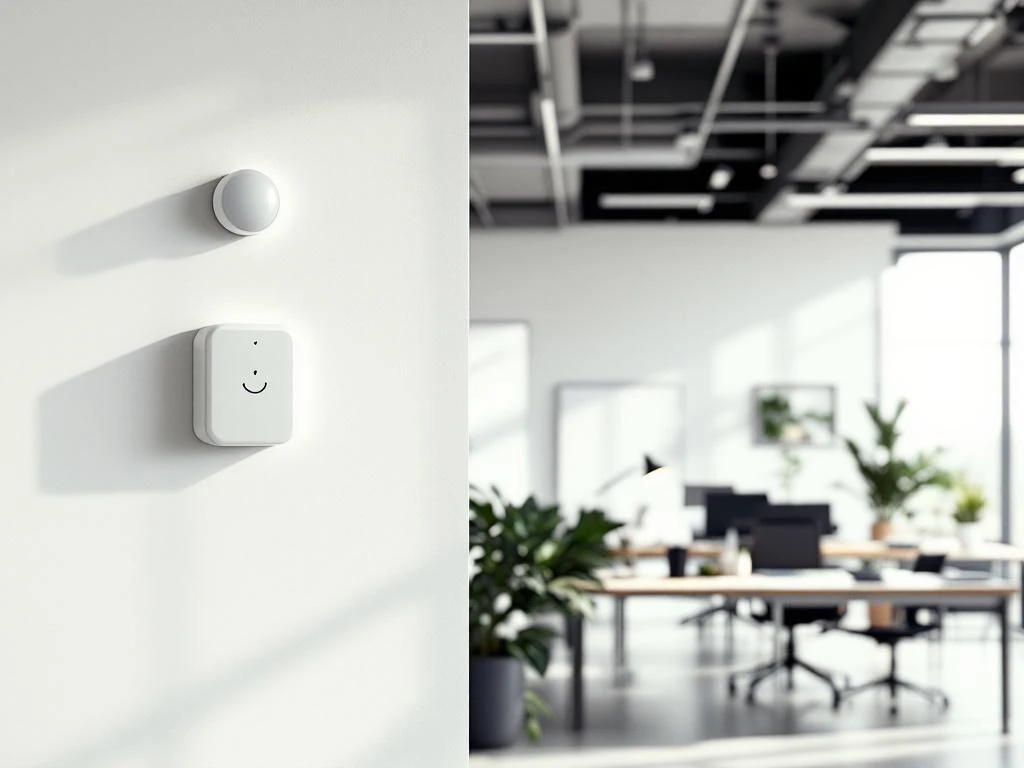
Smart office sensors are intelligent devices that automatically collect data about the office environment, such as motion, temperature, air quality, and noise. These sensors use IoT technology to send real-time information to a central system, enabling office spaces to automatically adapt to changing conditions. They help companies save energy, improve employee comfort, and use space more efficiently.
What exactly are smart office sensors, and how do they work?
Smart office sensors are small electronic devices that monitor various aspects of the office environment and automatically transmit data to a central management system. They use wireless connections and Internet of Things (IoT) networks to collect real-time information and enable intelligent decision-making.
The sensors detect changes in their environment using various technologies. Motion sensors use infrared or microwaves to detect presence. Temperature and humidity sensors measure environmental conditions, while CO2 sensors monitor air quality. Sound sensors measure sound pressure to ensure optimal acoustic conditions.
All collected data is transmitted via Wi-Fi, Bluetooth, or other wireless protocols to a central hub or cloud platform. There, the data is analyzed and used to make automatic adjustments to lighting, climate control, or other office systems.
What benefits do smart office sensors offer businesses?
Smart office sensors deliver immediate savings on energy costs by automatically adjusting lighting and climate control based on actual occupancy. At the same time, they improve employee satisfaction by maintaining optimal conditions for temperature, air quality, and lighting.
The key benefits include energy savings through smart automation, improved air quality through continuous monitoring, optimal use of space based on occupancy data, and increased productivity through comfortable working conditions. Companies can also make data-driven decisions regarding office layout and facility management.
In addition, the sensors enable proactive maintenance of HVAC systems, reduce the need for manual checks, and provide insights into space usage patterns. This helps optimize cleaning schedules and plan meeting room usage.
What types of smart office sensors are available?
There are various types of smart office sensors available, each with specific functions for office environments. Motion sensors detect occupancy for automatic lighting and climate control. Temperature and humidity sensors ensure optimal environmental conditions, while CO2 sensors monitor air quality.
The most commonly used sensor types are:
- Motion sensors for automatic lighting and energy savings
- Temperature and humidity sensors for climate control
- CO2 sensors for air quality monitoring
- Sound sensors for acoustic optimization
Light sensors adjust artificial lighting based on natural light, while occupancy sensors provide real-time data on space usage. Combining different types of sensors offers the most comprehensive monitoring and automation of office environments.
How do you install smart office sensors in your office?
The implementation of smart office sensors begins with a thorough needs assessment of your office environment and objectives. Next, you strategically plan the locations where sensors will be most effective, followed by professional installation and integration with existing systems.
The step-by-step approach begins by identifying which areas and systems should be prioritized for monitoring. Next, you select the appropriate sensor types and plan their placement to ensure optimal coverage. After installation, the sensors are calibrated and connected to the central management system.
It is also important to train employees on how to use the new system and to establish maintenance procedures. Start small with a pilot project in a single room before expanding the system to the entire office.
How much do smart office sensors cost?
The cost of smart office sensors ranges from €50 to €200 per sensor, depending on the type and functionality. On top of that, there are installation costs and any software subscriptions for the central management system. The total investment depends on the size of the office and the desired features.
Purchasing costs include the sensors themselves, gateway equipment, and software licenses. Installation costs vary depending on the location and the complexity of the system. Maintenance costs are generally low due to the long service life of modern sensors.
The payback period is typically between 1 and 3 years, thanks to energy savings and improved efficiency. Smaller offices can start with basic monitoring, while larger organizations benefit from extensive sensor networks with advanced analytics.
How Wout Monseurs Helps with Smart Office Sensor Solutions
We offer comprehensive support for the implementation of smart office sensor solutions, from advising you on the right choice of sensors to full integration with your office layout. Our team handles professional installation, integration with existing systems, and ongoing maintenance of your smart office solutions.
Our services include:
- Personalized advice on sensor selection and placement for optimal results
- Professional installation and integration with office automation systems
- Integration with lighting, climate control, and other office systems
- Maintenance and support to ensure the continuous operation of your smart office technology
With over 60 years of experience in professional office solutions, we combine traditional expertise with modern technology. Contact us for a no-obligation consultation on how smart office sensors can improve your workplace and help you save costs. Learn more about our company and our approach.
Frequently asked questions
How long does it take for smart office sensors to become fully operational after installation?
Once physically installed, smart office sensors are usually fully operational within 24–48 hours. The first day is used for calibration and collecting baseline data, after which the system automatically begins to optimize itself. For more complex integrations with existing building management systems, the process may take 3–5 business days.
Can smart office sensors also work in older office buildings without modern infrastructure?
Yes, modern smart office sensors are specifically designed to work in older buildings as well. They use wireless technology and only require a stable Wi-Fi connection. For buildings without existing automation systems, standalone solutions can be installed that operate independently and can be expanded later.
What happens to employees' privacy when motion and occupancy sensors are used?
Smart office sensors collect only anonymous data on occupancy and environmental conditions, not on individual people. The sensors detect movement and occupancy without personal identification or tracking. All data is stored in encrypted form and complies with GDPR regulations, with transparency toward employees being essential.
How do you maintain smart office sensors, and how often is this necessary?
Smart office sensors require minimal maintenance—usually just periodic battery replacement (every 1–3 years) and occasional cleaning of the sensors. The system automatically sends alerts for low battery levels or malfunctions. An annual inspection by a specialist is sufficient to ensure optimal performance.
Can smart office sensors be integrated with existing building management systems?
Yes, modern smart office sensors are designed to integrate with most existing HVAC, lighting, and security systems. They communicate via standard protocols such as BACnet, Modbus, or API interfaces. A preliminary technical analysis will determine the best integration method for your specific systems.
What are the most common mistakes made when implementing smart office sensors?
The most common mistakes include improper sensor placement (too high, too low, or in blind spots), insufficient Wi-Fi coverage, and skipping the calibration phase. Failing to involve employees in the implementation process can also lead to resistance. Therefore, always start with a professional needs assessment and ensure clear communication with all stakeholders.