

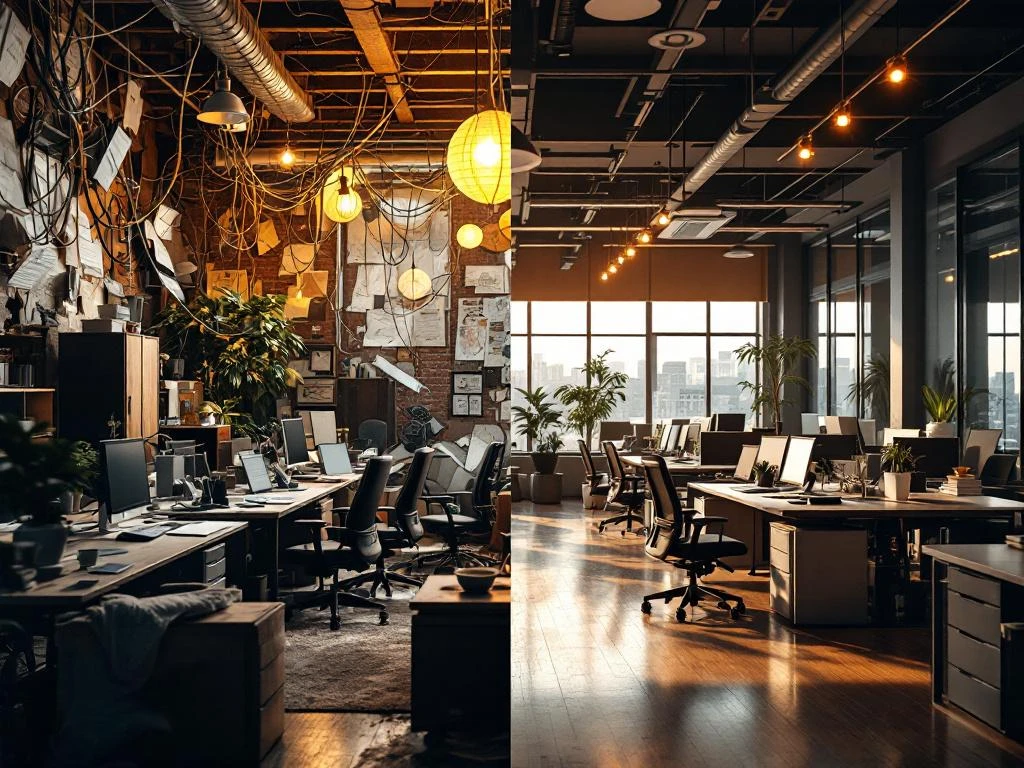
Project design often goes wrong due to poor planning, incorrect ergonomic choices, budget overruns, and incorrect furniture choices. The most common mistakes are insufficient needs analysis, ignoring employee needs, incorrect chairs and desks, underestimating costs, and focusing on appearance over functionality. These mistakes lead to dissatisfied employees, lower productivity, and unexpected additional costs.
What mistakes do companies make when planning their office layout?
Companies often make planning mistakes by starting too quickly without thorough preparation. The biggest mistake is skipping a needs analysis, where you don't investigate what your employees really need. Many companies also forget to take future growth into account and only plan for the current number of workstations.
Incorrect budgeting is another common mistake. Companies often underestimate costs and forget to factor in expenses for installation, transport, and any modifications to the building. Ignoring employee needs means that the new layout does not fit in with everyday working practices.
The consequences of poor planning are:
- Workplaces that are not functional for work
- Dissatisfied employees who become less productive
- Additional costs for subsequent modifications
- Delay in the project due to unclear planning
Why does ergonomics so often go wrong in project design?
Ergonomic errors occur because companies often view ergonomics as a secondary consideration rather than an important part of office design. Incorrect desk heights, poor chairs without adequate back support, and inadequate lighting are the most common problems. Many companies order standard furniture without taking into account the different heights and needs of employees.
Lack of space to move around is another common problem. Workplaces are designed to be too cramped, preventing employees from moving around comfortably. Monitors are also often positioned incorrectly, leading to neck and back problems.
These ergonomic errors have direct consequences:
- Increased absenteeism due to physical complaints
- Lower productivity due to uncomfortable workplaces
- Higher costs for replacing incorrect furniture
- Dissatisfied employees who are less motivated
How can you prevent budget overruns in office projects?
You can avoid exceeding your budget by making realistic cost estimates and building in a buffer of 10–15% for unforeseen expenses. Start with a clear list of all the necessary items and request multiple quotes. Don't forget to include costs for transport, installation, and any modifications to the property.
Set clear priorities in your wish list. Determine what is absolutely necessary and what would be nice to have, but not essential. Hidden costs such as extra power outlets, network cabling, or custom lighting can significantly exceed your budget if you don't factor them in beforehand.
Practical tips for budget management:
- Request detailed quotes that include all costs
- Plan a buffer for unexpected expenses
- Choose quality furniture that you shouldn't skimp on
- Consider phased implementation for large projects
What are the biggest mistakes when choosing office furniture?
The biggest mistake when choosing furniture is focusing on appearance over functionality. Beautiful furniture that is not practical for everyday use causes frustration among employees. Ordering the wrong sizes is another costly mistake, especially with desks and cabinets that do not fit in the available space.
Many companies do not take daily use into account and choose furniture that looks good but cannot withstand intensive use. Ignoring maintenance aspects leads to furniture that wears out quickly or is difficult to keep clean.
Common furniture mistakes:
- Choosing chairs without trying them out
- Ordering desks without considering the necessary equipment
- Forgot to provide storage space for personal belongings
- Opting for trendy designs that quickly become outdated
How Wout Monseurs helps prevent project design errors
We prevent these common mistakes thanks to our years of experience and personalized approach. Our process always starts with a thorough needs analysis, during which we work with you to examine your team's working methods and future plans. We take ergonomics seriously and ensure that all furniture is suited to the people who work with it every day.
Our transparent project design approachgives you a clear overview of all costs in advance, so there are no surprises. We only work with high-quality brands that can withstand intensive use and offer full support from design to installation.
Want to prevent your office project from going wrong? Contact us for a no-obligation consultation about your plans. We are happy to help you avoid all the pitfalls and create an office design that you and your team will truly love.
Frequently asked questions
How long does an average office design project take?
An office design project takes an average of 6-12 weeks, depending on its size and complexity. This includes 2-3 weeks for planning and design, 3-6 weeks for furniture production and delivery, and 1-2 weeks for installation. Large projects or special modifications to the building may take longer.
What should I do if employees complain about the new office layout?
Take complaints seriously and organize an evaluation round within two weeks of setting up the workspace. Document specific problems such as ergonomic complaints or functionality issues. Minor adjustments such as different chairs or extra lighting can often be resolved quickly. Prevention by involving employees in the planning process prevents most complaints.
Can I furnish in phases to spread the costs?
Yes, phased design is a smart way to spread costs and limit risks. Start with essential workspaces and add meeting rooms, lounge areas, or extra storage space later. Make sure you maintain a consistent style and take future expansion into account during the first phase to avoid duplicate costs.
How can I test whether furniture is suitable before ordering it?
Always ask for test models or visit a showroom to try out furniture. Have different employees (of different heights/builds) test the chairs and desks. Check whether all necessary equipment fits and whether there is sufficient room to move around. Many suppliers offer trial placements for larger orders.
What are the signs that my current office layout is due for an update?
Signs include increasing complaints about uncomfortable workplaces, outdated furniture that regularly breaks down, lack of space due to team growth, or an office that no longer fits your company image. Changing working methods (more hybrid working, different technology) can also be a reason for redesign.
How can I ensure that the new design is future-proof?
Choose flexible, modular furniture that is easy to move and expand. Allow for 20% extra space for growth and choose neutral colors that will not quickly go out of style. Invest in quality furniture with a good warranty and consider changing work styles, such as hybrid working, in the design.