

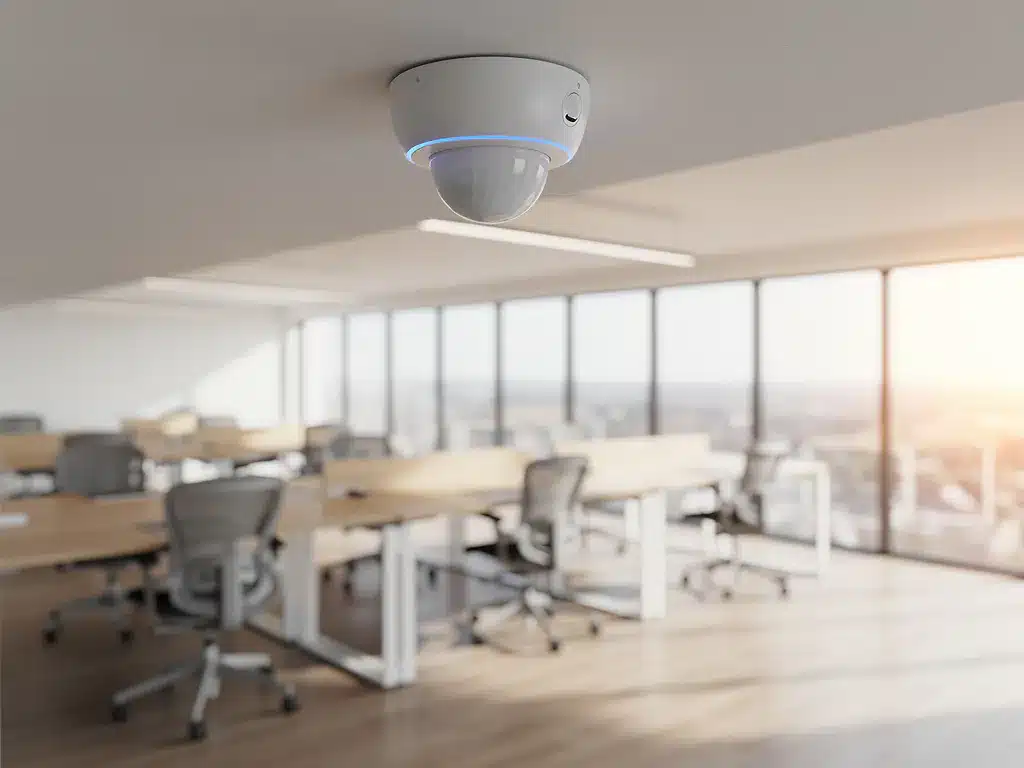
Modern offices are increasingly using smart sensors in the workplace to optimize workspaces and create a better working environment. These technologies collect valuable data on how spaces are used, but exactly what data is being recorded?
From motion detection to temperature monitoring: office sensors generate a wealth of information that helps companies make data-driven decisions about their workplace. For many organizations, however, it remains unclear exactly what these systems are recording and how this data is being used.
What are office sensors, and why are they used?
Office sensors are smart devices that automatically collect data on the physical environment and the use of workspaces. These sensors measure various parameters, such as motion, temperature, air quality, noise levels, and room occupancy, to provide insight into how office spaces are actually used.
Companies implement these sensors for several reasons. First, they help optimize space utilization by identifying which workstations and meeting rooms are used most and least frequently. This insight enables organizations to design their office layouts more efficiently and save costs on unused spaces.
In addition, sensors help improve employee comfort by automatically adjusting climate control, lighting, and ventilation to current conditions. In the era of hybrid work, they also provide valuable data for implementing flexible workspace concepts and reservation systems.
What types of data do office sensors collect?
Office sensors primarily collect environmental data, usage data, and technical measurements. The most common types of data include movement patterns, temperature and humidity, noise levels, air quality (CO2, particulate matter), light intensity, energy consumption, and occupancy rates for workstations and meeting rooms.
Motion sensors detect when there is activity in a room, but they generally do not detect individual people. Climate sensors continuously measure temperature, humidity, and CO2 levels to ensure a comfortable working environment. Noise sensors monitor decibel levels to provide insight into acoustic conditions without recording conversations.
Light and energy sensors measure the intensity of natural and artificial light, as well as the power consumption of equipment. This data helps optimize energy usage and create ideal lighting conditions for productivity. Occupancy sensors count the number of people present in rooms without identifying individuals.
How do motion and occupancy sensors work in offices?
Motion and presence sensors work by using infrared radiation, microwaves, or ultrasonic signals to detect activity in rooms. They detect when someone enters a room, how long it is occupied, and when the room is vacated, without identifying individual users.
Passive infrared (PIR) sensors are the most commonly used type and detect moving heat sources. They are energy-efficient and reliable for detecting general activity. Microwave sensors emit high-frequency signals and measure changes in reflection, allowing them to detect even subtle movements.
These sensors are often combined with other technologies to provide more accurate measurements. In modern offices, they can be linked to reservation systems to automatically detect whether a reserved meeting room is actually in use. The data is typically transmitted in real time to a central management system for analysis and reporting.
What is the difference between anonymous and personal data collection?
Anonymous data collection tracks patterns and trends without identifying individual users, whereas personal data collection links specific individuals to their workplace behavior. Most office sensors use anonymous data to protect privacy and comply with regulations such as the GDPR.
For example, anonymous systems track how many people use a space and when, but do not know who those people are. They can identify patterns—such as peak hours, popular workspaces, and average occupancy times—without compromising individual privacy. This approach provides sufficient insight for most optimization purposes.
Personal data is typically collected only with explicit consent and for specific purposes, such as automatically configuring desktop settings for individual users. This requires stricter security measures and transparent communication regarding data usage. Many organizations deliberately opt for anonymous systems to avoid complexity and privacy risks.
How do companies use sensor data to optimize the workplace?
Companies use sensor data to analyze space utilization, reduce energy costs, improve employee comfort, and make data-driven decisions about office layout. The collected information is converted into dashboards and reports that help facility managers and HR departments optimize the work environment.
Space optimization is a key application. By analyzing which workstations and meeting rooms are used most frequently, companies can adjust their office layout and potentially downsize or reconfigure their office space. This leads to significant cost savings on rent and facilities.
Energy management is optimized by automatically adjusting lighting, heating, and air conditioning based on occupancy and environmental conditions. Employee comfort is improved through proactive climate control and by identifying areas with poor air quality or acoustic issues. This data also helps in implementing flexible work concepts and measuring the effectiveness of changes to the office layout.
How Wout Monseurs Helps with Smart Office Technology
At Wout Monseurs, we help organizations implement smart office solutions that make the most of sensor technology. Our Smart Office services include the full integration of sensors and automation systems into your office environment.
Our approach includes:
- Advice on the right sensor technology for your specific needs
- Installation of smart reservation systems for workspaces and meeting rooms
- Implementation of automatic desktop customization based on personal preferences
- Integration with existing office automation systems
- Training and support for the optimal use of Smart Office technology
As a family-owned business with over 60 years of experience, we combine traditional expertise with modern technological innovations. Our comprehensive project solutions integrate seamlessly with Smart Office solutions to create a future-proof work environment. Contact us to discover how sensor technology can transform your office into an intelligent, efficient workplace.
Frequently asked questions
How long does it take to fully implement an office sensor system?
Implementing an office sensor system typically takes 4–8 weeks, depending on the size of the office and the complexity of the desired features. This includes planning, sensor installation, software configuration, and user training. Wout Monseurs will guide you through the entire process and ensure a smooth transition to your new Smart Office environment.
What is the cost of installing office sensors?
Costs vary significantly depending on the type of sensors, the size of your office, and the desired features. Basic motion sensors start at a few hundred euros per room, while comprehensive systems that include air quality and climate monitoring require a greater investment. Wout Monseurs offers a free consultation to determine a cost-effective, customized solution for your organization.
Can office sensors be integrated with existing office automation systems?
Yes, modern office sensors can usually be integrated with existing systems such as HVAC, lighting, security systems, and booking software. This is often done using standard protocols such as BACnet, KNX, or wireless connections. Our specialists at Wout Monseurs will analyze your current infrastructure and ensure seamless integration without disrupting your daily operations.
How accurate are office occupancy sensors?
Modern office sensors have an accuracy of 85–95% when detecting occupancy, depending on the type of sensor and the configuration. PIR sensors are highly reliable for motion detection, while combinations of different sensor types further increase accuracy. Minor discrepancies may occur during very sedentary activities, but this has minimal impact on overall data analysis and optimization.
What happens to the sensor data if the system fails or malfunctions?
Professional office sensor systems feature built-in backup capabilities and local data storage to prevent data loss. In the event of a network outage, sensors store data locally until the connection is restored. Wout Monseurs offers maintenance contracts with proactive monitoring and rapid repair services to minimize downtime and ensure the continuous operation of your Smart Office system.
Can employees adjust the sensor settings at their workstations themselves?
Yes, many modern systems allow employees to set personal preferences—such as desired temperature, light intensity, and desk height—via an app or web portal. These preferences are automatically applied when they reserve or use their workspace. Wout Monseurs can integrate such personalization features into your Smart Office solution to boost employee satisfaction and productivity.