

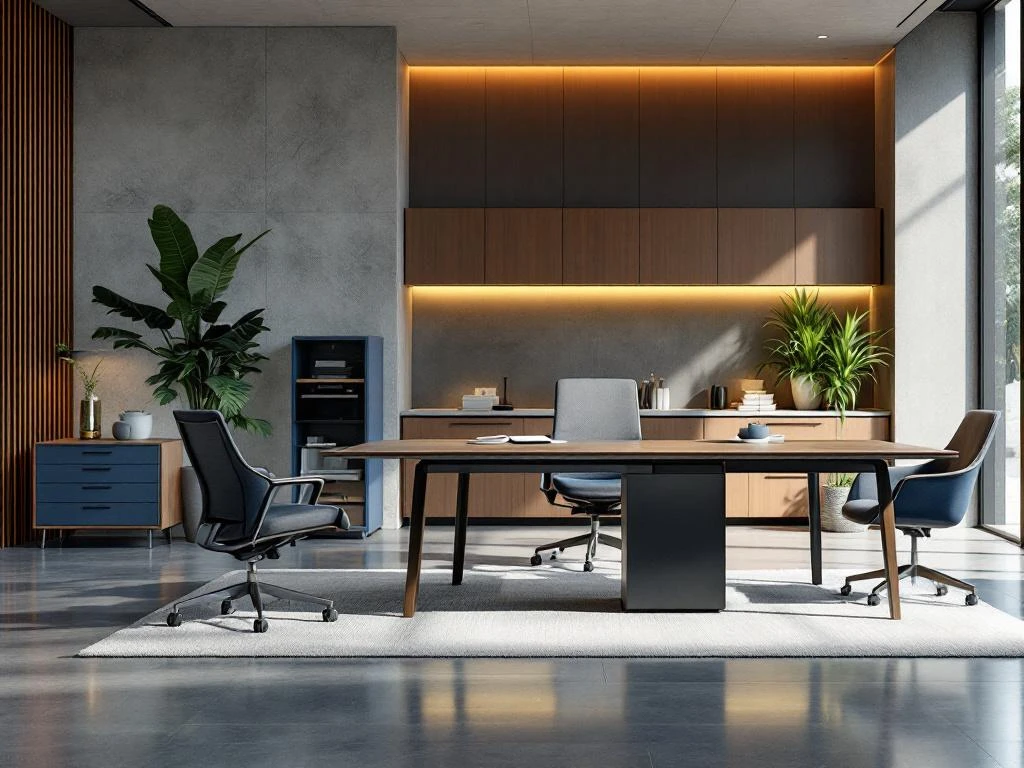
Bij projectinrichting zijn verschillende meubels belangrijk voor een functionele werkplek. De basis bestaat uit ergonomische bureaus, stoelen en opbergruimte voor elke werkplek. Daarnaast heb je vergaderruimtemeubels en meubels voor de ontvangst- en gemeenschappelijke ruimtes nodig. De juiste meubels verbeteren de productiviteit en het welzijn en zorgen voor een professionele uitstraling.
Welke basismeubels heb je nodig voor elke werkplek?
Elke werkplek heeft drie fundamentele meubelstukken nodig: een ergonomisch bureau, een goede bureaustoel en voldoende opbergruimte. Deze basis zorgt ervoor dat medewerkers comfortabel en efficiënt kunnen werken, zonder lichamelijke klachten.
Het bureau vormt het hart van elke werkplek. Een in hoogte verstelbaar bureau is ideaal, omdat medewerkers kunnen wisselen tussen zitten en staan. Dit bevordert de doorbloeding en vermindert rugklachten. Het bureauoppervlak moet groot genoeg zijn voor een computer, documenten en persoonlijke spullen.
Een ergonomische bureaustoel is net zo belangrijk als het bureau zelf. De stoel moet verstelbaar zijn in zithoogte, rugleuning en armleggers. Goede lumbale ondersteuning voorkomt rugpijn en verhoogt het zitcomfort gedurende lange werkdagen. Investeer in kwaliteitsstoelen, want medewerkers zitten er dagelijks uren op.
Opbergruimte houdt de werkplek georganiseerd en professioneel. Denk aan een ladeblok onder het bureau voor persoonlijke spullen en documenten. Een kleine kast of wandplanken bieden extra ruimte voor mappen, boeken en kantoorbenodigdheden. Georganiseerde werkplekken verhogen de productiviteit, omdat medewerkers minder tijd kwijt zijn aan zoeken.
Hoe kies je de juiste vergaderruimtemeubels voor je kantoor?
Vergaderruimtemeubels moeten flexibel zijn en verschillende vergaderformaten ondersteunen. Een verstelbare vergadertafel, comfortabele stoelen en presentatiemeubels vormen de basis voor productieve meetings en goede samenwerking.
De vergadertafel bepaalt de sfeer en functionaliteit van de ruimte. Ronde tafels bevorderen gelijkwaardige discussies, terwijl rechthoekige tafels geschikt zijn voor formele presentaties. Kies een tafel die past bij je ruimte en het aantal mensen dat er regelmatig vergadert. Modulaire tafels zijn handig, omdat je ze kunt aanpassen aan verschillende groepsgroottes.
Vergaderstoelen moeten comfortabel zijn voor langere meetings. Ze hoeven niet alle functies van een bureaustoel te hebben, maar moeten wel goede ondersteuning bieden. Stapelbare stoelen zijn praktisch als je de ruimte flexibel wilt inzetten. Zorg dat er voldoende stoelen zijn, plus enkele extra voor onverwachte deelnemers.
Presentatiemeubels zoals een whiteboard, flip-over of tv-meubel maken vergaderingen interactiever. Een mobiel presentatiebord kun je makkelijk verplaatsen naar waar je het nodig hebt. Zorg ook voor voldoende stopcontacten en eventueel een aparte tafel voor laptops, notitieblokken en drankjes.
Wat zijn de belangrijkste opbergruimteoplossingen bij projectinrichting?
Goede opbergruimteoplossingen bestaan uit kasten, ladeblokken, archiefkasten en moderne opbergsystemen. Deze houden de werkplek georganiseerd en zorgen ervoor dat belangrijke documenten en materialen makkelijk vindbaar blijven.
Ladeblokken zijn de meest praktische opbergruimte voor individuele werkplekken. Ze passen onder het bureau en bieden ruimte voor persoonlijke spullen, kantoorbenodigdheden en belangrijke documenten. Kies ladeblokken met verschillende ladegroottes: kleine lades voor pennen en paperclips, grote lades voor mappen en documenten.
Archiefkasten zijn nodig voor documenten die je niet dagelijks gebruikt, maar wel moet bewaren. Moderne archiefkasten hebben hangmappen die documenten netjes georganiseerd houden. Voor bedrijven met veel papierwerk zijn grote archiefkasten met meerdere lades onmisbaar.
Wandkasten en open stellingkasten bieden extra opbergruimte zonder veel vloeroppervlak in te nemen. Ze zijn perfect voor boeken, mappen die je regelmatig gebruikt en decoratieve items die het kantoor persoonlijker maken. Kies kasten die passen bij de stijl van je kantoor en voldoende stevig zijn voor het gewicht dat je erin wilt opbergen.
Welke ontvangst- en gemeenschappelijke ruimtemeubels zijn belangrijk?
Ontvangst- en gemeenschappelijke ruimtes hebben specifieke meubels nodig die een professionele eerste indruk maken en de bedrijfscultuur ondersteunen. Denk aan receptiemeubels, comfortabele zithoeken, keukenmeubels en informele ontmoetingsplekken.
De receptie is het eerste wat bezoekers zien van je bedrijf. Een representatieve receptiebalie, professionele stoelen voor bezoekers en eventueel een koffietafel creëren een gastvrije sfeer. De receptiebalie moet groot genoeg zijn voor een computer, telefoon en administratie, maar ook ruimte bieden voor persoonlijke interactie met bezoekers.
Wachtruimtes hebben comfortabele stoelen of banken nodig waar bezoekers prettig kunnen wachten. Een salontafel voor tijdschriften, folders of een laptop maakt de wachttijd aangenamer. Zorg voor voldoende zitplaatsen, ook tijdens drukke periodes, en houd rekening met verschillende voorkeuren: sommige mensen zitten graag op een bank, anderen geven de voorkeur aan een stoel.
Keuken- en pantryruimtes zijn belangrijk voor de bedrijfscultuur en het welzijn van medewerkers. Een functionele keuken met voldoende kastruimte, een grote tafel voor gezamenlijke lunches en comfortabele stoelen stimuleert sociale interactie. Informele zithoeken met loungestoelen of banken bieden ruimte voor spontane overleggen en pauzes.
Hoe Wout Monseurs helpt met projectinrichting
Wout Monseurs ondersteunt bedrijven bij het kiezen en implementeren van de juiste meubeloplossingen voor projectinrichting. We zorgen voor een complete aanpak: van het ontwerp tot de levering en installatie van alle meubels die je nodig hebt.
Ons proces begint met een uitgebreide ruimtestudie, waarbij we je wensen en behoeften in kaart brengen. We maken een gedetailleerd 3D-ontwerp, zodat je precies ziet hoe je nieuwe kantoor eruit komt te zien. Daarbij houden we rekening met ergonomie, functionaliteit en je bedrijfsidentiteit.
We werken met hoogwaardige merken zoals Interstuhl, Voortman en Gispen, zodat je verzekerd bent van duurzame en comfortabele meubels. Van de eerste schets tot de laatste stoel regelen we alles voor je. Wil je weten hoe we jouw kantoor kunnen transformeren? Neem dan contact met ons op voor een vrijblijvend gesprek over de mogelijkheden.
Veelgestelde vragen
Hoe bepaal ik het juiste budget voor de meubilair van mijn kantoorproject?
Plan ongeveer 15-25% van je totale kantoorbudget voor meubilair. Begin met de essentiële werkplekmeubels (bureau, stoel, opbergruimte) en breid daarna uit naar vergaderruimtes en gemeenschappelijke ruimtes. Vraag altijd offertes bij meerdere leveranciers en houd rekening met langetermijnkosten – kwaliteitsmeubels gaan langer mee en besparen op de lange termijn geld.
Wat zijn de meest voorkomende fouten bij het kiezen van kantoormeubels?
De grootste fout is het onderschatten van ergonomie – goedkope stoelen en bureaus leiden tot hogere ziekteverzuimkosten. Daarnaast kiezen bedrijven vaak te weinig opbergruimte, waardoor werkplekken rommelig worden. Ook het niet testen van meubels vooraf is een veelgemaakte fout – medewerkers moeten comfortabel kunnen werken met de gekozen inrichting.
Hoe kan ik mijn kantoorinrichting toekomstbestendig maken?
Kies voor modulaire en flexibele meubelsystemen die je kunt aanpassen als je bedrijf groeit. Investeer in in hoogte verstelbare bureaus en mobiele meubels die je kunt herindelen. Denk ook aan hybride werken: creëer flexibele werkplekken die verschillende werkstijlen ondersteunen in plaats van vaste individuele bureaus voor elke medewerker.
Welke duurzaamheidsaspecten moet ik meenemen bij de meubelkeuze?
Kies voor meubels met duurzaamheidscertificaten zoals FSC voor hout en Cradle to Cradle. Investeer in kwaliteitsmeubels die lang meegaan en kijk naar de mogelijkheden voor refurbishment. Veel merken bieden tegenwoordig circulaire programma’s waarbij oude meubels worden ingenomen en gerecycled bij vervanging.
Hoe lang duurt een complete kantoorprojectinrichting gemiddeld?
Een complete projectinrichting duurt meestal 6-12 weken vanaf het definitieve ontwerp. Dit omvat 2-3 weken voor productie, 1-2 weken voor levering en 1 week voor installatie. Complexere projecten met maatwerk kunnen langer duren. Plan daarom tijdig en houd rekening met eventuele vertragingen bij populaire merken of tijdens drukke periodes.
Kan ik bestaande meubels combineren met nieuwe aankopen bij een herinrichting?
Ja, dit is vaak een slimme kostenbesparende strategie. Laat een meubelexpert beoordelen welke bestaande meubels nog goed functioneren en passen bij het nieuwe ontwerp. Vaak kunnen bureaus, kasten en tafels een tweede leven krijgen, terwijl je investeert in nieuwe ergonomische stoelen en moderne technische oplossingen.