

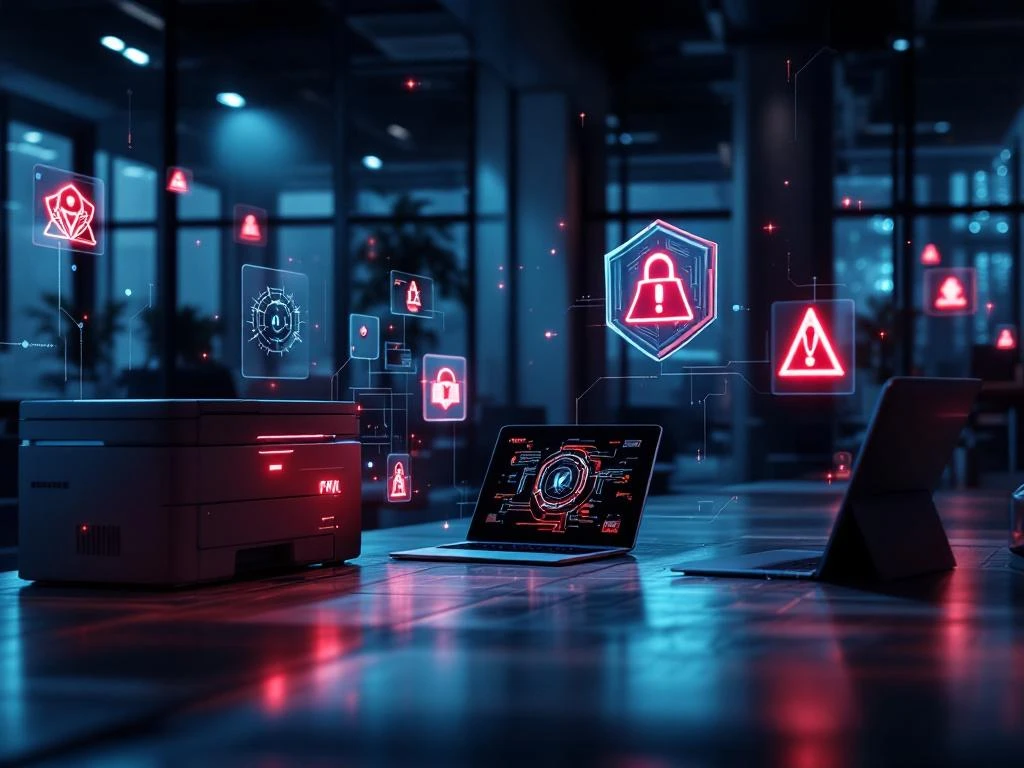
A smart office comes with various risks, including cybersecurity threats, privacy issues, technical malfunctions, and unexpected costs. Smart office solutions make you vulnerable to hacking of IoT devices, data theft, and privacy breaches through extensive employee monitoring. You may also experience system failures, compatibility issues, and higher-than-expected maintenance costs.
What are the biggest security risks of a smart office?
Smart offices are vulnerable to cybersecurity attacks because every connected device is a potential entry point for hackers. IoT devices such as smart thermostats, security cameras, and access controls often have weak default security settings and are not updated regularly.
The biggest security risks are:
- Hacking IoT devices with weak passwords
- Data theft via unsecured network connections
- Malware infections spreading through the office network
- Unauthorized access to sensitive company data
These threats can lead to data leaks, industrial espionage, and disruption to your daily business operations. For example, a hacked access system could allow unauthorized individuals to gain access to your office, while compromised sensors could transmit incorrect information.
You can limit these risks by using strong passwords, performing regular software updates, and segmenting your network. Also, make sure you have a firewall that is specifically configured for IoT devices.
How significant is the privacy risk associated with smart office solutions?
Smart offices collect extensive data about employees, from movement patterns to work habits. Sensors record when you arrive, how long you are away from your desk, and even your body temperature. This information can lead to privacy violations and a feeling of constant monitoring.
The main privacy risks are:
- Tracking employee behavior without explicit consent
- Storage of personal data on unsecure servers
- Resale of data to third parties
- Non-compliance with GDPR legislation
This type of monitoring can damage trust between employer and employee. Employees may feel that they are being watched and judged based on data rather than work performance. In addition, as an employer, you run the risk of fines if you do not comply with privacy legislation.
Transparency is important here. Clearly explain what data you collect, why you do so, and how you protect employee privacy. Where possible, provide opt-in options and minimize data collection to what is truly necessary.
What technical problems can you expect with smart office systems?
System failures and compatibility issues are the most common technical challenges in smart offices. Different devices from different manufacturers do not always work well together, which can lead to frustration and lost productivity.
Common technical issues include:
- Network overload due to too many connected devices
- Software bugs in new updates
- Incompatibility between different brands and systems
- Failure of central servers that control all systems
When your smart lighting stops responding or your access system fails, it can disrupt your entire working day. Employees can literally be locked out or have to work in poorly lit areas. Climate control systems can also malfunction, making the workplace uncomfortable.
Ensure backup systems and manual overrides for critical functions. Always test new updates on a small part of your system first before rolling them out widely. Also keep traditional alternatives available for when the technology fails.
What are the financial risks of investing in a smart office?
Investments in a smart office can end up being more expensive than planned due to unexpected costs for maintenance, updates, and training. The initial purchase price is often only the beginning of the actual costs.
The biggest financial risks are:
- Higher energy bills due to devices that are always switched on
- Expensive software licenses and subscriptions
- Frequent hardware replacements due to rapid technological developments
- Training costs for employees
- Maintenance by specialized technicians
Technology ages quickly, which means that your systems may become obsolete within a few years. Suppliers may also discontinue support for older models, forcing you to upgrade.
Create a realistic multi-year budget that takes all ongoing costs into account. Choose suppliers with a good reputation and long-term support. Also consider whether you really need all the smart features or whether a phased implementation would be more sensible.
How Wout Monseurs assists with smart office risk management
We help companies implement smart office solutionssafely and responsibly through careful planning and selection of reliable suppliers. Our team takes a well-considered approach, identifying risks in advance and taking appropriate measures.
We guide you through the entire process, from drawing up a realistic budget to training your employees. Thanks to our many years of experience, we know which systems work well together and where potential problems can arise. We also ensure clear agreements on maintenance and support.
Want to know how you can minimize smart office risks? Contact us for personalized advice tailored to your specific situation and budget.
Frequently asked questions
How can I prepare my employees for the introduction of a smart office?
Start by clearly communicating what changes are coming and why. Organize training sessions before the systems go live and ensure a gradual transition. Appoint 'smart office ambassadors' who can help colleagues with questions. Allow for an adjustment period of several weeks during which employees can get used to the new technology.
What should I do if my smart office systems are hacked?
Immediately isolate all compromised devices from the network and switch to manual systems. Change all passwords, document the breach, and report it to the Data Protection Authority within 72 hours if personal data is involved. Have a cybersecurity specialist examine the system before bringing everything back online.
Can I implement a smart office in phases to limit risks?
Yes, a phased approach is even recommended. For example, start with smart lighting and climate control before moving on to more complex systems such as access control or extensive monitoring. This gives you time to gain experience, solve problems, and better plan your budget for subsequent phases.
How can I prevent my smart office investment from becoming worthless due to outdated technology?
Opt for open standards and systems that can communicate with different brands. Select suppliers with a proven track record and long-term support. Ensure you have modular systems that you can upgrade without having to replace everything. Also, set aside an annual budget for updates and any replacements.
What legal aspects do I need to take care of before implementing a smart office?
Establish a clear privacy policy that complies with the GDPR and inform employees about data collection. Contractually arrange who is responsible for data security at suppliers. Obtain consent from employees where necessary and document all agreements regarding data ownership and access. Consult with a legal advisor about labor law implications.
How do I calculate the actual Total Cost of Ownership (TCO) of a smart office?
Add to the purchase costs: monthly software licenses, energy costs, maintenance, training, insurance, and planned replacements over 5-7 years. Also factor in an additional 15-20% budget for unforeseen costs and upgrades. Compare these total costs with the expected savings on energy, maintenance, and productivity to determine the actual ROI.