

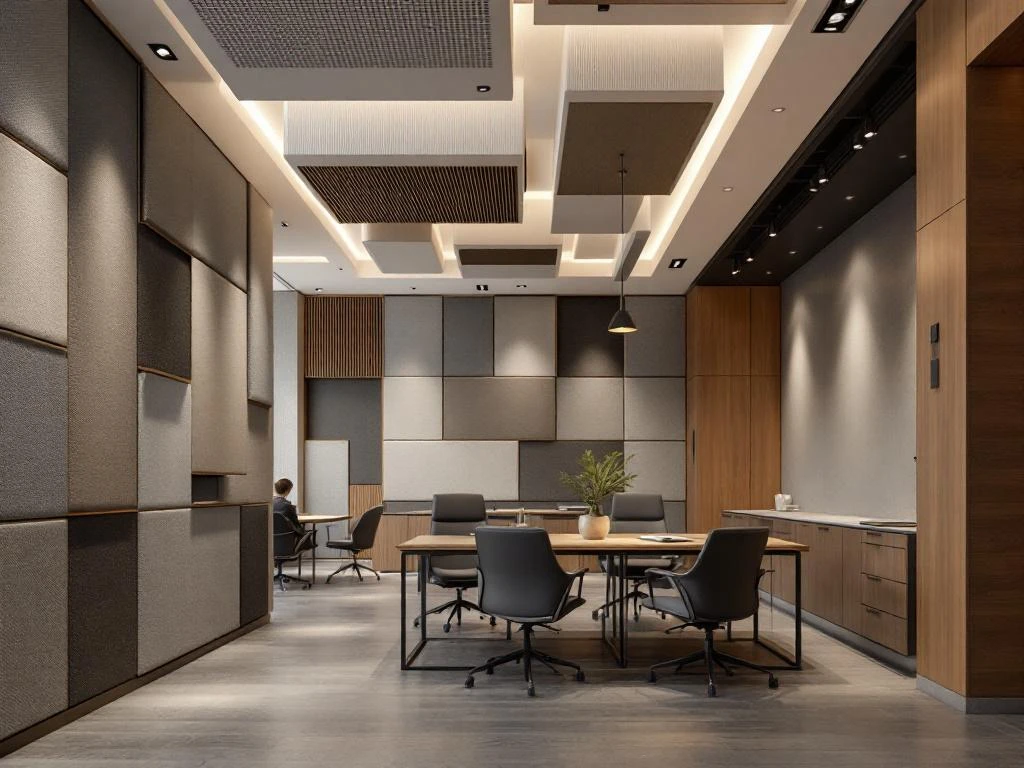
Akoestiek speelt een belangrijke rol in professionele projectinrichting, omdat het direct invloed heeft op de productiviteit, concentratie en het welzijn van werknemers. Een goed akoestisch ontwerp vermindert geluidsoverlast, verbetert de werkomgeving en zorgt voor een prettigere werkplek. Bij projectinrichting worden akoestische elementen vanaf het begin meegenomen in het ontwerp om optimale werkresultaten te bereiken.
Waarom is akoestiek zo belangrijk voor productiviteit op kantoor?
Geluidsoverlast vermindert de productiviteit van werknemers met wel 15 procent en veroorzaakt stress, concentratieproblemen en vermoeidheid. Werknemers in lawaaiige kantoren maken meer fouten, hebben moeite met complexe taken en ervaren meer werkgerelateerde stress.
Het menselijk brein is constant bezig met het verwerken van geluidsprikkels, ook wanneer je je probeert te concentreren op je werk. Ongewenste geluiden, zoals gesprekken van collega’s of rinkende telefoons, verstoren je gedachtegang en maken het moeilijk om diep na te denken. Je hebt tijd nodig om je concentratie weer op te bouwen nadat je bent afgeleid door geluid.
Werknemers in kantoren met goede akoestiek rapporteren minder hoofdpijn, minder stress en een hoger energieniveau aan het eind van de werkdag. Ze kunnen beter samenwerken, omdat gesprekken niet door het hele kantoor te horen zijn. Dit creëert een rustigere en professionelere werkomgeving waar iedereen beter kan presteren.
Welke geluidsproblemen komen het meest voor in kantoren?
Gesprekken van collega’s zijn de grootste bron van geluidsoverlast in kantoren, gevolgd door telefoongeluiden, printers, airconditioning en verkeer van buitenaf. Open kantoorconcepten versterken deze problemen, omdat er weinig barrières zijn om geluid tegen te houden.
In moderne kantoren zorgen harde oppervlakken zoals glas, beton en staal ervoor dat geluid weerkaatst en versterkt wordt. Telefoonconferenties in open ruimtes, het getik van toetsenborden, rollende bureaustoelen en het openen en sluiten van laden dragen allemaal bij aan de geluidsoverlast. Ook technische installaties, zoals ventilatiesystemen en printers, produceren constant achtergrondgeluid.
Verschillende zones in het kantoor hebben verschillende geluidsproblemen. Nabij de receptie hoor je veel bezoekers en telefoonverkeer. In werkgebieden domineren gesprekken tussen collega’s en presentaties. Nabij de keuken of koffiehoek ontstaat geluid door apparatuur en sociale interacties. Het identificeren van deze specifieke geluidsbronnen helpt bij het kiezen van de juiste oplossingen.
Hoe kun je akoestische problemen herkennen in je werkruimte?
Akoestische problemen herken je aan klachten van werknemers over concentratieproblemen, hoofdpijn en vermoeidheid. Ook wanneer mensen hun stem moeten verheffen om verstaan te worden of regelmatig worden afgeleid door geluiden uit andere delen van het kantoor, wijst dit op akoestische uitdagingen.
Let op gedragsveranderingen bij je werknemers. Dragen ze vaker koptelefoons? Zoeken ze rustige plekjes op om te bellen? Klagen ze over vermoeidheid of concentratieproblemen? Dit zijn signalen dat de akoestiek niet optimaal is. Je kunt ook zelf door het kantoor lopen en luisteren waar gesprekken van ver te horen zijn of waar echo’s ontstaan.
Een eenvoudige test is de ‘klaptest’: klap hard in je handen in verschillende ruimtes. Hoor je een echo of nagalm? Dan weerkaatst het geluid te veel en heb je akoestische maatregelen nodig. Ook kun je apps gebruiken die geluidsniveaus meten. Kantoren zouden niet boven de 55 decibel moeten uitkomen voor geconcentreerd werk.
Welke akoestische oplossingen zijn er voor kantoren?
Geluidsabsorberende panelen, akoestische scheidingswanden, tapijt en speciale plafondoplossingen zijn de meest effectieve manieren om de kantoorakoestiek te verbeteren. Deze materialen absorberen geluid in plaats van het te laten weerkaatsen, waardoor de ruimte rustiger wordt.
Wandpanelen van akoestisch materiaal kun je strategisch plaatsen op plekken waar veel geluid wordt geproduceerd. Denk aan muren nabij werkplekken, vergaderruimtes of telefooncellen. Akoestische scheidingswanden creëren rustige zones zonder de openheid van het kantoor volledig weg te nemen. Ze zijn verkrijgbaar in verschillende hoogtes en designs die bij je interieur passen.
Zachte vloerbedekking, zoals tapijt of speciale akoestische vloeren, dempt voetstappen en het geluid van rollende stoelen. Plafondoplossingen, zoals akoestische tegels of hangende elementen, vangen geluid op dat anders zou weerkaatsen. Ook meubelkeuzes maken verschil: gestoffeerde stoelen, boekenkasten en planten helpen bij het absorberen van geluid. Telefooncellen of rustige werkpods bieden werknemers de mogelijkheid om zich terug te trekken voor geconcentreerd werk.
Hoe Wout Monseurs helpt met akoestische projectinrichting
Wij integreren akoestische oplossingen vanaf het begin in elke projectinrichting, zodat je kantoor niet alleen mooi wordt, maar ook optimaal functioneert voor productief werk. Onze ervaring met meer dan 60 jaar kantoorinrichting helpt ons de juiste balans te vinden tussen design, functionaliteit en akoestiek.
Tijdens de ruimtestudie analyseren we de akoestische uitdagingen in je kantoor en werken we oplossingen uit die passen bij jouw werkwijze en budget. We combineren akoestische panelen, speciale vloeren, plafondoplossingen en meubelkeuzes tot een samenhangend geheel. Ons 3D-ontwerp laat je precies zien hoe de akoestische elementen eruitzien en waar ze geplaatst worden.
We werken met hoogwaardige akoestische producten die zowel functioneel als esthetisch zijn. Van stijlvolle wandpanelen tot praktische scheidingswanden – alles wordt afgestemd op je bedrijfsidentiteit. Wil je weten hoe we jouw kantoor akoestisch kunnen optimaliseren? Neem dan contact met ons op voor een vrijblijvend gesprek over de mogelijkheden.
Veelgestelde vragen
Wat zijn de kosten voor het verbeteren van de kantoorakoestiek?
De kosten variëren sterk afhankelijk van de grootte van het kantoor en gekozen oplossingen. Eenvoudige maatregelen zoals akoestische panelen kosten vanaf €50-150 per m², terwijl complete akoestische renovaties €200-500 per m² kunnen kosten. Een professionele akoestische analyse helpt bij het bepalen van de meest kosteneffectieve aanpak voor jouw situatie.
Hoe lang duurt het voordat werknemers resultaat merken van akoestische verbeteringen?
Werknemers merken direct verschil zodra akoestische oplossingen zijn geïnstalleerd. Binnen een week rapporteren de meeste mensen minder vermoeidheid en betere concentratie. De volledige impact op productiviteit en welzijn wordt meestal binnen 2-4 weken duidelijk, wanneer werknemers gewend zijn aan de nieuwe, rustigere werkomgeving.
Kunnen akoestische oplossingen ook bij bestaande kantoorinrichtingen worden toegevoegd?
Ja, de meeste akoestische oplossingen kunnen probleemloos worden toegevoegd aan bestaande kantoren. Wandpanelen, hangende plafondabsorbenten en akoestische scheidingswanden zijn eenvoudig te installeren zonder grote verbouwingen. Alleen bij vloervervanging of ingrijpende plafondaanpassingen is meer werk nodig.
Welke akoestische oplossing geeft het meeste resultaat voor de minste investering?
Akoestische wandpanelen op strategische plekken bieden meestal de beste prijs-prestatieverhouding. Plaats ze vooral nabij werkplekken waar veel gesproken wordt en op wanden tegenover harde oppervlakken. Ook zachte vloerbedekking in loopgebieden maakt direct hoorbaar verschil tegen relatief lage kosten.
Hoe onderhoud je akoestische materialen in kantoren?
De meeste moderne akoestische materialen zijn onderhoudsarm. Stoffige panelen kun je afzuigen met een zachte borstel, en veel producten hebben stof- en vlekwerende behandelingen. Vervang akoestische materialen gemiddeld elke 7-10 jaar, afhankelijk van gebruik en kwaliteit. Regelmatige reiniging houdt ze effectief en hygiënisch.
Wat gebeurt er als je te veel akoestische materialen gebruikt in een kantoor?
Overmatig gebruik van akoestische materialen kan leiden tot een ‘dode’ ruimte die onnatuurlijk stil aanvoelt en communicatie bemoeilijkt. Het ideaal is een balans waarbij achtergrondgeluid wordt gedempt maar normale gesprekken nog mogelijk zijn. Een professionele akoestische analyse voorkomt dit probleem door de juiste hoeveelheid absorptie te berekenen.