

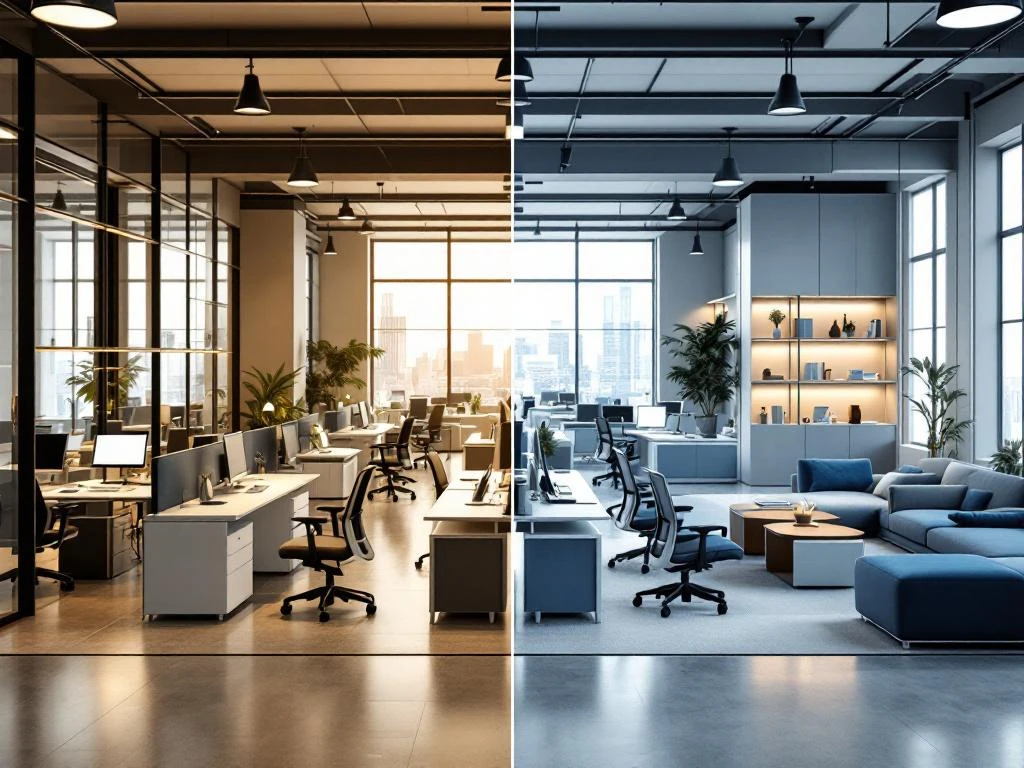
You can design almost any space in a modular way, from offices and living rooms to restaurants and shops. Modular design works best in spaces that require flexibility or where the function changes regularly. Think of open-plan offices, multifunctional meeting rooms, small apartments, and growing business premises. The key lies in choosing furniture and elements that you can easily move, combine, or adapt to new needs.
What does modular design actually mean?
Modular design means using furniture and elements that you can combine, move, and adjust without major renovations. You work with separate components that act as building blocks for your space. Think of desks that you can expand, cabinets that you can stack or move, and partitions that you can place as needed.
The core principle is flexibility without compromising on functionality. Modular furniture is designed to allow for multiple configurations. For example, a conference table consists of separate elements that you can arrange for a small meeting or expand for a large presentation.
The advantages are clear: you can adapt your space without buying new furniture. When your team grows, you can easily add extra workspaces. When you move, you can take everything with you and set up your new space again. This saves money and ensures that your interior design always suits your current situation.
Which office spaces are best suited for modular design?
Open workspaces, meeting rooms, reception areas, and flexible zones benefit most from modular design. These spaces regularly change function or have varying occupancy. Modular solutions make it possible to adapt quickly without major investments.
Open workspaces are ideal for modular desks and storage cabinets. You can create work islands that can be expanded when new colleagues join or reduced in size during reorganizations. Mobile cabinets serve as temporary partitions and also provide storage space.
Meeting rooms benefit from modular tables and chairs. For small meetings, you can use a compact setup; for workshops, you can create group tables; and for presentations, you can arrange all the chairs facing the screen. Flexible lighting and whiteboards on wheels complete the transformation.
Reception areas and lounge areas can be rearranged for different seasons or special events. Modular seating allows you to create cozy corners or open spaces for networking events.
How do you apply modular design in small spaces?
In small spaces, focus on multifunctional furniture and vertical storage solutions. Choose desks with built-in storage space, folding tables that can be placed against the wall, and stackable chairs that you can store away when you don't need them. Every square meter must serve a dual purpose.
Vertical solutions are your best friends in compact offices. Tall, narrow cabinets make optimal use of the height. Wall brackets for monitors create desk space. Magnetic whiteboards on the wall replace large flipcharts that take up floor space.
Multifunctional furniture is indispensable in small spaces. A high table serves as a standing workspace and meeting area. Storage benches offer seating and storage space. Mobile drawers fit under any desk and can be moved to wherever you need them.
Plan your layout smartly by creating overlapping zones. Your workspace becomes a dining area after office hours. The meeting corner transforms into a relaxation area. With modular furniture, you can make these transformations in minutes.
What advantages does modular design offer growing companies?
Modular furnishings grow with your business without you having to constantly buy new furniture. You invest once in high-quality, flexible elements that you can expand as your team grows. This prevents expensive replacements and ensures a consistent look.
Financially speaking, you will save considerably in the long term. Instead of buying completely new furniture every time you make a change, you only need to purchase additional modules. With a modular desk system, you can start with four workstations and expand to twenty without replacing your existing furniture.
Organizational changes are less stressful with modular office design. New departments can quickly be given their own space by rearranging existing elements. Teams that work together can be placed together without renovations. Project groups are given temporary extra meeting space.
This flexibility also facilitates experimentation with new ways of working. Would you like to try hybrid working? Temporarily reduce the number of permanent workstations. Would you like to encourage more collaboration? Replace individual desks with team tables. Everything is possible without major investments or long lead times.
How Wout Monseurs assists with project design
We understand that every space is unique and has different requirements for modular solutions. Our project design always starts with listening to your specific needs and future plans. We design modular systems that not only function perfectly today, but also grow with your organization.
With over 60 years of experience, we know which modular solutions really work in practice. We work with high-quality brands that combine durability and flexibility. Our team guides you from the initial design to installation and ensures that your team can take full advantage of the new layout.
Would you like to discover how modular design can transform your space? Contact us for a no-obligation consultation. We will visit your location, discuss your requirements, and draw up a proposal that perfectly matches your budget and ambitions.
Frequently asked questions
How do I know if my existing furniture is suitable for modular design?
Ensure that your furniture is easy to move, has standard dimensions, and combines well with other elements. Furniture with casters, stackable parts, or universal connections is usually suitable. If you are unsure, our specialists can assess which existing furniture you can keep and which you should replace during a consultation.
What are the costs of modular furnishings compared to traditional office furniture?
The initial investment may be slightly higher, but you will save significantly in the long term because you will not need to replace the entire system when changes are required. Modular systems have a lower Total Cost of Ownership due to their flexibility and durability. We would be happy to perform a cost analysis for your specific situation to provide insight into the savings.
How long does it take to set up a fully modular office?
A complete modular installation usually takes 2-4 weeks, depending on the size of your space and the complexity of the project. The advantage is that you can continue working during installation because we work in phases. Minor adjustments to existing modular installations can often be completed within a few days.
Can I take modular furniture with me when moving to another building?
Yes, that is precisely one of the major advantages of modular design. The furniture is designed to be easily dismantled and reassembled. We are happy to help you plan your move and redesign your new space so that you can make the most of your existing investment.
What common mistakes should I avoid when designing a modular layout?
Avoid purchasing too many different systems that are incompatible, and plan not only for your current situation but also for future growth. Another mistake is underestimating storage space or ignoring ergonomic aspects. Our advisors will help you avoid these pitfalls through careful planning.
How do I maintain modular office furniture and how long does it last?
High-quality modular furniture will last 15-20 years with proper maintenance. Regular vacuuming, cleaning with mild detergents, and lubricating moving parts is usually sufficient. We provide maintenance manuals and offer service contracts for more complex systems, ensuring that your investment remains optimally protected.