

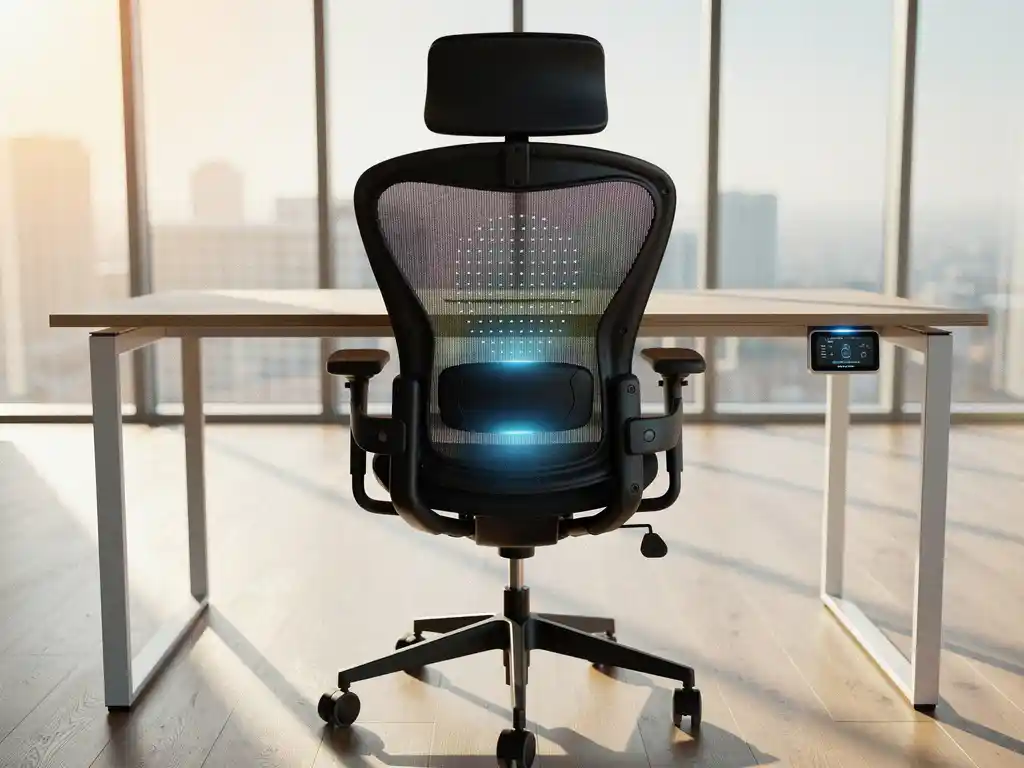
Modern workplaces are evolving into smart environments where technology and employee well-being go hand in hand. Smart sensors in the office environment play a crucial role in this by enabling continuous monitoring of ergonomic factors and workplace conditions.
This advanced sensor technology not only helps companies improve the health and productivity of their employees, but also provides valuable insights for optimizing office environments. From posture monitoring to climate control, ergonomic sensors are transforming the way we approach workplace optimization.
What are ergonomic sensors, and how do they work in the workplace?
Ergonomic sensors are intelligent monitoring devices that track body posture, movement, and environmental factors in the workplace to identify health risks and optimize employee well-being. These sensors collect real-time data on sitting posture, screen distance, lighting levels, and other ergonomic parameters.
These sensors operate using a variety of technologies. Motion sensors use accelerometers and gyroscopes to detect body movements, while pressure sensors in chairs and desks collect data on sitting patterns. Environmental sensors measure factors such as air quality, temperature, and noise levels that affect workplace comfort.
The collected data is transmitted via wireless connections to central systems, where algorithms analyze patterns and generate alerts in the event of potential health risks. This smart office technology integrates seamlessly with existing office automation systems and provides managers with insights into the ergonomic quality of their workspaces.
What types of sensors monitor employees' posture?
Posture sensors include wearable devices, desk sensors, and camera-based systems that monitor neck position, back posture, and arm positions to prevent repetitive strain injuries and musculoskeletal disorders. These sensors detect deviations from optimal working positions and provide real-time feedback.
Wearable sensors are often attached to clothing as small devices or integrated into wearables. They measure the angle of the back, neck rotation, and shoulder position throughout the workday. When an employee remains in an unhealthy posture for too long, these sensors emit a vibration or send an app notification.
Desktop-integrated sensors are built into chairs, desks, or keyboards. Pressure sensors in chair seats detect when someone has been sitting in the same position for too long, while sensors in mouse pads monitor wrist positions. Camera-based systems use computer vision to analyze head position and eye distance from the screen, without infringing on privacy.
Modern systems combine multiple types of sensors to provide a comprehensive picture of work posture. They learn individual movement patterns and tailor alerts to personal work habits, thereby increasing the effectiveness of ergonomic interventions.
How do sensors measure environmental factors in the office?
Environmental sensors measure air quality, temperature, humidity, noise levels, and light quality using specialized measuring instruments that enable continuous monitoring and trigger automatic adjustments when values fall outside optimal ranges.
Air quality sensors detect CO2 levels, particulate matter, and volatile organic compounds that affect concentration and well-being. When CO2 levels become too high, these sensors can automatically activate ventilation systems or alert managers to make necessary adjustments.
Temperature and humidity sensors ensure optimal environmental conditions by controlling HVAC systems. Noise sensors measure decibel levels and can automatically activate white noise systems in open-plan office environments when it becomes too noisy to concentrate on work.
Light sensors analyze both natural and artificial light, measuring color temperature and intensity. Smart lighting systems automatically adjust based on daylight and individual preferences, reducing eye strain and supporting the circadian rhythm.
What are the benefits of ergonomic sensors for businesses?
Ergonomic sensors reduce absenteeism by 15–30%, boost productivity by improving working conditions, and lower the costs associated with work-related health issues. At the same time, they help companies proactively optimize employee well-being rather than reactively addressing problems.
The main benefit lies in the prevention of musculoskeletal disorders, which account for a large proportion of work-related absenteeism. Through early detection, companies can implement interventions before serious health problems arise, resulting in significant cost savings on absenteeism and replacement staff.
Productivity benefits are evident in improved concentration and reduced fatigue. Employees in optimized environments report higher energy levels and better focus, which directly translates into improved business results. Data-driven insights help managers make informed decisions about office design and workplace policies.
Today’s employees value companies that invest in their well-being, which helps with talent retention and employer branding. Sensor technology demonstrates a commitment to employee health and positions organizations as forward-thinking employers in a competitive job market.
How do you choose the right sensors for your office environment?
The choice of ergonomic sensors depends on the type of office, employee density, budget, and specific health risks. Open-plan offices have different sensor requirements than individual workspaces, and hybrid work environments have yet other requirements.
Start by conducting an ergonomic risk assessment of your workplace. Identify the most common complaints among employees and determine which environmental factors are the most problematic. Offices where employees spend a lot of time working at computer screens have different priorities than manufacturing environments or creative spaces.
Consider the integration options with existing systems. Sensors that communicate with your current building management systems offer greater value than standalone solutions. Privacy is crucial: choose systems that collect anonymous data and are transparent about how that data is used.
Start small with a pilot project in a single department or on a single floor to test its effectiveness before rolling it out office-wide. Evaluate its user-friendliness and acceptance among employees, as adoption is essential to the success of ergonomic technology.
How Wout Monseurs Helps with Smart Office Solutions
We integrate advanced ergonomic sensors into our complete office furnishings and offer a comprehensive solution for smart workplace optimization. Our Smart Office technology combines sensor monitoring with ergonomic furniture design to promote optimal employee well-being.
Our services include:
- Implementation of IoT sensors for real-time workplace monitoring
- Integration with smart lighting and climate control systems
- Choosing ergonomic furniture based on sensor data
- Training and support for the optimal use of sensor technology
- Ongoing monitoring and optimization of office environments
With over 60 years of experience in office design, we understand how technology and ergonomics work together to create a healthy work environment. Contact us for a no-obligation consultation on implementing smart sensors in your office environment.
Frequently asked questions
How long does it take for ergonomic sensors to show results?
Most companies see the first positive results within 2–4 weeks, such as increased awareness of posture among employees. Measurable improvements in absenteeism and productivity usually become apparent after 2–3 months, once employees have adjusted their behavior in response to the sensor feedback.
Do ergonomic sensors invade employees' privacy?
Modern ergonomic sensors are designed with privacy-by-design principles in mind and collect only anonymous motion and environmental data. They do not record personal information, conversations, or video footage. Transparent communication about data usage and involving employees in the implementation process significantly increases acceptance.
What is the cost of implementing ergonomic sensors?
The investment ranges from €50–200 per workstation for basic sensors to €500–1,000 for complete systems with environmental monitoring. The payback period averages 6–12 months due to reduced absenteeism and increased productivity. Many companies start with a pilot project involving 10–20 workstations to demonstrate the ROI.
Can sensors be integrated with existing office automation systems?
Yes, most modern ergonomic sensors communicate via standard IoT protocols such as Wi-Fi, Bluetooth, or Zigbee and can be easily integrated with existing building management systems. This enables automatic adjustments to lighting, temperature, and ventilation based on real-time sensor data.
How do you deal with employees who are resistant to sensor monitoring?
Successful change management starts with transparent communication about the benefits for employee well-being, not corporate control. Organize information sessions, start with voluntary participation, and let the positive experiences of early adopters help build support. Emphasize that sensors help improve their comfort and health at work.
What technical support is needed after the sensors are installed?
Once installed, these systems require minimal maintenance: battery replacement (every 1–2 years), software updates, and periodic calibration. Most suppliers offer cloud-based dashboards with automatic alerts and remote monitoring. It is recommended to have a dedicated IT contact person for troubleshooting and user support.
Can ergonomic sensors also work in hybrid work environments?
Modern sensor systems are ideally suited for flexible workspaces that incorporate hot-desking and hybrid work arrangements. Wearable sensors follow employees as they move between different workstations, while desk sensors automatically detect new users. Cloud-based systems ensure continuous monitoring regardless of the work location.