

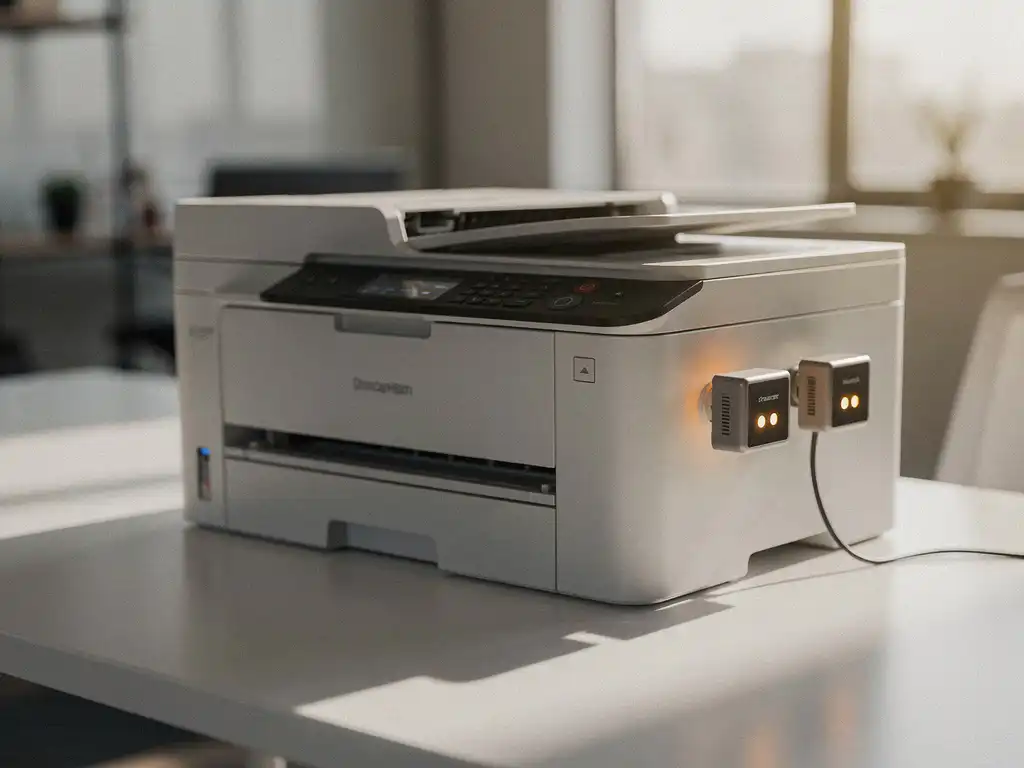
Modern office environments are becoming increasingly smart thanks to the integration of advanced sensor technology. Smart sensors in the office environment can detect equipment malfunctions before they lead to costly downtime, enabling companies to schedule proactive maintenance and ensure operational continuity.
These intelligent monitoring systems transform traditional office management from reactive to predictive, with real-time data providing insights into the performance of critical equipment, such as printers, HVAC systems, and IT infrastructure.
What are sensors for early fault detection?
Sensors for early fault detection are intelligent devices that continuously measure physical parameters and flag anomalies before full-scale equipment failures occur. These smart sensors in the office environment monitor vibrations, temperature, noise levels, and other critical indicators to identify potential issues.
These sensors operate on the principle of predictive maintenance, combining historical data and real-time measurements to identify patterns that indicate impending failures. Using algorithms and machine learning, the systems can distinguish between normal operational variations and genuine warning signs.
The benefits of early detection are significant: on average, a 25–30% reduction in unplanned downtime, lower repair costs due to timely intervention, and a longer service life for equipment. In office environments, this translates to less productivity loss due to malfunctioning printers, more stable climate control, and more reliable IT systems.
What types of sensors detect different kinds of malfunctions?
Different types of sensors are designed to detect specific failure patterns: vibration sensors for mechanical wear, temperature sensors for overheating, and acoustic sensors for unusual noises that indicate internal problems.
Vibration sensors are particularly effective for rotating equipment, such as fans in printers and HVAC systems. These sensors detect changes in vibration amplitude and frequency that may indicate bearing failures, imbalance, or mechanical wear. Modern vibration sensors can measure down to the micrometer level.
Temperature sensors monitor heat generation in electrical components and mechanical parts. Sudden temperature spikes can indicate electrical problems, blocked ventilation, or overloading. Infrared temperature sensors can detect hotspots in electrical panels and printer circuits without physical contact.
Acoustic sensors analyze the sound signatures of equipment to detect abnormal noises. Changing sound patterns can serve as early indicators of mechanical problems, even before vibration sensors detect any anomalies. This technology is particularly valuable for complex equipment, such as multifunction printers.
How do IoT sensors work for equipment monitoring?
IoT sensors for equipment monitoring continuously collect data via wireless networks and send it to cloud-based analytics systems that generate real-time insights and trigger automatic alerts when abnormal patterns are detected.
The IoT ecosystem consists of three main components: the sensors themselves, which measure physical parameters; wireless communication protocols such as Wi-Fi, Bluetooth, or LoRaWAN for data transmission; and cloud platforms that analyze data and generate dashboards. This integration enables remote monitoring from any location.
Machine learning algorithms analyze historical data to establish normal operating parameters and identify anomalies. The system learns from patterns and becomes more accurate at predicting failures as more data becomes available. Advanced systems can even factor seasonal variations and usage patterns into their analyses.
Practical implementation requires strategic sensor placement at critical measurement points, configuration of alert thresholds, and integration with existing maintenance processes. Modern IoT sensors have a battery life of 2–5 years and can self-calibrate for optimal accuracy.
Which office equipment benefits most from sensor monitoring?
Multifunction printers, HVAC systems, and equipment in server rooms benefit most from sensor monitoring, as these devices are critical to day-to-day operations and can result in relatively high maintenance costs in the event of unplanned outages.
Printers and copiers are ideal candidates because they contain complex mechanical systems with many moving parts. Sensors can predict paper jams by monitoring paper feed systems, detect toner transfer issues through temperature monitoring, and identify mechanical wear through vibration and noise analysis.
HVAC systems in office buildings contain valuable components such as compressors, fans, and pumps that benefit from predictive maintenance. Temperature, pressure, and vibration sensors can detect energy waste, flag filter contamination, and identify mechanical issues before a complete system failure occurs.
IT infrastructure, such as servers, network equipment, and UPS systems, requires continuous availability. Temperature monitoring prevents overheating, power sensors detect electrical anomalies, and vibration sensors can provide early warning of hard drive issues. This monitoring is essential for preventing data loss and system downtime.
What are the costs and benefits of predictive maintenance sensors?
Predictive maintenance sensors cost between €50 and €500 per sensor, depending on their complexity, but typically deliver a return on investment (ROI) of 300–500% through reduced downtime, lower repair costs, and a longer equipment lifespan, within 12–18 months of implementation.
The initial investment includes sensor hardware, installation costs, software licenses for data analysis platforms, and any necessary upgrades to the network infrastructure. Basic temperature and vibration sensors start at around €50–100, while advanced multi-parameter sensors can cost €200–500. Cloud-based analysis platforms typically charge €10–50 per sensor per month.
The financial benefits are substantial: unplanned downtime is reduced by an average of 70%, maintenance costs drop by 25% thanks to optimized scheduling, and equipment lifespan is extended by 20–30%. For a medium-sized office with 10 multifunction printers, this can result in annual savings of €15,000–25,000.
Operational benefits include increased employee productivity due to more reliable equipment, improved scheduling of maintenance activities, and reduced pressure on IT and facilities teams. The data insights also aid in budget planning and replacement strategies for office equipment.
How Wout Monseurs Helps with Smart Sensor Solutions
We integrate advanced sensor monitoring as part of our Smart Office solutions, deploying predictive maintenance sensors for your critical office equipment. Our expertise in both traditional office design and modern technology enables us to create comprehensive monitoring ecosystems.
Our sensor solutions include:
- IoT sensors for printer management with automatic toner monitoring and fault detection
- Smart climate monitoring that saves energy and optimizes comfort
- Integrated dashboards that provide real-time insights into equipment performance
- Preventive maintenance planning based on sensor data and usage patterns
As a family-owned business with over 60 years of experience, we combine traditional expertise with cutting-edge technology. Our project solutions seamlessly integrate smart sensors into your office environment, from design to implementation and maintenance.
Discover how smart sensors can transform your office efficiency. Contact us for a personalized consultation on predictive maintenance solutions that perfectly align with your business needs.
Frequently asked questions
How long does it take to fully implement a sensor system in our office?
Implementing a sensor system typically takes 2–4 weeks, depending on the size of the office and the complexity of the equipment. This includes sensor installation, network integration, dashboard configuration, and training for your team. Simple installations can be up and running within a week.
Can sensors also work with older office equipment that doesn't have IoT capabilities?
Yes, external sensors can be easily installed on older equipment that lacks built-in IoT functionality. Vibration, temperature, and noise sensors are mounted externally and communicate wirelessly with the monitoring system. This enables predictive maintenance for virtually all office equipment.
What happens if a sensor malfunctions or fails?
Modern sensor systems feature built-in self-diagnostics and automatically send alerts in the event of battery or connection issues. Most sensors have a battery life of 2–5 years and provide low-battery warnings weeks in advance. Redundant sensor placement on critical equipment prevents blind spots.
How accurate are sensor predictions of equipment failures?
Modern predictive maintenance sensors achieve an accuracy of 85–95% in predicting failures, depending on the type of equipment and the quality of historical data. Accuracy improves as the system collects more data and machine learning algorithms are better trained on your specific equipment.
Can we integrate sensor data with our existing maintenance or facility management software?
Ja, de meeste moderne sensorsystemen bieden API’s en standaard integraties met populaire facility management-platforms zoals IBM Maximo, SAP PM of Microsoft Dynamics. Dit maakt automatische werkorderaanmaak mogelijk en zorgt voor naadloze integratie in uw bestaande onderhoudsworkflow.
What privacy measures are in place for sensor data in office environments?
Sensoren voor apparatuurmonitoring verzamelen alleen technische data zoals temperatuur, trillingen en geluid – geen persoonlijke informatie. Data wordt versleuteld opgeslagen en getransmitteerd volgens GDPR-richtlijnen. U behoudt volledige controle over uw data en kunt kiezen voor on-premise of cloud-gebaseerde opslag.