

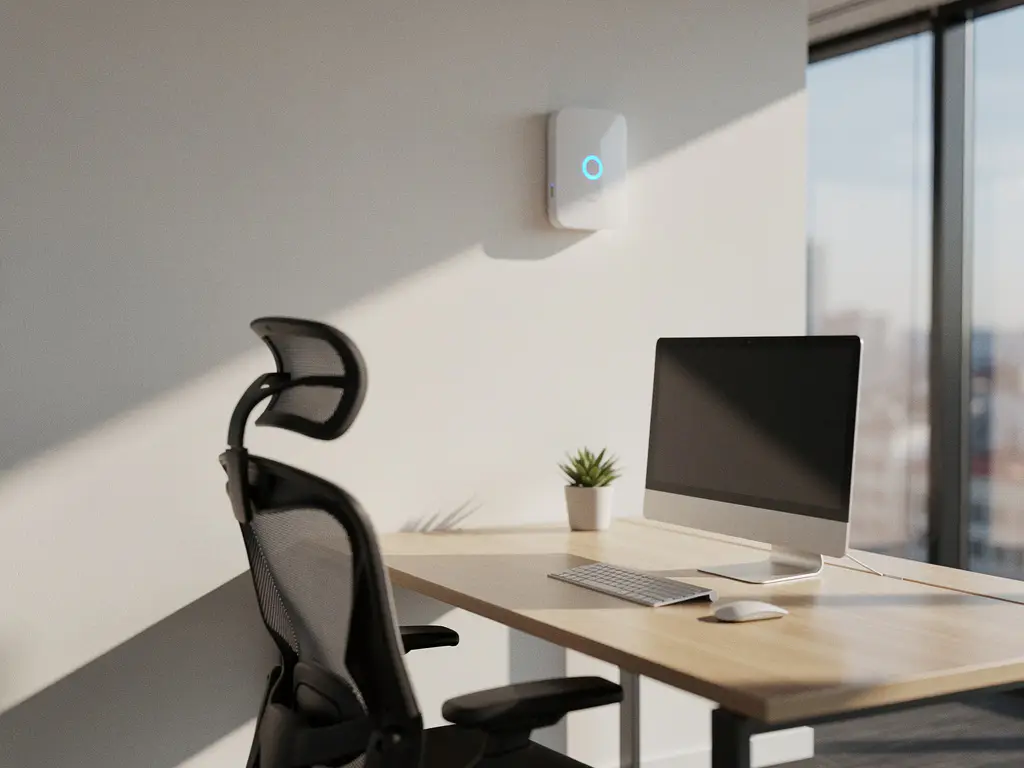
Indoor air quality in offices directly affects employees’ health and productivity. Modern offices may contain various chemicals that are invisible but can potentially harm indoor air quality. Smart sensors designed for office environments offer a reliable solution for detecting these hazards early on and ensuring a healthy work environment.
By using the right detection technology, organizations can proactively address air quality issues and protect the well-being of their employees. From volatile organic compounds to carbon monoxide, various chemical sensors play a crucial role in monitoring the office environment.
What chemical hazards are present in office air?
Office air contains various chemicals that can be harmful to health, including volatile organic compounds (VOCs) from office furniture, carbon dioxide from poor ventilation, formaldehyde from building materials, and ozone from printers and copiers.
The most common chemical hazards in offices are volatile organic compounds (VOCs) released from new furniture, carpets, and paint. These substances can cause headaches, fatigue, and irritation of the eyes and respiratory tract. Formaldehyde is another common pollutant released from particleboard, adhesives, and insulation materials.
Carbon monoxide can be produced by faulty heating systems or poorly maintained ventilation equipment. Although this is less common in modern offices, it remains a serious risk due to the colorless and odorless nature of this gas. In addition, printers and copiers produce ozone and ultrafine particles that can degrade air quality, especially in poorly ventilated areas.
How do chemical detection sensors work in offices?
Chemical detection sensors in offices work by identifying specific gases or substances in the air using various measurement principles, such as electrochemical reactions, infrared absorption, or semiconductor technology. They continuously monitor the environment and issue alerts when safe thresholds are exceeded.
Electrochemical sensors detect gases through chemical reactions that produce an electrical signal. These sensors are highly accurate for specific gases, such as carbon monoxide and oxygen. Infrared sensors measure the absorption of infrared light by gas molecules, which is particularly effective for carbon dioxide and methane.
Semiconductor sensors change their electrical resistance when they come into contact with certain gases. This technology is cost-effective and suitable for detecting VOCs and other organic vapors. Modern smart sensors for office environments often combine multiple detection technologies to monitor a wide range of chemicals.
The sensors are connected to a central monitoring system that collects and analyzes real-time data. If values deviate from the norm, automatic ventilation measures can be triggered, or facility managers can be alerted via mobile apps or dashboards.
What is the difference between different types of chemical sensors?
The main types of chemical sensors differ in detection method and application: electrochemical sensors offer high accuracy for specific gases, infrared sensors are ideal for carbon dioxide, semiconductor sensors detect a wide range of VOCs, and photometric sensors measure dust particles and aerosols.
Electrochemical sensors are the most accurate option for detecting toxic gases such as carbon monoxide, sulfur dioxide, and nitrogen oxides. They have a long service life and low power requirements, but are sensitive to temperature and humidity. These sensors are ideal for safety-critical applications.
Infrared sensors (NDIR) are highly stable and require minimal maintenance. They are ideal for measuring carbon dioxide concentrations and do not require calibration. Semiconductor sensors are cost-effective and can detect a wide range of VOCs, but they are less selective and may exhibit cross-sensitivity to various substances.
Photometric sensors measure light scattering caused by particles in the air and are essential for detecting dust, smoke, and other aerosols. Modern systems often combine multiple sensor types to provide a comprehensive picture of air quality.
Where should chemical sensors be placed in offices?
Chemical sensors should be strategically placed in areas where contamination is most likely to occur: near ventilation ducts, in conference rooms, near printer areas, in basements or utility rooms, and at various heights to ensure optimal coverage.
For VOC detection, sensors are most effective when placed near new furniture, carpets, or recently renovated areas. In meeting rooms, carbon dioxide sensors should be installed to monitor air quality when many people are present. Printer areas require specific sensors for ozone and ultrafine particles.
The height at which the sensor is placed is crucial, because different gases have different densities. Carbon dioxide sinks to the floor, so sensors should be placed at breathing height (1.2–1.5 meters). Carbon monoxide spreads evenly, while some VOCs rise toward the ceiling.
Avoid placing sensors near windows, doors, or ventilation grilles where air currents could affect the measurements. Ensure adequate coverage by installing sensors according to the recommended coverage area per sensor, typically one sensor per 100–200 square meters, depending on the type of space and the risk profile.
How do you interpret readings from chemical detection sensors?
Sensor readings are interpreted by comparing measured values with established safety limits and guidelines: carbon dioxide below 1,000 ppm for good air quality, VOCs below 300 µg/m³, and carbon monoxide below 10 ppm for safe office environments.
The following guidelines apply to carbon dioxide: levels below 800 ppm are excellent, 800–1,000 ppm are good, 1,000–1,500 ppm require improved ventilation, and levels above 1,500 ppm call for immediate action. These values are based on ASHRAE standards and Dutch building codes.
VOC measurements must be evaluated in the context of the specific substances involved. Total VOC (TVOC) levels below 300 µg/m³ are acceptable, levels between 300 and 500 µg/m³ require attention, and levels above 500 µg/m³ may pose health risks. Formaldehyde must remain below 100 µg/m³ according to WHO guidelines.
Trends are just as important as absolute values. Gradual increases may indicate a deterioration in ventilation systems or new sources of contamination. Sudden spikes require immediate investigation into possible causes, such as faulty equipment or chemical leaks.
How Wout Monseurs is helping with smart sensors for office environments
At Wout Monseurs, we integrate advanced Smart Office technology into our office design projects, including intelligent sensor systems for air quality monitoring. Our expertise in comprehensive office design enables us to seamlessly integrate sensor technology with ventilation, lighting, and climate control.
Our Smart Office solutions include:
- Real-time air quality monitoring using IoT sensors
- Automatic ventilation adjustments based on sensor data
- Dashboards for facility managers with alert systems
- Integration with existing building management systems
- Preventive maintenance based on sensor data
With over 60 years of experience, we combine traditional office design with cutting-edge technology to create healthy, productive work environments. Contact us to discover how smart sensor technology can transform your office environment into an intelligent, healthy workplace that ensures the well-being of your employees.
Frequently asked questions
How often should chemical sensors in offices be calibrated?
Most chemical sensors need to be calibrated every 6 to 12 months, depending on the type of sensor and environmental conditions. Electrochemical sensors typically require annual calibration, while semiconductor sensors should be calibrated every 6 months. Keep a log of calibrations and replace sensors according to the manufacturer’s recommendations.
What is the cost of installing a complete sensor system in an office?
The cost ranges from €50 to €200 per sensor, plus installation costs of €1,000 to €5,000 for an average office of 500 square meters. A complete system with a central monitoring dashboard typically costs €5,000 to €15,000, depending on the number of sensors and the complexity of the integration. The investment often pays for itself through improved productivity and lower absenteeism costs.
Can sensors trigger false alarms, and how can you prevent this?
Yes, sensors can trigger false alarms due to dust, extreme temperatures, high humidity, or interference from other devices. Prevent this by cleaning sensors regularly, avoiding placement near heat sources or ventilation grilles, and using sensors with built-in temperature and humidity compensation. Also, set realistic thresholds that take normal office activities into account.
How long does it take for new sensors to provide reliable readings?
Most chemical sensors require a 24- to 48-hour stabilization period after installation before they provide stable readings. Electrochemical sensors may take up to a week to fully stabilize. Therefore, schedule the installation well in advance of important measurements and monitor the system particularly closely during the first week to detect any anomalies.
What should you do when sensors detect dangerous levels?
If hazardous levels are detected, immediately increase ventilation, identify the source of the contamination, and evacuate the area if necessary. Document the incident, check whether other sensors are measuring similar levels, and consult a specialist if the cause is unclear. Ensure there is a clear protocol in place that all employees are familiar with for emergency situations.
Can smart sensors integrate with existing climate control systems?
Yes, modern smart sensors can integrate with existing HVAC systems via standard protocols such as BACnet, Modbus, or wireless connections. This enables automatic ventilation adjustments based on real-time air quality data. Be sure to check the compatibility of your current system and consider an upgrade if integration is complex.
How long do chemical sensors last, and when should they be replaced?
Electrochemical sensors typically last 2–3 years, infrared sensors can last 10–15 years, and semiconductor sensors have a lifespan of 3–5 years. Replace sensors when they no longer calibrate accurately, produce inconsistent readings, or their response time becomes noticeably slower. Plan replacements proactively to avoid interruptions in monitoring.