

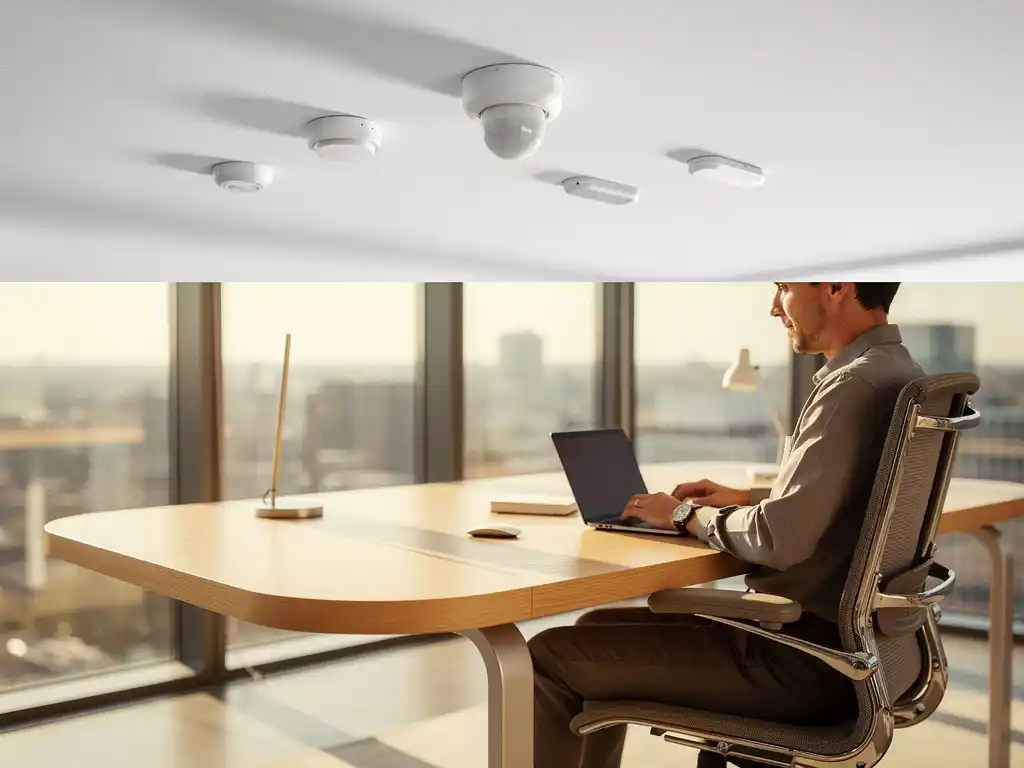
De moderne werkplek evolueert razendsnel naar een slimme, geconnecteerde omgeving waarin technologie en menselijk welzijn hand in hand gaan. Slimme sensoren in de kantooromgeving spelen hierin een cruciale rol door realtime data te verzamelen over ruimtegebruik, luchtkwaliteit, verlichting en temperatuur. Deze technologische vooruitgang maakt het mogelijk om kantoren te transformeren tot intelligente ecosystemen die zich automatisch aanpassen aan de behoeften van werknemers.
Voor bedrijven die investeren in een moderne kantoorinrichting zijn sensoren niet langer een luxe, maar een noodzaak. Ze vormen de basis voor datagestuurde beslissingen over ruimteoptimalisatie, energiebesparing en werknemerswelzijn. In een tijd waarin hybride werken en flexibele werkplekken de norm worden, bieden slimme sensoren het inzicht dat organisaties nodig hebben om hun kantoorruimte effectief te beheren.
Wat zijn slimme kantoorsensoren en waarom zijn ze belangrijk?
Slimme kantoorsensoren zijn IoT-apparaten die automatisch data verzamelen over verschillende aspecten van de werkomgeving, zoals beweging, temperatuur, luchtkwaliteit, geluidsniveau en lichtintensiteit. Deze sensoren vormen het zenuwstelsel van een intelligent kantoor door continue monitoring en automatische aanpassingen mogelijk te maken.
De belangrijkste voordelen van slimme sensoren in kantooromgevingen zijn veelzijdig. Ze optimaliseren het energieverbruik door verlichting en klimaatbeheersing alleen te activeren wanneer ruimtes daadwerkelijk worden gebruikt. Dit kan de energiekosten met wel 90% verlagen, vooral bij verlichtingssystemen. Daarnaast bieden ze waardevolle inzichten in ruimtegebruik, waardoor organisaties hun kantoorindeling kunnen optimaliseren en onnodige vierkante meters kunnen elimineren.
Voor het welzijn van werknemers spelen sensoren een essentiële rol bij het handhaven van optimale werkomstandigheden. Ze monitoren de luchtkwaliteit en zorgen voor automatische ventilatie wanneer CO2-niveaus te hoog worden. Dit draagt direct bij aan de productiviteit en gezondheid van medewerkers. In combinatie met flexwerkplekken maken sensoren het mogelijk om via deskbookingtools realtime te zien welke werkplekken beschikbaar zijn.
Welke verschillende typen sensoren bestaan er voor kantoren?
Er bestaan verschillende categorieën sensoren die elk specifieke aspecten van de kantooromgeving monitoren. De meest essentiële typen zijn bewegingssensoren, klimaatsensoren, luchtkwaliteitssensoren, geluidssensoren en lichtsensoren, elk met hun eigen toepassingsgebied en voordelen.
Bewegings- en aanwezigheidssensoren
Bewegingssensoren detecteren of ruimtes bezet zijn en vormen de basis voor automatische verlichting en klimaatbeheersing. Geavanceerde aanwezigheidssensoren kunnen zelfs onderscheid maken tussen verschillende personen en hun voorkeuren onthouden. Deze sensoren zijn onmisbaar voor flexwerkplekken, waar werkplekken dagelijks door verschillende medewerkers worden gebruikt.
Klimaat- en temperatuursensoren
Temperatuur- en vochtigheidssensoren zorgen voor optimale klimaatomstandigheden door HVAC-systemen automatisch aan te sturen. Ze kunnen verschillende zones in een kantoor onafhankelijk monitoren en regelen, wat vooral belangrijk is in open kantoortuinen, waar verschillende afdelingen verschillende temperatuurvoorkeuren kunnen hebben.
Luchtkwaliteitssensoren
Deze sensoren meten CO2-niveaus, fijnstof en andere luchtverontreinigingen. Wanneer de luchtkwaliteit verslechtert, activeren ze automatisch ventilatiesystemen. Dit is cruciaal voor de gezondheid en productiviteit van werknemers, omdat slechte luchtkwaliteit tot vermoeidheid en concentratieproblemen leidt.
Geluids- en lichtsensoren
Geluidssensoren monitoren geluidsniveaus en kunnen waarschuwen wanneer ruimtes te lawaaierig worden om productief te werken. Lichtsensoren passen kunstverlichting aan op basis van natuurlijke lichtinval, wat zowel energiebesparend is als bijdraagt aan het welzijn van werknemers door optimale verlichtingscondities te handhaven.
Hoe kies je de juiste sensoren voor jouw kantooromgeving?
De keuze voor de juiste sensoren hangt af van de specifieke behoeften van je organisatie, de grootte van het kantoor, het aantal werknemers en de gewenste functionaliteiten. Begin met een grondige analyse van je huidige kantooromgeving en identificeer de belangrijkste uitdagingen die je wilt oplossen.
Voor kleinere kantoren met voornamelijk vaste werkplekken zijn basisbewegings- en klimaatsensoren vaak voldoende om energiebesparing en comfort te realiseren. Grotere organisaties met flexwerkplekken hebben daarentegen meer geavanceerde systemen nodig die integreren met reserveringssoftware en persoonlijke voorkeuren kunnen onthouden.
Overweeg de volgende factoren bij je keuze:
- Compatibiliteit met bestaande systemen zoals verlichting, HVAC en IT-infrastructuur
- Schaalbaarheid voor toekomstige uitbreiding van het kantoor
- Privacy en databescherming, vooral bij sensoren die persoonlijke gegevens verzamelen
- Gebruiksgemak voor zowel IT-beheerders als eindgebruikers
- Onderhoudsvereisten en batterijduur van draadloze sensoren
Het is verstandig om te beginnen met een pilotproject in een beperkt gebied om de effectiviteit te testen voordat je het hele kantoor uitrust. Dit geeft waardevolle inzichten in welke sensoren het meest effectief zijn voor jouw specifieke situatie.
Wat zijn de kosten van slimme kantoorsensoren?
De kosten van slimme kantoorsensoren variëren sterk afhankelijk van het type sensor, de gewenste functionaliteiten en de omvang van de implementatie. Basisbewegingssensoren kosten tussen de 50 en 150 euro per stuk, terwijl geavanceerde multisensorsystemen kunnen oplopen tot 500 euro of meer per apparaat.
Naast de aanschafkosten moet je rekening houden met installatiekosten, softwarelicenties voor het managementsysteem en eventuele aanpassingen aan de bestaande infrastructuur. Voor een gemiddeld kantoor van 500 vierkante meter kun je rekenen op een totale investering tussen de 5.000 en 15.000 euro voor een basisuitrusting.
De terugverdientijd is vaak verrassend kort door energiebesparingen. Slimme verlichtingssystemen kunnen de energiekosten met wel 90% verlagen, waardoor bij grotere kantoren de investering al binnen één tot twee jaar kan zijn terugverdiend. Daarnaast leiden optimalisaties in ruimtegebruik vaak tot kostenbesparingen op huur en facilitaire kosten.
Bij de kostencalculatie is het belangrijk om ook de indirecte voordelen mee te nemen, zoals een hogere werknemerstevredenheid, lager ziekteverzuim door betere luchtkwaliteit en hogere productiviteit door optimale werkomstandigheden. Deze ‘zachte’ voordelen zijn moeilijk in euro’s uit te drukken, maar hebben wel degelijk financiële impact.
Hoe installeer en integreer je sensoren in een bestaand kantoor?
De installatie van slimme sensoren in een bestaand kantoor vereist zorgvuldige planning om minimale verstoring van de dagelijkse werkzaamheden te garanderen. Begin met een grondige inventarisatie van de bestaande infrastructuur, inclusief netwerkcapaciteit, stroomvoorziening en compatibiliteit met huidige systemen.
De meeste moderne sensoren zijn draadloos en kunnen relatief eenvoudig worden geïnstalleerd zonder grote verbouwingen. Bewegingssensoren worden meestal aan het plafond gemonteerd, terwijl luchtkwaliteitssensoren op wandhoogte worden geplaatst voor optimale metingen. Zorg ervoor dat sensoren strategisch worden gepositioneerd om volledige dekking te krijgen zonder dode hoeken.
Voor de integratie met bestaande systemen is professionele ondersteuning vaak noodzakelijk. Dit omvat het koppelen van sensoren aan verlichtings- en HVAC-systemen, het configureren van automatische regels en het opzetten van dashboards voor monitoring. Test alle functionaliteiten grondig voordat je het systeem volledig in gebruik neemt.
Denk ook aan gebruikerstraining voor je medewerkers. Hoewel veel sensoren volledig automatisch werken, is het belangrijk dat werknemers begrijpen hoe het systeem functioneert en hoe ze eventuele voorkeuren kunnen aanpassen. Goede communicatie over privacy en datagebruik is essentieel voor acceptatie van het nieuwe systeem.
Hoe Wout Monseurs helpt met slimme kantoorsensoren
Wij bieden een complete Smart Office-oplossing die slimme sensoren naadloos integreert in jouw kantooromgeving. Met meer dan 60 jaar ervaring in kantoorinrichting combineren wij traditionele expertise met geavanceerde technologie om intelligente werkomgevingen te creëren die zowel efficiënt als mensgericht zijn.
Onze Smart Office-technologie omvat:
- Volledige analyse van jouw huidige kantooromgeving en specifieke behoeften
- Maatwerkimplementatie van sensoren, afgestemd op jouw organisatie
- Integratie met bestaande systemen voor verlichting, klimaatbeheersing en IT-infrastructuur
- Deskbooking-systemen die realtime inzicht geven in werkplekbeschikbaarheid
- Automatische bureauaanpassing op basis van persoonlijke voorkeuren van gebruikers
- Continue monitoring en ondersteuning na implementatie
Als onderdeel van onze projectinrichting-service zorgen wij voor een totaaloplossing waarbij sensoren perfect aansluiten bij je kantoorinrichting en bedrijfscultuur. Van het eerste kennismakingsbezoek tot de uiteindelijke oplevering begeleiden wij het complete traject.
Wil je weten hoe slimme sensoren jouw kantooromgeving kunnen transformeren? Neem contact met ons op voor een vrijblijvend adviesgesprek en ontdek de mogelijkheden voor jouw organisatie.
Veelgestelde vragen
Hoe lang gaan de batterijen van draadloze sensoren mee en wat gebeurt er als ze leeg raken?
De meeste moderne draadloze sensoren hebben een batterijduur van 2-5 jaar, afhankelijk van het type en gebruiksfrequentie. De sensoren sturen automatisch waarschuwingen naar het managementsysteem wanneer de batterij bijna leeg is, zodat je tijdig kunt vervangen. Sommige geavanceerde sensoren hebben zelfs energy harvesting-technologie die energie opwekt uit beweging of licht.
Kunnen sensoren ook werken als de internetverbinding wegvalt?
Ja, de meeste slimme kantoorsensoren hebben lokale intelligentie en kunnen basisfuncties zoals verlichting en klimaatbeheersing blijven uitvoeren zonder internetverbinding. Ze slaan data lokaal op en synchroniseren automatisch zodra de verbinding hersteld is. Voor kritieke functies is het aan te raden om een backup-internetverbinding te hebben.
Hoe voorkom je dat sensoren een privacyprobleem worden voor werknemers?
Kies sensoren die alleen anonieme data verzamelen (zoals beweging of temperatuur) in plaats van persoonlijk identificeerbare informatie. Wees transparant over welke data wordt verzameld en hoe deze wordt gebruikt. Implementeer strikte toegangscontroles op sensordata en overweeg opt-out mogelijkheden voor werknemers die privacy-gevoelig zijn.
Wat doe je als sensoren vals alarm geven of niet goed reageren?
Vals alarm komt meestal door verkeerde plaatsing of kalibratie. Controleer of sensoren niet worden beïnvloed door warmtebronnen, trillingen of reflecties. De meeste systemen hebben kalibratieopties in de software waarmee je gevoeligheid kunt aanpassen. Bij aanhoudende problemen kan professionele hercalibratie of verplaatsing van de sensor nodig zijn.
Kunnen bestaande gebouwmanagementsystemen worden gekoppeld aan nieuwe slimme sensoren?
Ja, de meeste moderne sensoren ondersteunen standaard protocollen zoals BACnet, Modbus of MQTT waardoor ze kunnen integreren met bestaande gebouwmanagementsystemen. Oudere systemen hebben mogelijk een gateway of converter nodig. Het is verstandig om vooraf de compatibiliteit te laten controleren door een specialist om integratiekosten in kaart te brengen.
Hoe meet je het succes van je sensorimplementatie en welke KPI's zijn belangrijk?
Belangrijke KPI’s zijn energiebesparing (percentage reductie in verbruik), ruimtebenutting (bezettingspercentages), werknemerstevredenheid (via enquêtes over comfort) en onderhoudsbesparing. Meet deze waarden voor en na implementatie om ROI te berekenen. Dashboard-rapportages kunnen maandelijks inzicht geven in trends en optimalisatiemogelijkheden.