

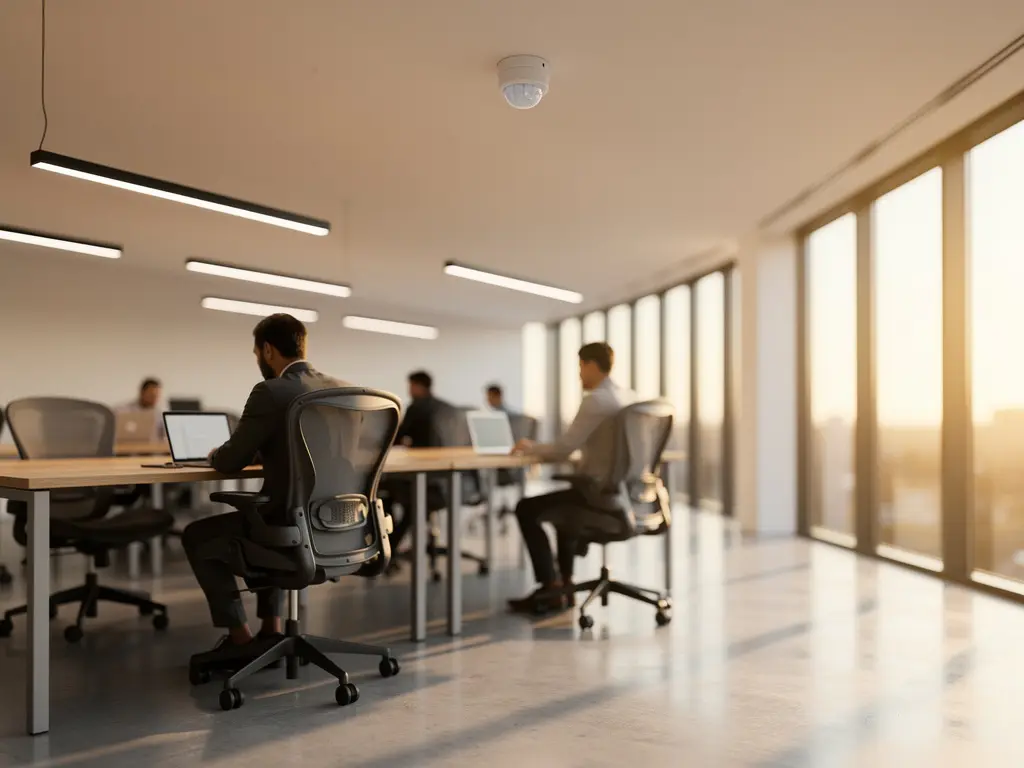
Moderne kantoorgebouwen staan voor de uitdaging om energiekosten te verlagen en tegelijkertijd een comfortabele werkomgeving te behouden. Slimme sensoren voor de kantooromgeving bieden hiervoor een effectieve oplossing door het energieverbruik automatisch te optimaliseren op basis van de daadwerkelijke bezetting en omgevingsfactoren.
Deze intelligente technologieën kunnen tot 90% van de energiekosten voor verlichting besparen en zorgen voor aanzienlijke reducties in verwarmings- en koelingskosten. Door real-time data te verzamelen over ruimtegebruik, lichtbehoefte en temperatuurvereisten, creëren sensoren een efficiënte en duurzame kantooromgeving.
Welke sensoren zijn het meest effectief voor energiebesparing in kantoren?
De meest effectieve sensoren voor energiebesparing in kantoren zijn bewegingssensoren, daglichtssensoren, temperatuursensoren en CO2-sensoren. Deze vier typen werken samen om verlichting, verwarming, ventilatie en airconditioning automatisch te optimaliseren op basis van de daadwerkelijke bezetting en omgevingscondities.
Bewegingssensoren detecteren aanwezigheid en schakelen automatisch verlichting en apparatuur in of uit. Dit voorkomt energieverspilling in ongebruikte ruimtes, zoals vergaderzalen, toiletten en opslagruimtes. Moderne bewegingssensoren kunnen onderscheid maken tussen verschillende soorten beweging en hebben een instelbare gevoeligheid.
Daglichtssensoren meten de hoeveelheid natuurlijk licht en dimmen kunstmatige verlichting dienovereenkomstig. Deze sensoren zijn bijzonder effectief in ruimtes met grote ramen en kunnen de verlichtingskosten met 60-80% verminderen door optimaal gebruik te maken van natuurlijk licht.
Temperatuursensoren monitoren de werkelijke temperatuur per zone en sturen verwarmings- en koelsystemen aan. Dit voorkomt oververwarming of overkoeling van ruimtes en kan het energieverbruik voor klimaatbeheersing met 20-30% reduceren.
CO2-sensoren meten de luchtkwaliteit en regelen de ventilatie automatisch. Wanneer CO2-niveaus stijgen door een hogere bezetting, verhoogt het systeem de ventilatie. Bij lage bezetting verlaagt het de ventilatie, wat energie bespaart zonder het comfort te beïnvloeden.
Hoe werken bewegingssensoren voor energiebesparing?
Bewegingssensoren voor energiebesparing detecteren aanwezigheid via infraroodstraling, microgolven of ultrasoon geluid en schakelen automatisch verlichting en apparatuur in of uit. Ze werken met instelbare timers die bepalen hoe lang systemen aan blijven na de laatst gedetecteerde beweging.
Passieve infrarood (PIR)-sensoren zijn het meest gebruikte type en detecteren lichaamswarmte. Ze reageren op temperatuurverschillen die ontstaan wanneer een persoon door hun detectieveld beweegt. Deze sensoren zijn ideaal voor ruimtes waar mensen regelmatig bewegen, zoals gangen en toiletten.
Microgolfsensoren zenden hoogfrequente golven uit en detecteren veranderingen in het reflectiepatroon. Ze zijn gevoeliger dan PIR-sensoren en kunnen beweging detecteren door dunne wanden heen. Dit maakt ze geschikt voor grote open ruimtes en kantoortuinen.
Ultrasone sensoren werken met geluidsgolven en zijn zeer gevoelig voor kleine bewegingen. Ze kunnen zelfs typen op een toetsenbord detecteren, waardoor ze perfect zijn voor individuele werkplekken waar mensen lange tijd stilzitten.
De effectiviteit hangt af van de juiste plaatsing en kalibratie. Sensoren moeten strategisch gepositioneerd worden om dode hoeken te vermijden en valse triggers door beweging buiten de ruimte te voorkomen. Moderne systemen combineren vaak verschillende sensortypen voor optimale dekking en betrouwbaarheid.
Wat is het verschil tussen slimme en traditionele sensoren?
Slimme sensoren verschillen van traditionele sensoren doordat ze data kunnen analyseren, leren van gebruikspatronen en communiceren met andere systemen via internetverbindingen. Traditionele sensoren reageren alleen op directe input, zonder geheugen of aanpassingsvermogen.
Traditionele sensoren werken met eenvoudige aan/uit-schakelingen op basis van vooraf ingestelde drempelwaarden. Een traditionele bewegingssensor schakelt bijvoorbeeld het licht aan wanneer beweging wordt gedetecteerd en uit na een vaste tijd. Deze sensoren kunnen niet leren of zich aanpassen aan veranderende omstandigheden.
Slimme sensoren daarentegen verzamelen continu data en gebruiken algoritmen om patronen te herkennen. Ze kunnen leren dat een vergaderzaal elke dinsdag van 14:00 tot 16:00 uur wordt gebruikt en het systeem hierop voorbereiden. Ook kunnen ze communiceren met weersvoorspellingen om verwarmingssystemen proactief aan te sturen.
Een belangrijk voordeel van slimme sensoren is hun vermogen tot integratie met gebouwbeheersystemen. Ze kunnen data delen tussen verschillende systemen, zoals verlichting, HVAC en beveiliging, voor gecoördineerde energiebesparingen.
Slimme sensoren bieden ook remote monitoring en controle via smartphone-apps of webportalen. Facilitair managers kunnen real-time inzicht krijgen in energieverbruik, bezettingsgraden en systeemprestaties, wat helpt bij het identificeren van verdere optimalisatiekansen.
Hoeveel energie kun je besparen met sensoren in kantoorgebouwen?
Met sensoren in kantoorgebouwen kun je 30-50% van het totale energieverbruik besparen, waarbij verlichtingskosten tot 90% kunnen dalen en verwarmings- en koelingskosten met 20-40% kunnen worden gereduceerd. De exacte besparingen hangen af van het gebouwtype, de gebruikspatronen en de kwaliteit van de sensorinstallatie.
Verlichtingssystemen bieden de grootste besparingspotentie omdat ze vaak onnodig aanstaan in lege ruimtes. Bewegingssensoren, gecombineerd met daglichtssensoren, kunnen de verlichtingskosten drastisch verlagen. In een gemiddeld kantoorgebouw van 1000 m² kan dit neerkomen op €3.000-5.000 per jaar aan energiebesparingen.
HVAC-systemen (verwarming, ventilatie en airconditioning) vertegenwoordigen vaak 40-50% van het totale energieverbruik in kantoorgebouwen. Slimme temperatuur- en bezettingssensoren kunnen dit verbruik aanzienlijk optimaliseren door alleen ruimtes te conditioneren die daadwerkelijk worden gebruikt.
De terugverdientijd voor sensorinvesteringen ligt meestal tussen 2 en 4 jaar, afhankelijk van de energieprijzen en het huidige efficiëntieniveau van het gebouw. Oudere gebouwen met verouderde systemen zien vaak snellere terugverdientijden dan moderne, reeds geoptimaliseerde gebouwen.
Naast directe energiebesparingen bieden sensoren ook indirecte voordelen, zoals een langere levensduur van apparatuur door minder bedrijfstijd, een verbeterd binnenklimaat door betere luchtkwaliteitscontrole en waardevolle data voor verdere optimalisaties.
Hoe Wout Monseurs helpt met slimme sensortechnologie
Wij bij Wout Monseurs integreren geavanceerde sensortechnologie als onderdeel van onze Smart Office-oplossingen. Met meer dan 60 jaar ervaring combineren we traditionele expertise in kantoorinrichting met geavanceerde IoT-sensoren en AI-gestuurde systemen voor maximale energiebesparingen.
Onze Smart Office-technologie omvat:
- Intelligente verlichtingssystemen met bewegings- en daglichtssensoren
- Slimme klimaatbeheersing met temperatuur- en CO2-monitoring
- Geautomatiseerde systemen die energiekosten tot 90% kunnen verlagen
- Real-time monitoring en rapportage via gebruiksvriendelijke dashboards
- Integratie met bestaande gebouwbeheersystemen
Als complete projectinrichter zorgen we voor een naadloze implementatie van sensortechnologie binnen uw totale kantoorinrichting. Van ontwerp tot installatie en onderhoud begeleiden we u gedurende het hele proces, voor optimale energiebesparing en optimaal werknemerscomfort.
Ontdek hoe slimme sensoren uw energiekosten kunnen verlagen en neem contact met ons op voor een vrijblijvend adviesgesprek over de mogelijkheden voor uw kantooromgeving.
Veelgestelde vragen
Welke ruimtes in een kantoorgebouw profiteren het meest van slimme sensoren?
Vergaderzalen, toiletten, opslagruimtes en gangen bieden de grootste besparingspotentie omdat deze ruimtes vaak onbezet zijn maar wel verlicht blijven. Ook open kantoorruimtes met wisselende bezetting en ruimtes met veel natuurlijk licht profiteren sterk van slimme sensortechnologie.
Hoe lang duurt de installatie van sensoren in een bestaand kantoorgebouw?
De installatie van sensoren in een gemiddeld kantoorgebouw duurt 1-3 dagen, afhankelijk van de grootte en complexiteit. Draadloze sensoren kunnen vaak binnen enkele uren per ruimte worden geïnstalleerd, terwijl bekabelde systemen meer tijd vergen voor de infrastructuur.
Kunnen sensoren interfereren met bestaande IT-systemen of WiFi-netwerken?
Moderne slimme sensoren gebruiken verschillende frequenties (Zigbee, Z-Wave, LoRaWAN) die geen interferentie veroorzaken met WiFi-netwerken. Bij professionele installatie worden frequentieconflicten vermeden door het gebruik van dedicated netwerkprotocollen voor IoT-apparaten.
Wat gebeurt er als sensoren defect raken of uitvallen?
Kwaliteitssensoren hebben een levensduur van 10-15 jaar en zijn voorzien van batterijstatusmonitoring. Bij uitval schakelen systemen automatisch naar een veilige modus (bijvoorbeeld licht blijft aan). Professionele systemen sturen meldingen bij storingen en hebben vaak redundantie ingebouwd.
Hoe nauwkeurig zijn de energiebesparingsvoorspellingen in de praktijk?
Energiebesparingsvoorspellingen zijn gebaseerd op gemiddelde gebruikspatronen en kunnen 10-20% afwijken van de werkelijkheid. Factoren zoals seizoensvariaties, bedrijfscultuur en gebouwkenmerken beïnvloeden de resultaten. Een grondige analyse vooraf en monitoring na installatie zorgen voor realistische verwachtingen.
Kunnen werknemers de sensoren handmatig uitschakelen als ze dat willen?
Moderne sensorsystemen bieden meestal override-functies via wandschakelaars of smartphone-apps waarmee werknemers tijdelijk de automatische bediening kunnen uitschakelen. Deze override-instellingen keren na een ingestelde tijd (meestal 2-4 uur) automatisch terug naar de normale sensorwerking.
Welke onderhoudswerkzaamheden zijn nodig voor slimme sensoren?
Slimme sensoren vereisen minimaal onderhoud: jaarlijkse batterijcontrole, periodieke reiniging van sensorlenzen en software-updates. Professionele systemen monitoren hun eigen status en geven waarschuwingen bij onderhoudsbehoefte. Een jaarlijkse servicebeurt door een specialist is meestal voldoende.