

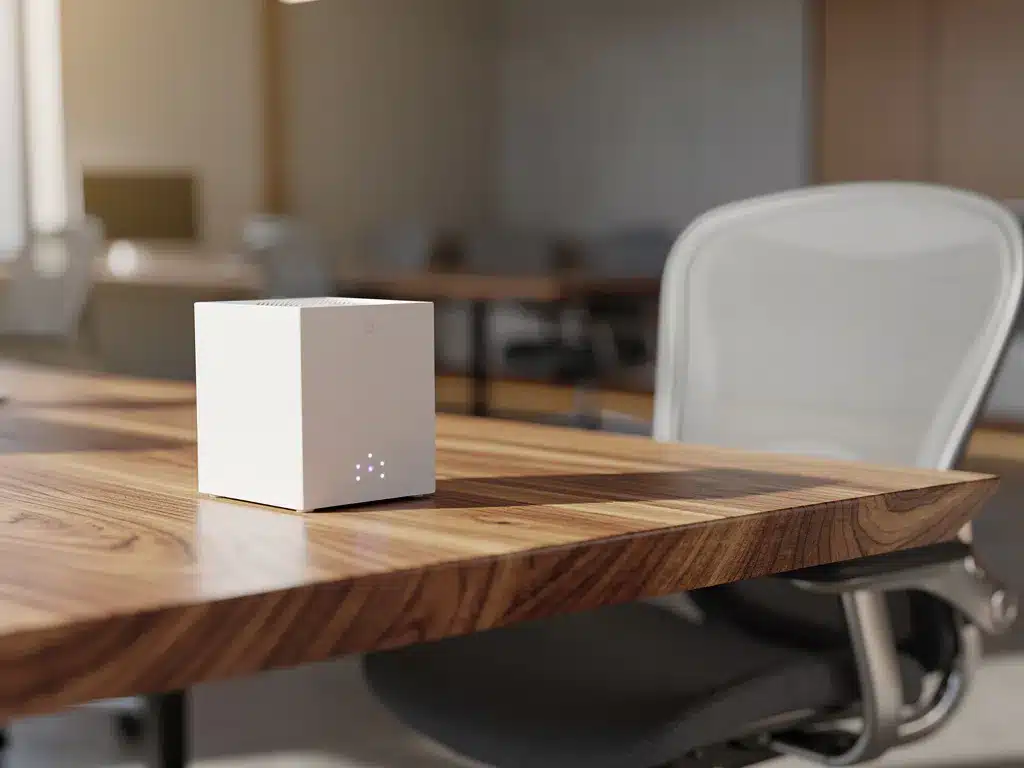
Good indoor air quality is essential for productivity and well-being in the office. Modern workplaces are increasingly using smart sensors designed for office environments to enable continuous monitoring. These advanced systems detect real-time changes in air composition and help organizations take proactive action.
Smart air quality sensors are no longer a luxury, but a necessity. They provide insight into invisible factors that directly affect employees’ concentration, health, and work performance.
What is indoor air quality, and why is continuous monitoring important?
Indoor air quality encompasses all the chemical, physical, and biological properties of the air in enclosed spaces. Continuous monitoring is crucial, as poor air quality directly leads to reduced productivity, headaches, fatigue, and long-term health issues among employees.
Research shows that employees in spaces with good air quality are up to 15% more productive. Pollutants such as CO2, volatile organic compounds, and particulate matter accumulate unnoticed throughout the workday. Without continuous monitoring, these issues remain hidden until employees begin to experience symptoms.
Smart sensors for the office environment make it possible to identify trends and take preventive action. They automatically issue alerts when readings reach critical levels, allowing ventilation systems to be adjusted or rooms to be temporarily ventilated.
What parameters do indoor air quality sensors measure?
Modern air quality sensors primarily measure CO2 levels, temperature, humidity, volatile organic compounds (VOCs), particulate matter (PM2.5/PM10), and formaldehyde. Advanced systems also detect ozone, nitrogen dioxide, and other specific pollutants.
CO2 levels provide the best indication of ventilation effectiveness. Levels above 1000 ppm indicate insufficient air exchange. Temperature and humidity affect comfort, with ideal values ranging between 20–24 °C and 40–60% relative humidity.
VOC measurements detect emissions from furniture, cleaning products, and office supplies. Particulate matter enters through ventilation systems or is generated by printers and copiers. Formaldehyde can be released from new furniture or carpeting. Smart sensors for the office environment combine these parameters to provide a comprehensive picture of air quality.
How do CO2 sensors work, and what exactly do they measure?
CO2 sensors use infrared technology to measure the concentration of carbon dioxide in the air and express it in parts per million (ppm). They detect the characteristic infrared absorption of CO2 molecules and convert this into a digital signal.
The sensor contains an infrared light source and a detector. CO2 molecules absorb infrared light at a specific wavelength. The more CO2 is present, the less light reaches the detector. This change is converted into a ppm value.
Outdoor air contains approximately 400 ppm of CO2. In offices, levels up to 800 ppm are acceptable, levels between 800 and 1000 ppm are moderate, and levels above 1000 ppm are problematic. CO2 itself is not harmful at these levels, but serves as an indicator of overall air quality and the effectiveness of ventilation.
What is the difference between portable and fixed air quality sensors?
Portable sensors are mobile measuring devices used for temporary measurements and troubleshooting, while fixed sensors are permanently installed for continuous monitoring and automatic ventilation control. Fixed systems provide real-time data integration and alerts.
Portable sensors cost between €50 and €500 and are ideal for identifying problem areas or validating fixed systems. They often feature a display for immediate readings and can store data for analysis. Drawbacks include limited battery life and the need for manual measurements.
Fixed sensors are integrated into building management systems and cost between €200 and €2,000 per unit. They communicate with central systems wirelessly or via cables, automatically control ventilation systems, and generate historical reports. Fixed systems are preferred for professional office environments because they enable continuous monitoring and automatic adjustments.
Where is the best place to install air quality sensors in offices?
Install air quality sensors at a height of 1.5–2 meters, away from direct airflow from ventilation systems, windows, or doors. Install at least one sensor per 50–100 square meters of office space, with additional sensors in meeting rooms, cafeterias, and near printers.
Avoid placing sensors near heat sources such as radiators, direct sunlight, or air conditioning vents, as this can interfere with measurements. In open-plan offices, place sensors centrally between workstations. Meeting rooms require special attention due to fluctuating occupancy and limited ventilation.
Critical locations include:
- Central location in open-plan offices
- Any private meeting room
- Near printers and copiers
- Cafeterias and break rooms
- Entrances and reception areas
Smart sensors for the office environment work best when they are strategically placed and connected to central monitoring systems that can automatically adjust the ventilation.
How Wout Monseurs Helps Create Smart Office Environments
We integrate advanced air quality sensors as part of our Smart Office solutions. Our team designs comprehensive systems that combine real-time monitoring with automated ventilation control and centralized reporting.
Our approach includes:
- Analysis of your office layout and ventilation needs
- Strategic placement of sensors in optimal locations
- Integration with existing building management systems
- Training your facilities team in monitoring and maintenance
- Ongoing support and system optimization
At our Experience Center, you can explore various sensor technologies and see how they contribute to a healthy work environment. Contact us for a no-obligation consultation on smart air quality monitoring in your office.
Frequently asked questions
How long does it take for air quality sensors to provide accurate readings after installation?
Most modern air quality sensors require a stabilization period of 24–48 hours after installation. CO2 sensors are usually operational within a few hours, while VOC sensors may take up to 72 hours to establish reliable baseline readings. Therefore, it is best to schedule installation for the weekend to ensure optimal calibration.
What are the maintenance costs of an air quality monitoring system?
Annual maintenance costs range from 10% to 15% of the initial investment. This includes sensor calibration (€50–100 per sensor per year), software updates, battery replacement for wireless sensors, and any sensor replacements after 5–7 years. Fixed systems generally have lower maintenance costs than portable alternatives.
Can air quality sensors trigger false alarms, and how can you prevent this?
False alarms can occur due to improper placement near heat sources, direct air currents, or temporary contaminants such as cleaning activities. Prevent this by adjusting threshold values to suit your specific environment, calibrating sensors regularly, and configuring alarms with delay timers of 5–10 minutes to ignore short-term spikes.
How do you interpret data from multiple sensors in a large office building?
Use central dashboards that combine data from all sensors and visualize trends by zone, floor, or room type. Look for patterns such as CO2 spikes during peak hours, VOC spikes after cleaning, or temperature differences between zones. Set up automated reports that highlight anomalies and compare data with occupancy rates and ventilation settings to gain actionable insights.
What should you do if sensors continue to measure poor air quality despite adjustments to the ventilation system?
First, investigate external sources such as nearby traffic, industrial activity, or construction work. Next, check internal sources such as old furniture, carpets, or malfunctioning equipment. Consider additional measures such as air purifiers, plant filters, or professional duct cleaning. If problems persist, consult a specialist for a comprehensive IAQ audit.
Can employees themselves influence air quality based on sensor data?
Yes, by giving employees access to real-time data via displays or apps, they can act more consciously. They can open windows when CO2 levels are high, turn off printers after use, limit the use of cleaning products, and adjust occupancy levels in meeting rooms. Educating employees about air quality significantly increases engagement and the system’s effectiveness.