

Noise levels in offices have a direct impact on employee productivity, concentration, and well-being. In today’s workplace, where open-plan offices and flexible workspaces are becoming increasingly common, measuring and monitoring noise has become essential to creating an optimal work environment.
Smart sensors for office environments offer an advanced solution for continuously monitoring and automatically adjusting noise levels. This technology not only helps organizations create a comfortable work environment, but also ensures compliance with ergonomic guidelines and improves employee well-being.
What are noise sensors, and why are they important for offices?
Sound sensors are electronic devices that measure sound levels and convert them into digital data, expressed in decibels (dB). These sensors detect sound waves via a microphone and analyze the intensity, frequency, and duration of sounds in the work environment.
Noise sensors are crucial for offices because they provide insight into acoustic conditions that directly impact employee performance. Research shows that excessive noise exposure can lead to increased stress, reduced concentration, and lower productivity. Through continuous monitoring, organizations can take proactive measures when noise levels become too high.
Modern noise sensors integrate seamlessly with smart office systems and can automatically trigger acoustic measures. For example, when sensors detect that the noise level in an open-plan office exceeds the ideal threshold, they can automatically deploy acoustic panels or adjust background noise to create a better working environment.
What are the different types of sound sensors available for office use?
There are three main types of noise sensors for office use: standalone decibel meters, integrated IoT sensors, and smart acoustic monitoring systems. Each type offers specific advantages, depending on the office environment and specific needs.
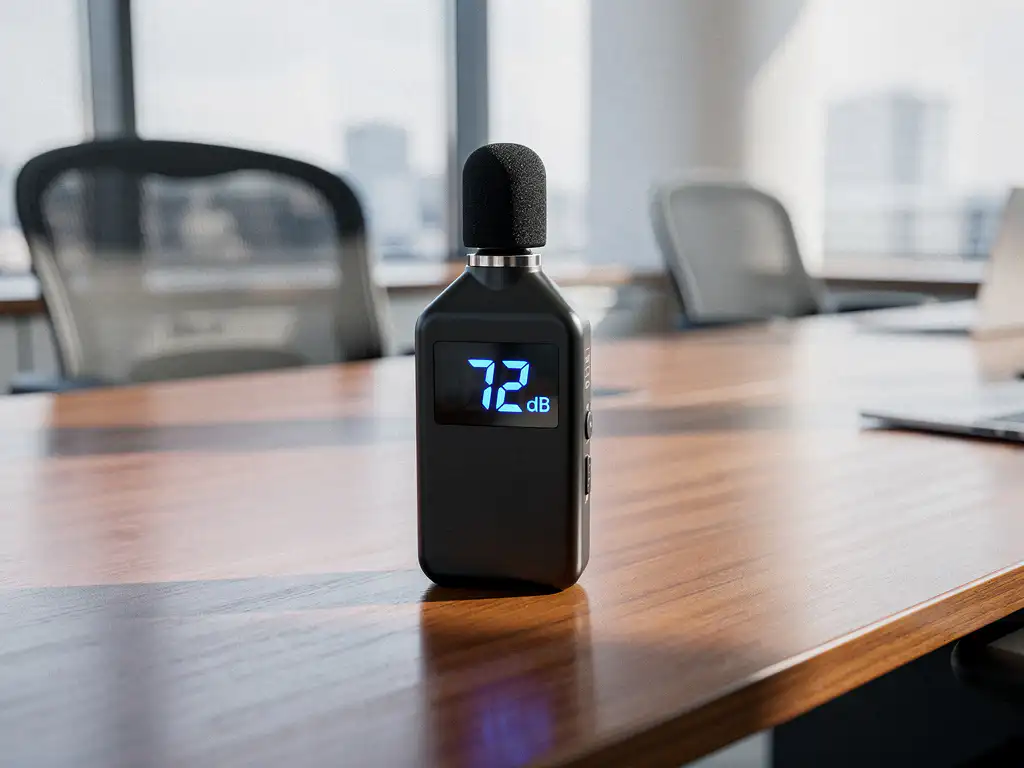
Standalone decibel meters are simple devices that measure sound levels and display the results on a screen. They are ideal for periodic measurements and cost between 50 and 200 euros. These sensors provide basic information but do not connect to other systems.
Integrated IoT sensors are part of a larger smart office ecosystem. These sensors collect not only noise levels but also other environmental data, such as temperature, humidity, and air quality. They communicate wirelessly with a central system and typically cost between 200 and 500 euros per sensor.
Smart acoustic monitoring systems are the most advanced solution. These systems use multiple sensors per room and can analyze different sound frequencies. They distinguish between speech, background noise, and disruptive sounds, enabling them to make personalized acoustic adjustments.
How do modern sound sensors work in smart office systems?
Modern noise sensors in smart office systems operate using wireless connectivity, real-time data analysis, and automated response mechanisms. They continuously monitor noise levels and send this information to a central management system that can automatically make adjustments.
The process begins with data collection by the sensors, which measure noise levels every second and transmit this information to a cloud-based platform via Wi-Fi or LoRaWAN. Artificial intelligence analyzes the data and identifies patterns, such as peak times for noise pollution or specific areas where noise problems arise.
Automatic response is a key advantage of smart systems. When noise levels exceed preset thresholds, sensors can trigger various actions: adjusting background noise through speakers, activating acoustic panels, or sending notifications to facility managers.
Integration with other smart office technologies makes these systems even more powerful. Sound sensors can communicate with lighting systems, climate control, and even meeting room reservation systems to create an optimal work environment that automatically adapts to users’ needs.
What are the ideal noise levels for different office spaces?
Ideal noise levels vary depending on the type of office space: open-plan offices function best at 45–50 dB, focused workstations at a maximum of 40 dB, meeting rooms at 35–40 dB, and cafeterias can reach up to 55 dB to create a lively yet comfortable atmosphere.
For open-plan offices, where employees perform a variety of tasks, the ideal noise level is between 45 and 50 decibels. This level allows colleagues to discuss matters normally without disturbing others. Noise levels above 55 dB in these spaces lead to increased stress and reduced concentration.
Focus workstations and quiet zones require the lowest noise levels, up to 40 dB. These spaces are designed for tasks that require deep concentration, such as analysis, writing, or complex calculations. Any disturbance above this level can significantly impact productivity.
Meeting rooms should have an ideal background noise level of 35–40 dB so that all participants can hear each other clearly. Modern meeting rooms equipped with video conferencing often require even lower noise levels to optimize speech recognition and audio recording.
Social spaces such as cafeterias and lounge areas can tolerate higher noise levels, up to 55 dB. These spaces are designed for relaxation and informal interaction, where a lively atmosphere is desired, but the noise level must still remain comfortable.
How do you choose the right noise sensor for your office environment?
Choosing the right sound sensor depends on five factors: the size of your office space, the desired level of integration, your budget, specific acoustic challenges, and future expansion plans. Start by identifying your current noise issues and the desired level of automation.
For small offices up to 100 square meters, standalone sensors that monitor noise levels and send alerts are often sufficient. These cost between 50 and 200 euros per sensor and provide basic monitoring without requiring a complex installation. They are ideal for organizations that want to start measuring noise without making a major investment.
Medium-sized offices ranging from 100 to 500 square meters benefit from IoT-integrated sensors that are part of a broader smart-office system. These sensors cost 200–500 euros each, but offer advanced features such as automatic adjustments and integration with lighting and climate control systems.
Large office complexes exceeding 500 square meters often require a comprehensive acoustic monitoring system with multiple sensors per zone. These systems cost between 1,000 and 5,000 euros, but offer enterprise-grade features such as AI analysis, predictive algorithms, and full automation of acoustic adjustments.
How Wout Monseurs is helping with smart sound sensors for offices
At Wout Monseurs, we integrate advanced sound sensors as part of our Smart Office technology to create optimal acoustic conditions in your office. Our expertise in acoustic solutions, combined with modern sensor technology, ensures a workplace where productivity and well-being are central.
Our approach includes:
- A comprehensive analysis of your current acoustic conditions and noise levels
- Implementation of IoT noise sensors that integrate with our Smart Office systems
- Installation of automatically adjustable acoustic panels, designer lamps, and moss walls
- Real-time monitoring and automatic adjustments for optimal noise levels
- Integration with other office furnishings for a comprehensive solution
As a family-owned business with over 60 years of experience, we understand that every workplace is unique. That’s why we offer customized solutions that perfectly match your specific needs and budget. Contact us for a no-obligation analysis of your office acoustics and discover how smart sensors can transform your work environment.
Frequently asked questions
How long does it take for noise sensors to start providing reliable data after installation?
Noise sensors start measuring immediately, but you’ll need at least 2–4 weeks of data to identify reliable patterns and trends. During this period, the system learns the normal noise dynamics of your office, such as peak hours, quiet moments, and specific noise patterns for each room.
Can noise sensors distinguish between desired and undesired sounds?
Yes, modern AI-powered sound sensors can recognize and classify different types of sounds. They distinguish between normal conversations, disruptive background noise, phone rings, and external sounds such as traffic. This allows them to respond specifically to genuinely disruptive noises without interrupting normal office activities.
What happens if the Wi-Fi connection for the sound sensors is lost?
High-quality sound sensors have built-in memory to store data locally in the event of a connection failure. As soon as the connection is restored, they automatically synchronize all missed measurements. Many systems also feature backup connectivity via mobile networks or LoRaWAN to minimize downtime.
How often should noise sensors be maintained or calibrated?
Professionele geluidssensoren vereisen minimaal onderhoud – meestal alleen periodieke reiniging van de microfoon (elke 3-6 maanden) en batterijvervanging bij draadloze modellen (1-2 jaar). Kalibratie is zelden nodig bij kwaliteitssensoren, maar kan jaarlijks gecontroleerd worden voor optimale nauwkeurigheid.
Can employees influence or tamper with the noise sensors themselves?
Modern noise sensors are protected against tampering by being installed in inaccessible locations and featuring tamper detection. The system detects suspicious changes in noise levels or sensor positions. In addition, employees typically have access to an app or dashboard where they can report noise issues without having to physically intervene.
What are the privacy implications of noise sensors in the workplace?
Sound sensors measure only sound levels and frequencies, not the content of conversations. They cannot record or eavesdrop on speech. However, transparency is important: inform employees about the locations of the sensors and the purpose of the monitoring. Many organizations establish a privacy protocol for the use of this technology.
Can noise sensors help optimize office layout?
Absolutely. Noise sensors provide valuable data on acoustic hotspots, quiet zones, and noise patterns throughout the office. This information helps with repositioning workstations, installing acoustic screens, and identifying spaces that are better suited for specific activities such as brainstorming sessions or focused work.