

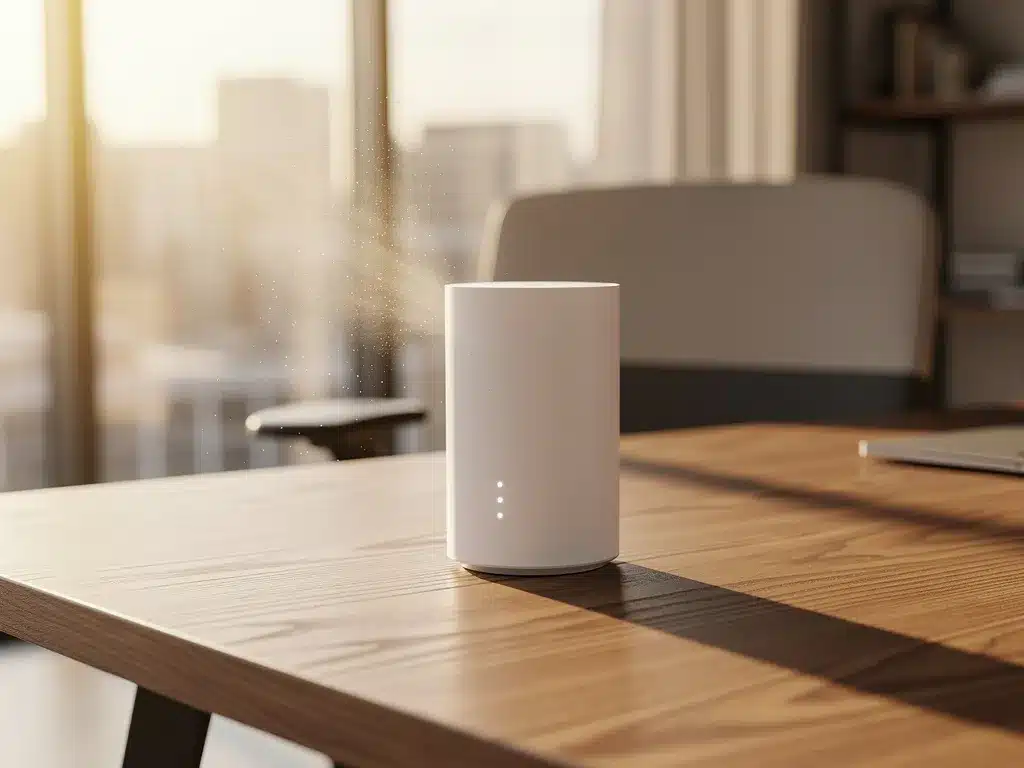
Air quality in the office has a direct impact on employees’ health and productivity. Airborne dust particles can cause respiratory problems, allergies, and reduced concentration. Fortunately, modern smart sensors designed for office environments make it possible to continuously monitor air quality and take timely action.
In this article, you’ll learn about the different types of sensors available for measuring dust particles, how they work, and where to place them for the best results. From simple consumer sensors to professional air quality monitoring systems, we’ll cover all the options that can help you create a healthier workplace.
What are dust particles, and why are they harmful to indoor air quality?
Airborne particles are tiny particles suspended in the air that range in size from 0.1 to 100 micrometers and consist of skin flakes, pollen, bacteria, mold, and exhaust fumes. These particles are harmful because they can penetrate deep into the lungs and cause respiratory problems, allergic reactions, and impaired cognitive performance.
The most problematic air particles are PM2.5 (particles smaller than 2.5 micrometers) and PM10 (particles smaller than 10 micrometers). PM2.5 particles are particularly dangerous because they are so small that they can penetrate the alveoli and enter the bloodstream. This can lead to cardiovascular disease, asthma attacks, and other chronic conditions.
In office environments, dust particles are generated by various sources, such as printers, copiers, carpeting, furniture, and the presence of people. Poorly maintained ventilation systems can exacerbate the problem by circulating dust particles instead of removing them. Good air quality is therefore essential for a healthy and productive workplace.
What types of sensors can measure dust particles in offices?
There are three main types of sensors used to measure dust particles: optical particle sensors that use light scattering, laser sensors for precise measurements, and ionization sensors that detect electrical charges. Modern offices typically use optical sensors because of their reliability and cost-effectiveness.
Optical particle sensors work by sending a beam of light through the air and measuring the scattering caused when dust particles interrupt the light. These sensors can distinguish between different particle sizes and are ideal for continuous monitoring of PM2.5 and PM10 concentrations.
Laser sensors offer the highest accuracy and can detect very small particles as small as 0.3 micrometers. They are more expensive, but provide professional measurement results that meet industrial standards. These sensors are often used in cleanrooms and laboratories where precision is critical.
Ionization sensors detect charged particles in the air using electric fields. Although they are less accurate than optical sensors, they are suitable for detecting specific types of pollution, such as smoke or chemical vapors.
How do modern air quality sensors for particulate matter measurement work?
Modern air quality sensors use advanced optical technology in which a laser or LED light source detects particles by measuring light scattering. The sensor analyzes the scattered light to determine the size and concentration of dust particles and converts this data into real-time readings.
The measurement process begins when air is drawn through a measurement chamber where a beam of light is emitted. When dust particles pass through this beam, they scatter the light in various directions. A photodetector detects this scattered light and measures its intensity, which is directly related to the size and quantity of the particles.
Smart sensors are equipped with microprocessors that process raw measurement data and convert it into understandable values, such as micrograms per cubic meter (μg/m³). This data is often transmitted wirelessly to a central monitoring hub or smartphone app for real-time analysis.
Many modern sensors can also measure other air quality parameters, such as temperature, humidity, CO2 concentration, and volatile organic compounds (VOCs). These multifunctional sensors provide a comprehensive picture of air quality and can automatically control ventilation systems to maintain optimal conditions.
What is the difference between professional and consumer sensors?
Professional sensors offer greater measurement accuracy, a longer service life, and more extensive calibration options, while consumer sensors are less expensive but less accurate and have more limited functionality. The difference lies primarily in the technology used, calibration procedures, and data processing capabilities.
Professional sensors use high-quality laser technology and are calibrated according to international standards, such as ISO 21501-4. They can accurately measure particle concentrations ranging from 0 to 500 μg/m³ with an accuracy of ±10%. These sensors are often certified for use in industrial environments and can last for years without requiring recalibration.
Consumer sensors, on the other hand, often use simpler LED technology and have a lower measurement accuracy of ±20–30%. They are ideal for home use or small offices where approximate readings are sufficient. Most consumer sensors cost between 50 and 200 euros.
Another key difference is data processing capacity. Professional systems can store historical data, analyze trends, and generate automated reports. They also offer advanced connectivity options, such as Ethernet, LoRaWAN, or professional IoT protocols, for integration into building management systems.
Where should you place particulate matter sensors in an office?
Place particulate matter sensors at breathing height (1.5–2 meters) in representative locations, such as workstations, meeting rooms, and central areas. Avoid direct sunlight, ventilation grilles, and heat sources. For optimal coverage, install one sensor per 100–150 square meters of office space.
The ideal placement depends on the office layout and air circulation patterns. In open-plan offices, place sensors centrally between workstations to obtain an average reading. For individual offices or meeting rooms, one sensor per room is usually sufficient, mounted on a wall at a height of approximately 1.5 meters.
Avoid placing the device near printers, copiers, or other equipment that generates dust particles, as this can lead to inaccurate readings. Sensors placed directly next to windows, doors, or ventilation grilles may also provide unreliable data due to air currents.
For a comprehensive monitoring system, you should also place sensors in critical areas, such as:
- The entrance hall and reception area, where visitors enter
- The cafeteria and break rooms, where there is increased activity
- Server rooms, where equipment generates heat and particles
- Near external air intake vents
Modern wireless sensors allow for flexible placement and can be easily moved if the office layout changes. Be sure to calibrate and maintain them regularly according to the manufacturer’s instructions to ensure accurate measurements.
How Wout Monseurs is helping with smart air quality sensors
We integrate advanced air quality sensors into our Smart Office solutions to create healthy and productive work environments. Our expertise in office design, combined with modern sensor technology, provides a comprehensive package that perfectly meets your business needs.
Our Smart Office services for air quality monitoring include:
- Professional sensors that measure PM2.5, PM10, and other air quality parameters
- Real-time monitoring via dashboards and smartphone apps
- Automatic integration with ventilation systems for optimal air quality
- Analysis of historical data and reporting for continuous improvement
- Integration with existing building management systems
With over 60 years of experience in office design, we understand that clean air is essential for employee well-being and productivity. Our smart sensors are part of a comprehensive concept that combines ergonomics, sustainability, and technology in modern workplaces.
Would you like to learn how smart air quality sensors can improve your office? Contact us for a no-obligation consultation and discover the possibilities at our Experience Center in Breda.
Frequently asked questions
How often should particulate matter sensors be calibrated?
Professional sensors typically have a calibration interval of 12–24 months, depending on the operating environment and manufacturer specifications. Consumer sensors often do not require manual calibration, but they do need to be cleaned regularly. For office environments, we recommend annual calibration by a certified service provider to ensure accurate measurements.
What are acceptable PM2.5 levels for a healthy office environment?
According to WHO guidelines, an average PM2.5 concentration below 15 μg/m³ (24-hour average) is acceptable for indoor spaces. For optimal health and productivity, we aim for levels below 10 μg/m³. Levels above 25 μg/m³ require immediate action, such as increased ventilation or the activation of air purification systems.
Can particulate matter sensors trigger false alarms, and how can you prevent this?
Yes, sensors can trigger false alarms due to factors such as high humidity, cooking fumes, or sudden temperature changes. Prevent this by avoiding the placement of sensors near kitchens, bathrooms, or heat sources. Also, choose sensors with temperature and humidity compensation, and set realistic alarm thresholds based on the specific office environment.
How long does it take to see results after installing the sensors?
Measurement results are available within minutes, but reliable baseline measurements require 1–2 weeks of continuous monitoring. After this period, you can identify patterns and take effective corrective actions. Significant improvements in air quality resulting from adjustments to ventilation or air purification are usually noticeable within a few days.
What should you do if sensors consistently measure high dust levels?
First, check the sensors for contamination and clean them if necessary. Next, identify potential sources such as old carpeting, malfunctioning printers, or poorly maintained ventilation systems. Increase ventilation, consider air purification systems, and have the HVAC system inspected by a professional. If problems persist, it is advisable to consult an air quality specialist.
Can employees view the sensor data themselves, and what are the benefits?
Yes, transparent data sharing raises employee awareness and engagement regarding air quality. Many modern sensor systems offer dashboards or apps where employees can view real-time readings. This encourages mindful behavior, such as opening windows when readings are high, and builds trust in the employer who invests in a healthy work environment.