

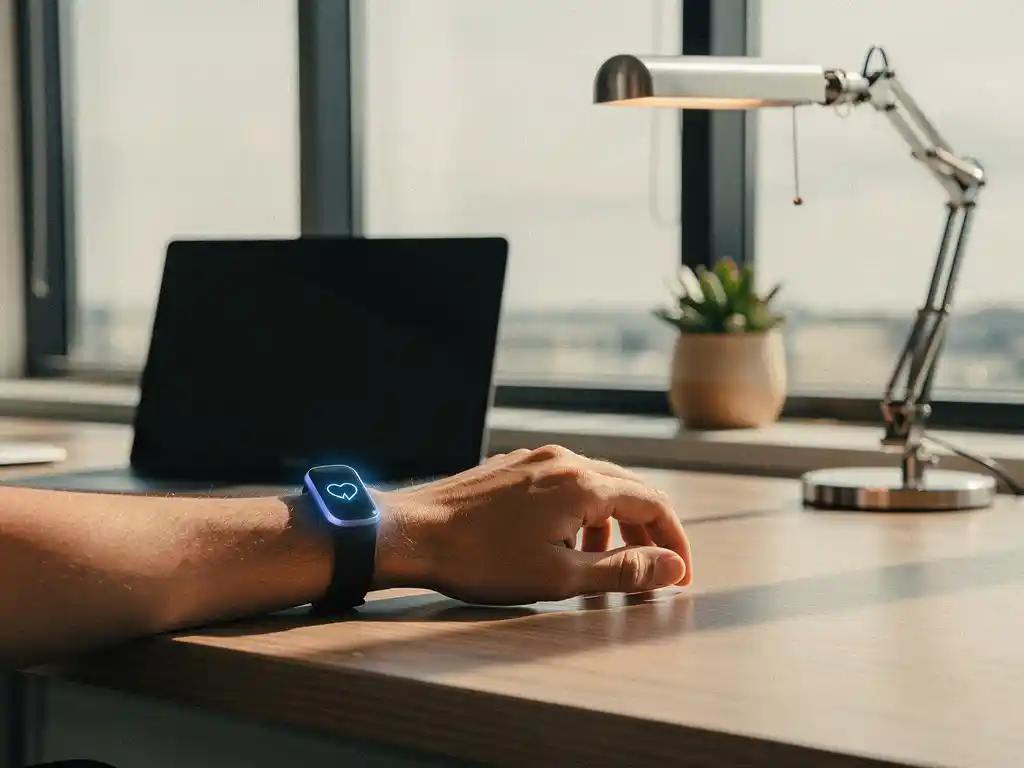
Moderne werkplekken worden steeds slimmer en technologisch geavanceerder. Een belangrijk onderdeel van deze ontwikkeling zijn slimme sensoren in de kantooromgeving, die verschillende aspecten van het werkklimaat kunnen monitoren, waaronder de stressniveaus van werknemers. Deze innovatieve technologie biedt organisaties waardevolle inzichten in het welzijn van hun personeel en helpt bij het creëren van gezondere werkomgevingen.
Het meten van werkstress met behulp van sensoren is geen toekomstmuziek meer, maar een realiteit die bedrijven helpt om proactief in te spelen op het welzijn van hun medewerkers. Door verschillende typen sensoren strategisch te implementeren, kunnen werkgevers vroegtijdig signalen van verhoogde stress detecteren en passende maatregelen nemen.
Wat zijn sensoren voor het meten van stressniveaus op de werkplek?
Sensoren voor stressmeting op de werkplek zijn geavanceerde technologische apparaten die fysiologische en omgevingsfactoren monitoren om verhoogde stressniveaus bij werknemers te detecteren. Deze slimme sensoren in de kantooromgeving kunnen hartslagvariabiliteit, huidgeleiding, bewegingspatronen en omgevingsfactoren zoals geluidsniveau en luchtkwaliteit meten.
De sensoren werken door continue dataverzameling en analyse van verschillende stressindicatoren. Ze kunnen worden geïntegreerd in draagbare apparaten zoals smartwatches, polsbandjes of zelfs in de werkplek zelf, door middel van omgevingssensoren. De verzamelde data wordt vervolgens geanalyseerd door algoritmen die patronen herkennen die wijzen op verhoogde stress.
Deze technologie maakt deel uit van een bredere trend naar Smart Office-oplossingen die de werkplek intelligenter en responsiever maken voor de behoeften van werknemers. Door realtime monitoring kunnen organisaties snel inspelen op situaties die het welzijn van hun personeel kunnen beïnvloeden.
Welke typen sensoren kunnen werkstress het beste detecteren?
De meest effectieve sensoren voor stressdetectie zijn hartslagvariabiliteitssensoren, huidgeleidingssensoren, bewegingssensoren en omgevingssensoren die luchtkwaliteit en geluidsniveau meten. Deze sensoren bieden samen een compleet beeld van zowel fysiologische als omgevingsgebonden stressfactoren.
Hartslagvariabiliteitssensoren zijn bijzonder effectief omdat ze subtiele veranderingen in het hartritme detecteren die indicatief zijn voor stress. Wanneer iemand gestrest raakt, verandert de variabiliteit tussen hartslagen op een meetbare manier. Deze sensoren kunnen worden geïntegreerd in wearables of zelfs worden ingezet voor contactloze monitoring via camera’s.
Huidgeleidingssensoren meten de elektrische geleiding van de huid, die toeneemt bij stress door verhoogde zweetproductie. Bewegingssensoren detecteren veranderingen in activiteitspatronen, zoals rusteloosheid of verminderde beweging, die kunnen duiden op stress. Omgevingssensoren monitoren factoren zoals CO2-niveaus, temperatuur, luchtvochtigheid en geluidsniveau, die allemaal kunnen bijdragen aan stress op de werkplek.
Hoe werken biometrische sensoren voor stressmeting?
Biometrische sensoren voor stressmeting werken door continue monitoring van fysiologische parameters zoals hartslag, huidtemperatuur, zweetproductie en bewegingspatronen. Deze sensoren gebruiken algoritmen om normale basislijnwaarden te bepalen en afwijkingen te detecteren die wijzen op verhoogde stress.
Het proces begint met het vaststellen van individuele basislijnmetingen gedurende een periode van normale activiteit. De sensoren leren de unieke fysiologische patronen van elke gebruiker kennen, waardoor ze nauwkeurig kunnen bepalen wanneer er significante afwijkingen optreden. Moderne sensoren gebruiken machine learning om hun nauwkeurigheid in de tijd te verbeteren.
De verzamelde data wordt realtime geanalyseerd en kan worden gekoppeld aan externe factoren zoals werkdruk, deadlines of specifieke taken. Dit helpt bij het identificeren van stressveroorzakende situaties en het ontwikkelen van gerichte interventies. De meeste systemen bieden ook feedback aan gebruikers, zodat zij zich bewust worden van hun stressniveaus en proactief maatregelen kunnen nemen.
Wat zijn de voordelen van stressmonitoring met sensoren op kantoor?
Stressmonitoring met sensoren biedt organisaties vroege waarschuwingssystemen voor werknemersuitputting, verbeterde productiviteit door een optimale werkbelasting, verminderd ziekteverzuim en waardevolle inzichten voor het verbeteren van de werkomgeving. Deze technologie helpt bij het creëren van gezondere en meer productieve werkplekken.
Een belangrijk voordeel is de mogelijkheid om burn-out te voorkomen door vroegtijdige signalen te herkennen. Wanneer sensoren consistent verhoogde stressniveaus detecteren bij een werknemer, kunnen managers proactief ingrijpen met gesprekken, aanpassingen in de werkbelasting of extra ondersteuning. Dit voorkomt niet alleen persoonlijk leed, maar bespaart organisaties ook aanzienlijke kosten door verminderd ziekteverzuim en verloop.
De verzamelde data helpt ook bij het optimaliseren van de fysieke werkomgeving. Door correlaties te vinden tussen omgevingsfactoren en stressniveaus kunnen organisaties gerichte verbeteringen doorvoeren, zoals het aanpassen van verlichting, temperatuur of akoestiek. Dit draagt bij aan het algemene welzijn en de tevredenheid van werknemers, wat resulteert in hogere productiviteit en betere bedrijfsresultaten.
Hoe implementeer je stresssensoren in een bestaande kantooromgeving?
De implementatie van stresssensoren begint met een grondige analyse van de huidige werkomgeving, gevolgd door de selectie van geschikte sensortechnologie, pilotprojecten met een beperkte groep gebruikers en een geleidelijke uitrol, met continue monitoring en bijsturing van het systeem.
De eerste stap is het in kaart brengen van de specifieke behoeften en uitdagingen van de organisatie. Dit omvat het identificeren van stressgevoelige afdelingen, het bepalen van privacyvereisten en het vaststellen van gewenste resultaten. Vervolgens moet worden bepaald welke combinatie van draagbare sensoren en omgevingssensoren het beste past bij de organisatiecultuur en werkprocessen.
Een succesvolle implementatie vereist ook aandacht voor privacywetgeving en acceptatie door werknemers. Het is essentieel om transparant te communiceren over het doel van de monitoring, hoe data wordt gebruikt en welke voordelen werknemers kunnen verwachten. Training en ondersteuning zijn cruciaal voor adoptie, evenals regelmatige evaluatie van de effectiviteit van het systeem.
Hoe Wout Monseurs helpt met slimme kantooromgevingen
Wij bij Wout Monseurs begrijpen dat een moderne kantooromgeving meer is dan alleen meubilair. Onze Smart Office-technologie integreert geavanceerde sensorsystemen naadloos in uw werkplek om het welzijn en de productiviteit van uw medewerkers te optimaliseren.
Onze aanpak voor slimme kantooromgevingen omvat:
- Implementatie van IoT-sensoren voor monitoring van luchtkwaliteit, temperatuur en geluidsniveaus
- Integratie van slimme verlichtingssystemen die automatisch reageren op aanwezigheid en natuurlijk licht
- Deskbookingtools gekoppeld aan sensortechnologie voor optimaal ruimtegebruik
- Akoestische oplossingen die bijdragen aan stressreductie en concentratie
- Ergonomische werkplekken die zich automatisch aanpassen aan persoonlijke voorkeuren
Met meer dan 60 jaar ervaring in kantoorinrichting combineren wij traditionele expertise met geavanceerde technologie. Ons projectinrichting-team werkt samen met u om een complete Smart Office-omgeving te creëren die niet alleen technologisch geavanceerd is, maar ook bijdraagt aan een gezonde en productieve werksfeer. Neem contact met ons op om te ontdekken hoe wij uw kantoor kunnen transformeren tot een intelligente werkplek waarin het welzijn van uw medewerkers centraal staat.
Veelgestelde vragen
Hoe nauwkeurig zijn stresssensoren en kunnen ze vals-positieve resultaten geven?
Moderne stresssensoren hebben een nauwkeurigheid van 85-95% wanneer ze correct gekalibreerd zijn. Vals-positieve resultaten kunnen voorkomen door fysieke activiteit, cafeïne of medische aandoeningen. Daarom gebruiken de beste systemen meerdere sensoren tegelijk en leren ze individuele patronen aan om de nauwkeurigheid te verbeteren.
Welke privacymaatregelen moet ik treffen bij het implementeren van stresssensoren?
Zorg voor transparante communicatie over dataverzameling, verkrijg expliciete toestemming van werknemers, en implementeer sterke databeveiliging met encryptie. Geef werknemers controle over hun eigen data en de mogelijkheid om opt-out te gaan. Stel duidelijke richtlijnen op over hoe en door wie de data gebruikt mag worden.
Wat zijn de kosten voor het implementeren van stresssensoren in een kantoor van 50 werknemers?
De kosten variëren van €15.000 tot €50.000 afhankelijk van het type sensoren en integratie. Draagbare sensoren kosten €100-300 per werknemer, omgevingssensoren €500-1.500 per ruimte, plus software en implementatiekosten. ROI wordt meestal binnen 12-18 maanden behaald door verminderd ziekteverzuim en verhoogde productiviteit.
Hoe reageren werknemers meestal op stressmonitoring en hoe verhoog je acceptatie?
Aanvankelijke weerstand is normaal vanwege privacyzorgen. Verhoog acceptatie door transparante communicatie over voordelen, vrijwillige deelname, persoonlijke feedback-dashboards en duidelijke grenzen aan datagebruik. Toon concrete verbeteringen in de werkomgeving en betrek werknemers bij de implementatie.
Kunnen stresssensoren ook helpen bij het identificeren van burn-out risico's?
Ja, door langetermijnpatronen te analyseren kunnen sensoren vroege signalen van burn-out detecteren, zoals chronisch verhoogde stressniveaus, verslechterende slaapkwaliteit en afnemende hartslagvariabiliteit. Het systeem kan waarschuwingen geven wanneer meerdere risico-indicatoren gedurende weken consistent verhoogd blijven.
Welke technische vereisten zijn nodig voor het installeren van een stressmonitoringssysteem?
Je hebt een stabiele WiFi-infrastructuur nodig, cloudopslag voor data-analyse, compatibele software voor dashboards, en mogelijk nieuwe netwerkcapaciteit voor IoT-apparaten. De meeste systemen integreren met bestaande HR- en facility management software via API’s. Een IT-assessment vooraf is aan te raden.
Hoe lang duurt het voordat je meetbare resultaten ziet van stressmonitoring?
Eerste inzichten zijn zichtbaar binnen 2-4 weken na implementatie. Significante verbeteringen in welzijn en productiviteit worden meestal na 3-6 maanden gemeten, wanneer er voldoende data is verzameld en gerichte interventies zijn doorgevoerd. Langetermijntrends en ROI zijn evalueerbaar na 12 maanden.