

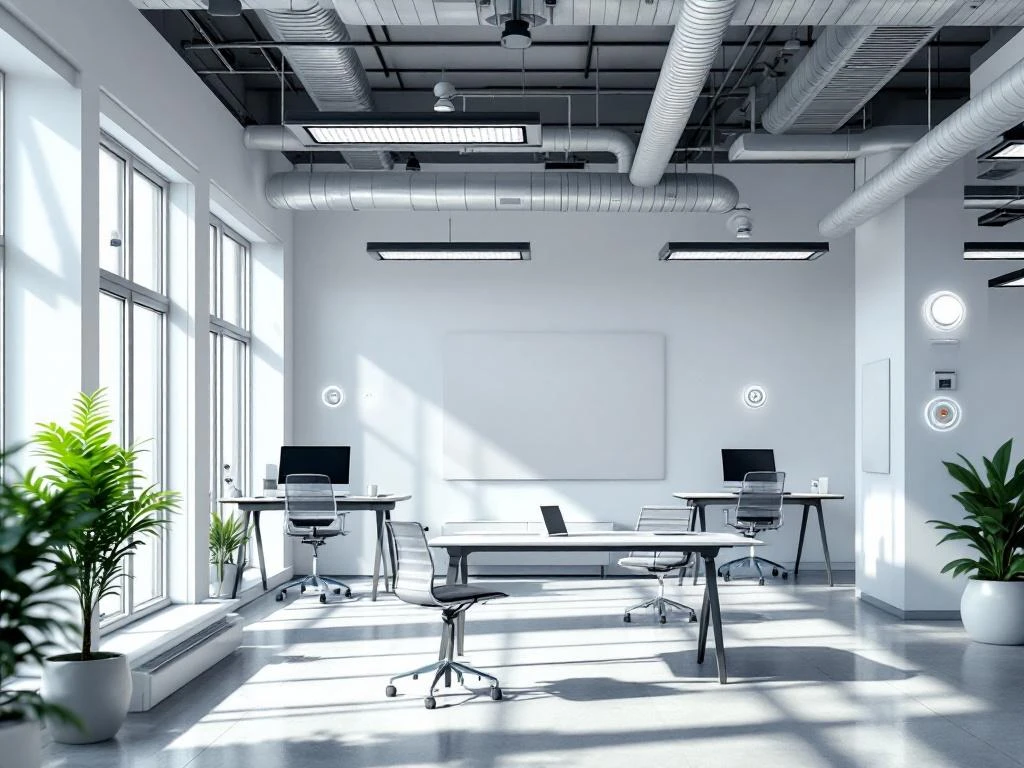
Een smart office gebruikt verschillende sensoren om automatisch de werkplek te optimaliseren. De belangrijkste sensoren zijn bewegingssensoren voor verlichting en beveiliging, temperatuursensoren voor klimaatbeheersing, luchtkwaliteitssensoren voor ventilatie, geluidssensoren voor akoestiek en lichtsensoren voor automatische zonwering. Deze sensoren werken samen om energie te besparen, het comfort te verhogen en de productiviteit te verbeteren.
Wat zijn de belangrijkste sensoren die je tegenkomt in een smart office?
In een smart office vind je vijf hoofdtypen sensoren die elk een specifieke functie hebben. Bewegingssensoren detecteren aanwezigheid voor automatische verlichting en beveiliging. Temperatuursensoren monitoren de ruimtetemperatuur voor slimme klimaatbeheersing. Luchtkwaliteitssensoren meten CO2-niveaus en andere stoffen voor een gezonde ventilatie.
Daarnaast zijn er geluidssensoren die het geluidsniveau bewaken voor optimale akoestiek en concentratie. Lichtsensoren meten het natuurlijke licht en sturen automatische zonwering en kunstverlichting aan. Deze sensoren communiceren via een centraal systeem dat de werkplek continu optimaliseert.
Het slimme aan deze sensoren is dat ze leren van gebruikersgedrag. Ze passen zich aan de werkpatronen aan en zorgen voor een comfortabele omgeving zonder dat medewerkers er bewust mee bezig hoeven te zijn. Dit verhoogt zowel het werkplezier als de efficiëntie van het kantoor.
Hoe werken bewegingssensoren en waarom zijn ze nuttig op kantoor?
Bewegingssensoren werken op drie verschillende manieren: PIR-sensoren detecteren warmte van lichamen, ultrasone sensoren gebruiken geluidsgolven en microgolfsensoren zenden elektromagnetische straling uit. PIR-sensoren worden het meest gebruikt omdat ze energiezuinig zijn en beweging betrouwbaar detecteren.
Op kantoor schakelen deze sensoren automatisch de verlichting in wanneer iemand een ruimte binnenkomt en uit wanneer de ruimte leeg is. Ze kunnen ook de airconditioning aansturen, zodat alleen bezette ruimtes worden gekoeld of verwarmd. Voor beveiliging detecteren ze ongewenste beweging buiten kantooruren.
Het voordeel is een enorme energiebesparing, omdat licht en klimaat alleen actief zijn waar nodig. Medewerkers hoeven niet meer handmatig schakelaars te bedienen, wat het gebruiksgemak verhoogt. Bovendien krijg je inzicht in het ruimtegebruik, wat helpt bij het optimaliseren van de kantoorindeling.
Welke sensoren helpen bij het verbeteren van de luchtkwaliteit?
CO2-sensoren zijn het belangrijkst voor de luchtkwaliteit, omdat ze meten hoeveel mensen zich in een ruimte bevinden en wanneer ventilatie nodig is. VOC-sensoren detecteren vluchtige organische stoffen van materialen en schoonmaakmiddelen. Luchtvochtigheidsmeters bewaken het vochtgehalte voor comfort en schimmelpreventie.
Fijnstofmeters meten kleine deeltjes in de lucht die schadelijk kunnen zijn voor de gezondheid. Deze sensoren werken samen met het ventilatiesysteem om automatisch frisse lucht aan te voeren wanneer de kwaliteit daalt. Ze kunnen ook waarschuwen bij te hoge concentraties schadelijke stoffen.
Goede luchtkwaliteit is direct gekoppeld aan de productiviteit en het welzijn van medewerkers. Te veel CO2 zorgt voor vermoeidheid en verminderde concentratie. Door automatische ventilatie blijft de lucht fris zonder energieverspilling, omdat het systeem alleen actief is wanneer dat nodig is.
Waarom zijn temperatuur- en lichtsensoren belangrijk voor productiviteit?
Temperatuur- en lichtsensoren zorgen voor optimale arbeidsomstandigheden die direct invloed hebben op hoe goed mensen kunnen werken. Temperatuursensoren houden de ruimtetemperatuur tussen 20 en 22 graden, wat ideaal is voor concentratie en comfort. Te warm of te koud leidt tot afleiding en verminderde prestaties.
Lichtsensoren meten de hoeveelheid natuurlijk licht en passen de kunstverlichting daarop aan. Bij veel zonlicht wordt automatische zonwering geactiveerd om verblinding te voorkomen. Bij bewolkt weer wordt de verlichting feller om voldoende licht te behouden voor geconcentreerd werk.
Slimme thermostaten leren van gebruikersvoorkeuren en passen de temperatuur gedurende de dag aan. Ze verwarmen of koelen ruimtes voordat medewerkers arriveren en schakelen over naar een energiebesparende modus wanneer het kantoor leeg is. Dit zorgt voor comfort én lagere energiekosten.
Hoe Wout Monseurs helpt met smart office-oplossingen
Wij bij Wout Monseurs integreren smart office-technologie naadloos in je kantoorinrichting. We beginnen met een analyse van je werkplek en gebruikersbehoeften om te bepalen welke sensoren het meeste voordeel opleveren. Onze ervaring met ergonomische en duurzame kantooroplossingen helpt bij het kiezen van de juiste technologie.
We werken samen met betrouwbare leveranciers van sensortechnologie en zorgen voor een complete installatie die aansluit op je bestaande systemen. Ons team begeleidt je door het hele proces, van ontwerp tot implementatie en nazorg. We zorgen ervoor dat de technologie werkt zoals bedoeld en dat je team weet hoe alles te gebruiken.
Wil je weten hoe smart office-sensoren jouw werkplek kunnen verbeteren? Neem contact met ons op voor een vrijblijvend adviesgesprek. We bekijken samen welke oplossingen het beste passen bij jouw kantoor en budget.
Veelgestelde vragen
Wat zijn de kosten voor het installeren van smart office sensoren?
De kosten variëren sterk afhankelijk van de grootte van je kantoor en welke sensoren je kiest. Een basispakket met bewegings- en temperatuursensoren kost tussen €2.000-€5.000 voor een klein kantoor. Grotere installaties met alle sensortypen kunnen €10.000-€25.000 kosten, maar besparen vaak 20-30% op energiekosten waardoor de investering zich binnen 2-3 jaar terugverdient.
Kunnen smart office sensoren ook in bestaande kantoorgebouwen geïnstalleerd worden?
Ja, de meeste sensoren kunnen probleemloos in bestaande kantoren worden geïnstalleerd. Draadloze sensoren zijn vooral geschikt voor renovaties omdat ze geen nieuwe bekabeling vereisen. Wel is het belangrijk om te controleren of je huidige klimaat- en verlichtingssystemen compatibel zijn of aangepast kunnen worden voor automatische bediening.
Hoe lang duurt het voordat sensoren mijn werkpatronen hebben geleerd?
De meeste smart office systemen hebben 2-4 weken nodig om gebruikerspatronen te leren en zich aan te passen. Bewegingssensoren werken direct, maar temperatuur- en lichtsensoren hebben tijd nodig om optimale instellingen te vinden. Na een maand merkje meestal al duidelijke verbeteringen in comfort en energiebesparing.
Wat gebeurt er als sensoren defect raken of verkeerde metingen geven?
Moderne sensorsystemen hebben ingebouwde zelfdiagnose en sturen automatisch waarschuwingen bij problemen. De meeste leveranciers bieden 2-5 jaar garantie en remote monitoring. Bij storing schakelt het systeem vaak terug naar handmatige bediening, zodat je kantoor gewoon blijft functioneren terwijl reparaties plaatsvinden.
Kunnen medewerkers de sensorinstellingen zelf aanpassen als ze het te warm of koud vinden?
Ja, de meeste smart office systemen hebben een app of wandpaneel waarmee medewerkers temperatuur en verlichting kunnen bijstellen. Het systeem leert van deze aanpassingen en past toekomstige instellingen automatisch aan. Wel kun je als beheerder limieten instellen om energieverspilling te voorkomen.
Zijn er privacy-zorgen bij het gebruik van sensoren die beweging en aanwezigheid detecteren?
Smart office sensoren detecteren alleen aanwezigheid en beweging, niet wie er aanwezig is. Ze slaan geen beeldmateriaal of persoonlijke gegevens op. Wel is het belangrijk om transparant te zijn naar medewerkers over welke sensoren gebruikt worden en waarvoor, en om te voldoen aan AVG-regelgeving bij het verzamelen van gebruiksdata.
Welke sensoren moet ik als eerste installeren voor maximaal effect?
Begin met bewegingssensoren voor verlichting en temperatuursensoren voor klimaatbeheersing – deze leveren de grootste energiebesparing en comfort verbetering op. CO2-sensoren voor vergaderruimtes zijn ook een goede tweede stap. Licht- en geluidssensoren kun je later toevoegen wanneer het basissysteem goed functioneert.