

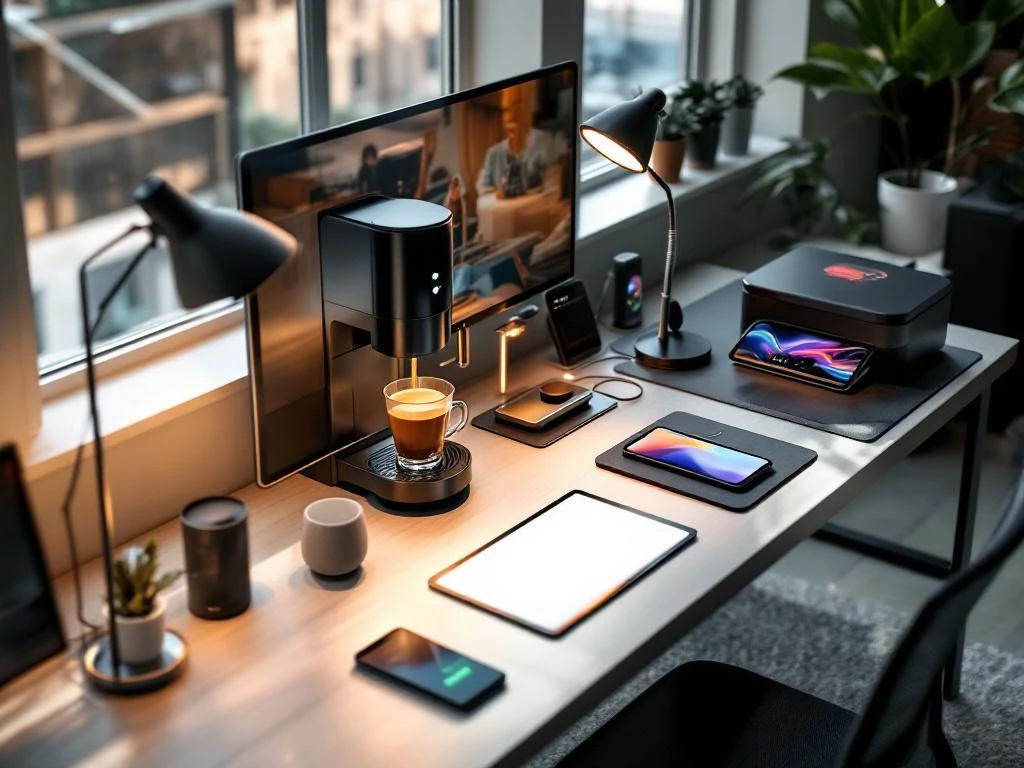
Smart office devices are intelligent technologies that transform traditional office environments into efficient, automated workspaces. These IoT-driven systems include smart lighting, climate control, security systems, and automated desks that work together to increase productivity, save energy, and improve employee comfort. From smart sensors to AI-driven systems, these devices offer tangible benefits for modern businesses.
What exactly are smart office devices?
Smart office devices are intelligent technologies that use IoT sensors, AI, and automated systems to optimize office environments. These devices collect real-time data, automatically adapt to changing conditions, and communicate with each other to create a seamless work experience.
IoT technology forms the basis of smart office systems by connecting sensors and devices via the internet. This connection enables lighting to dim automatically in response to natural light, climate systems to adjust to occupancy, and security systems to provide intelligent access control.
The systems work by continuously monitoring the working environment and making automatic adjustments based on preset parameters. This creates smarter workplaces that anticipate the needs of employees while reducing operational costs through efficient energy use.
What types of smart office devices are available?
Smart office devices fall into different categories, each of which improves specific aspects of the workplace. Smart lighting systems automatically adjust brightness and color temperature based on daylight and employee presence, ensuring optimal comfort and energy savings.
Intelligent climate control automatically regulates temperature and air quality using sensors that monitor occupancy and outdoor conditions. Smart security systems provide access control via badges, facial recognition, or mobile apps, while also providing intrusion detection and video surveillance.
- Height-adjustable desks with memory functions for ergonomic working positions
- Digital displays for meeting rooms with automatic scheduling and booking
- Smart coffee machines that remember preferences and signal maintenance needs
- Intelligent sound systems for optimal acoustics and background noise
How can smart office devices increase productivity?
Smart office devices increase productivity through automated processes that relieve employees of routine tasks and ensure optimal working conditions. Automatic climate control and lighting eliminate distractions, while ergonomic systems reduce physical discomfort that would otherwise lead to reduced focus.
Energy savings are achieved because systems are only active when needed. Smart lighting automatically switches off in empty rooms, climate control systems adjust to actual occupancy, and devices go into sleep mode when not in use. This results in lower operating costs and more sustainable business operations.
Improved ergonomics through smart desks and chairs that remind employees to change their posture and take breaks contribute to health and well-being. Automated meeting room reservations, smart parking indicators, and digital signage reduce daily frustrations and wasted time.
What should you know before purchasing smart office devices?
Budget planning is a crucial starting point, as the implementation of smart office solutions ranges from basic automation to comprehensive AI-driven systems. Compatibility between different brands and systems requires careful planning to avoid future integration issues and ensure optimal functionality.
Security aspects deserve special attention, as IoT devices are potential access points for cybercriminals. Ensure systems have regular security updates, strong encryption, and network isolation. Installation requirements often include infrastructure changes such as cabling, network upgrades, and possibly structural modifications.
Enable a phased implementation by starting with systems that have the greatest impact on daily operations. Consider scalability so that the system can grow with the business, and plan training for employees to ensure optimal use.
How Wout Monseurs assists with smart office systems
Wout Monseurs supports companies in the complete implementation of smart office technology by providing customized advice that meets specific business needs and budgetary constraints. We analyze your current office environment and develop an implementation strategy that integrates seamlessly with your work processes and future plans.
Our experience with high-quality brands and our focus on ergonomics ensure that smart office systems contribute optimally to employee well-being and productivity. We take care of the entire installation and offer ongoing maintenance to keep systems functioning optimally.
- Comprehensive analysis of your current office environment and needs
- Advice on compatible systems that fit your budget and objectives
- Professional installation by experienced technicians
- Ongoing maintenance and support for optimal performance
Discover how smart office technology can transform your workplace. Contact us for a no-obligation consultation about the possibilities for your office environment.
Frequently asked questions
How long does it take to implement a complete smart office system?
Implementation takes an average of 2-6 weeks, depending on the size of your office and the systems you choose. Simple automation such as smart lighting can be up and running within a few days, while more complex AI-driven systems require more preparation time. We plan the installation so that your daily work is disrupted as little as possible.
Can smart office devices also be installed in older office buildings?
Yes, modern smart office systems are often wireless and can be integrated into existing buildings without major renovations. Some systems do require network upgrades or additional cabling, but many IoT devices operate via WiFi or batteries. We assess your building and advise on the most practical solutions.
What happens if the internet goes down—will the devices still work?
Most high-quality smart office systems have local backup functions and can perform basic operations without an internet connection. Lighting and climate control continue to function via local sensors, although advanced features such as remote monitoring are temporarily unavailable. When choosing systems, we always advise on reliability and offline functionality.
How do you protect smart office devices against cyberattacks?
Security starts with choosing devices from reliable brands that offer regular updates and use strong encryption. We recommend placing IoT devices on a separate network, changing default passwords, and performing regular security updates. We also implement firewalls and monitoring to detect suspicious activity.
Can employees adjust the smart office settings themselves?
Yes, modern systems offer user-friendly apps that allow employees to set personal preferences for lighting, temperature, and desk settings. Administrators can determine which settings employees are allowed to change and which remain centrally controlled. This ensures a balance between personalization and efficient energy use.
What are the maintenance costs of smart office systems after installation?
Maintenance costs typically amount to 10-15% of the initial investment per year and include software updates, sensor battery replacement, and preventive maintenance. Many systems have self-diagnostic functions that identify problems early on, preventing costly repairs. We offer maintenance contracts that include all updates and support for predictable annual costs.
How do you measure the return on your investment in smart office technology?
ROI is measured in terms of energy savings (often a 20-30% reduction), increased productivity due to improved working conditions, and lower operating costs. Modern systems offer comprehensive reporting on energy consumption, space utilization, and system performance. Most companies see a return on their investment within 2-4 years thanks to these combined benefits.