

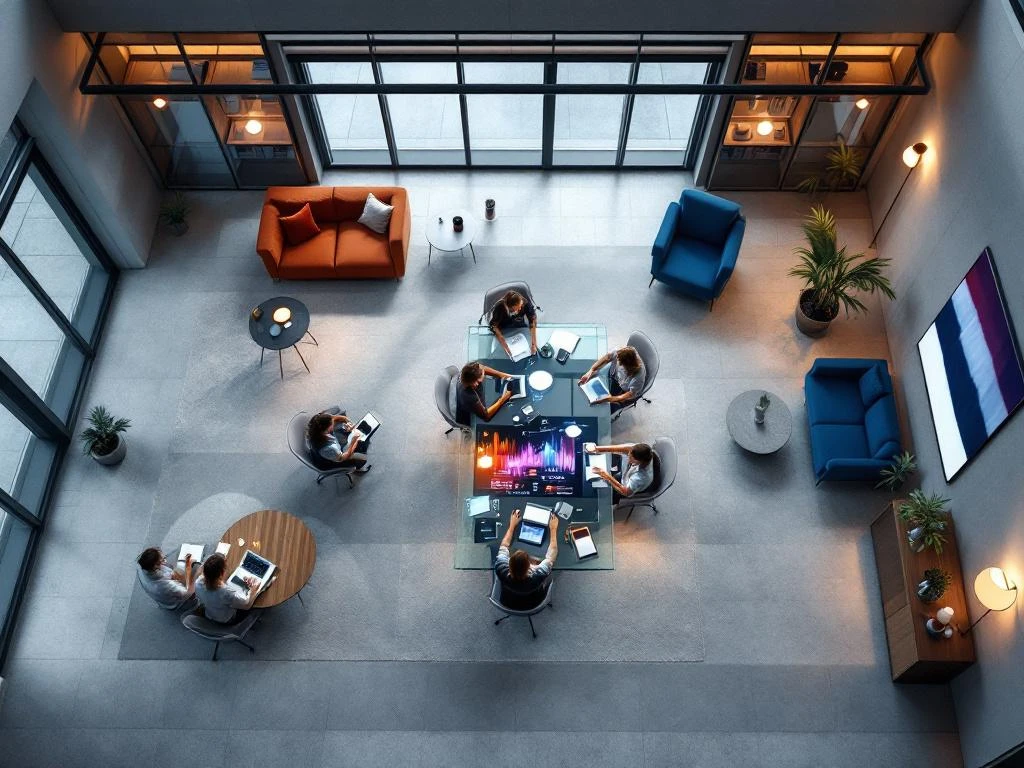
Nederland heeft verschillende gespecialiseerde smartoffice-leveranciers die moderne kantooroplossingen aanbieden. Van grote technologiebedrijven tot lokale specialisten bieden zij slimme systemen voor verlichting, klimaatbeheersing, beveiliging en werkplekbeheer. De keuze hangt af van je specifieke behoeften, budget en gewenste integratiemogelijkheden.
Wat is een smart office en waarom kiezen bedrijven ervoor?
Een smart office gebruikt slimme technologieën om de werkplek efficiënter, comfortabeler en duurzamer te maken. Deze kantoren combineren IoT-sensoren, geautomatiseerde systemen en data-analyse om de werkomgeving aan te passen aan de behoeften van gebruikers.
Nederlandse bedrijven kiezen steeds vaker voor smartoffice-oplossingen vanwege concrete voordelen. Je bespaart energie door automatische verlichting en klimaatregeling die zich aanpassen aan de bezetting. Werknemers zijn productiever in een comfortabele omgeving die automatisch de juiste temperatuur en lichtsterkte instelt.
De coronapandemie heeft deze trend versterkt. Bedrijven willen nu beter begrijpen hoe hun kantoorruimte wordt gebruikt, vooral met hybride werken. Smartofficetechnologie geeft inzicht in ruimtegebruik en helpt bij het optimaliseren van de kantoorindeling.
Moderne werknemers verwachten ook meer van hun werkomgeving. Slimme boekingssystemen voor vergaderruimtes, automatische toegangscontrole en gepersonaliseerde werkplekinstellingen maken het werk aangenamer en efficiënter.
Welke smart office technologieën zijn er beschikbaar in Nederland?
Nederlandse leveranciers bieden verschillende smartofficetechnologieën die samen een geïntegreerd systeem vormen. IoT-sensoren vormen de basis en meten bezetting, temperatuur, luchtkwaliteit en geluidsniveaus in realtime.
Slimme verlichtingssystemen passen automatisch de helderheid en kleurtemperatuur aan op basis van daglicht en aanwezigheid. Dit verbetert het welzijn van werknemers en bespaart energie. Klimaatbeheersing werkt op dezelfde manier en zorgt voor een optimale temperatuur en luchtkwaliteit.
Toegangssystemen gebruiken badges, smartphones of biometrische gegevens voor veilige en gemakkelijke toegang. Je kunt rechten per persoon instellen en krijgt inzicht in wie wanneer aanwezig is.
Vergaderruimteboekingssystemen laten medewerkers eenvoudig ruimtes reserveren via een app of touchscreen. Het systeem toont de beschikbaarheid en kan reserveringen automatisch annuleren als niemand opdaagt.
Deze systemen werken samen via een centraal platform. Data van alle sensoren wordt verzameld en geanalyseerd om patronen te herkennen en automatisch aanpassingen te doen. Dit creëert een lerende omgeving die steeds beter wordt afgestemd op jullie werkwijze.
Hoe kies je de juiste smart office leverancier voor jouw bedrijf?
Bij het kiezen van een smartoffice-leverancier moet je vooral kijken naar technische expertise en ervaring met vergelijkbare projecten. Een goede leverancier begrijpt jouw branche en kan concrete voorbeelden geven van succesvolle implementaties.
Onderzoek of de leverancier een totaaloplossing kan bieden of alleen onderdelen. Integratie tussen verschillende systemen is complex, dus een leverancier die alles uit één hand kan leveren, bespaart hoofdpijn. Vraag naar hun ervaring met de merken en systemen die jullie al gebruiken.
Schaalbaarheid is belangrijk voor groeiende bedrijven. Het systeem moet kunnen meegroeien zonder complete vervanging. Vraag hoe eenvoudig je later functies kunt toevoegen of kunt uitbreiden naar andere locaties.
Ondersteuning na installatie is net zo belangrijk als de implementatie zelf. Informeer naar onderhoudscontracten, responstijden bij storingen en de beschikbaarheid van technische ondersteuning. Een lokale leverancier kan bij problemen sneller ter plaatse zijn.
Stel concrete vragen over kosten, planning en wat er gebeurt als iets niet werkt zoals beloofd. Een betrouwbare leverancier is transparant over mogelijke uitdagingen en heeft een duidelijk plan voor oplossingen.
Wat kost een smart office implementatie gemiddeld?
Een smartoffice-implementatie kost tussen de 500 en 5000 euro per werkplek, afhankelijk van de gewenste functionaliteiten en complexiteit. Basisoplossingen met slimme verlichting en sensoren beginnen rond de 500 euro per werkplek, terwijl uitgebreide systemen met alle functies kunnen oplopen tot 5000 euro.
De kantoorgrootte beïnvloedt de kosten per werkplek sterk. Grote kantoren profiteren van schaalvoordelen, waardoor de prijs per werkplek daalt. Kleine kantoren betalen verhoudingsgewijs meer, omdat vaste kosten zoals software en installatie over minder werkplekken worden verdeeld.
De complexiteit van de integratie met bestaande systemen kan de kosten verhogen. Als jullie al investeringen hebben gedaan in bepaalde systemen, kost het extra tijd en geld om alles goed te laten samenwerken.
Voor de budgetplanning kun je rekenen op 70% eenmalige kosten voor hardware en installatie, en 30% voor softwarelicenties en jaarlijks onderhoud. De terugverdientijd ligt meestal tussen de 2 en 4 jaar, door energiebesparing en verhoogde productiviteit.
Begin met een pilot in één deel van het kantoor om ervaring op te doen en de kosten te spreiden. Dit helpt ook bij het overtuigen van stakeholders voordat je de volledige investering doet.
Hoe Wout Monseurs helpt met smart office oplossingen
Wij combineren onze 60 jaar ervaring in kantoorinrichting met moderne smartofficetechnologieën tot een totaaloplossing. Ons team begrijpt hoe traditionele kantoorinrichting en slimme systemen elkaar versterken voor een optimale werkomgeving.
We beginnen altijd met een analyse van jullie werkwijze en wensen. Vervolgens ontwerpen we een geïntegreerde oplossing waarbij het meubilair, de indeling en de technologie perfect op elkaar zijn afgestemd. Dit zorgt voor een naadloze gebruikerservaring, zonder technische complexiteit voor jullie medewerkers.
Onze projectaanpak zorgt voor een soepele implementatie. We coördineren alle leveranciers en zorgen dat alles op tijd en binnen budget wordt opgeleverd. Na installatie blijven we beschikbaar voor ondersteuning en eventuele uitbreidingen.
Wil je weten hoe een smart office jullie bedrijf kan helpen? Neem contact met ons op voor een vrijblijvend adviesgesprek, waarin we jullie specifieke situatie bespreken en een passende oplossing voorstellen.
Veelgestelde vragen
Hoe lang duurt de implementatie van een smart office systeem gemiddeld?
Een gemiddelde smart office implementatie duurt 6-12 weken, afhankelijk van de kantoorgrootte en complexiteit. Kleine kantoren (tot 50 werkplekken) zijn vaak binnen 6-8 weken klaar, terwijl grote kantoren met uitgebreide integratie 3-4 maanden kunnen duren. Een gefaseerde aanpak kan de overlast minimaliseren.
Kunnen smart office systemen worden geïntegreerd met onze bestaande IT-infrastructuur?
Ja, moderne smart office oplossingen zijn ontworpen om te integreren met bestaande systemen zoals WiFi-netwerken, beveiligingssystemen en ERP-software. Wel is het belangrijk om vooraf de compatibiliteit te controleren en eventueel netwerkupgrades in te plannen. Een goede leverancier voert altijd eerst een technische audit uit.
Wat gebeurt er als het smart office systeem uitvalt of storing heeft?
Betrouwbare smart office systemen hebben ingebouwde redundantie en kunnen in offline-modus blijven functioneren voor basisfuncties zoals verlichting en toegang. De meeste leveranciers bieden 24/7 monitoring en ondersteuning met responstijden van 4-8 uur voor kritieke storingen. Preventief onderhoud en regelmatige updates voorkomen de meeste problemen.
Hoe privacy-gevoelig is de data die smart office sensoren verzamelen?
Smart office systemen verzamelen voornamelijk anonieme data over ruimtegebruik, temperatuur en aanwezigheid, geen persoonlijke informatie. Alle data wordt lokaal opgeslagen of via beveiligde verbindingen verstuurd conform AVG-wetgeving. Werknemers kunnen niet individueel worden gevolgd, alleen algemene patronen worden geanalyseerd voor optimalisatie.
Welke ROI kunnen we verwachten van een smart office investering?
De gemiddelde ROI ligt tussen 15-30% per jaar door energiebesparing (20-40%), verhoogde productiviteit en betere ruimtebenutting. Typische besparingen komen van lagere energiekosten, minder benodigde kantoorruimte door optimaal ruimtegebruik, en verminderde facility management kosten. De terugverdientijd is meestal 2-4 jaar.
Is het mogelijk om met een klein budget te beginnen en later uit te breiden?
Absoluut, een gefaseerde aanpak is vaak de slimste keuze. Begin bijvoorbeeld met slimme verlichting en sensoren in één verdieping of afdeling. Kies een leverancier die modulaire systemen aanbiedt, zodat je later eenvoudig functies kunt toevoegen zoals toegangscontrole of klimaatbeheer zonder het bestaande systeem te vervangen.
Hoe voorkom je weerstand van medewerkers bij de introductie van smart office technologie?
Communicatie en betrokkenheid zijn cruciaal voor acceptatie. Leg uit welke voordelen medewerkers persoonlijk ervaren zoals beter comfort en gemakkelijker vergaderruimte boeken. Start met een pilot groep enthousiaste medewerkers en organiseer training sessies. Zorg dat de technologie intuïtief werkt en medewerkers niet belast met complexe systemen.