

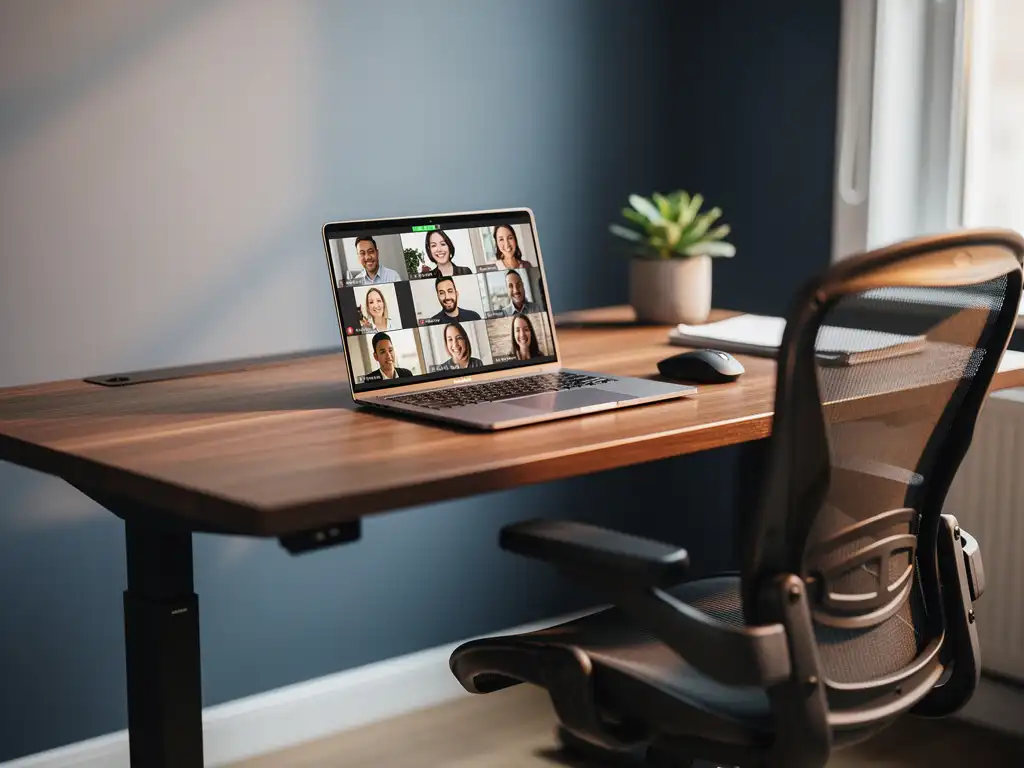
The modern workplace has undergone a revolution, with smart office solutions taking remote and hybrid work to the next level. These intelligent technologies are transforming traditional work environments by enabling seamless integration between office and home workspaces.
With the growing popularity of flexible working, organizations are seeking solutions that optimize productivity, comfort, and collaboration, regardless of the work location. The costs of implementing a smart office are increasingly viewed as an investment in the future of work, with technology serving as the foundation for efficient and enjoyable work experiences.
What are smart office solutions for working from home?
Smart office solutions for remote work are intelligent technologies that connect the home office to the main office and automate work processes. These solutions include cloud-based systems, IoT sensors, smart devices, and integrated software that optimize collaboration, productivity, and employee comfort.
The core of smart office technology lies in creating a seamless work experience across different locations. Cloud systems enable employees to access company data from anywhere, while video conferencing systems facilitate high-quality communication. Smart lighting systems automatically adjust to natural light and can reduce energy consumption by up to 90%.
Modern smart office solutions also integrate with popular platforms such as Microsoft Teams, Google Meet, and Zoom. This ensures that remote workers can fully participate in meetings and projects, just as if they were physically present in the office.
What technologies make hybrid work possible?
Hybrid work is made possible by a combination of cloud computing, video conferencing systems, collaboration software, IoT sensors, and AI-driven automation. These technologies enable seamless communication and collaboration between office-based and remote workers.
Cloud-based systems form the backbone of hybrid work. They provide access to files, applications, and business data from any location with an internet connection. Video conferencing technology has evolved into advanced systems that not only transmit voice and video but also enable screen sharing, digital whiteboards, and real-time collaboration.
Desk booking tools have become essential for flexible workspaces. These systems allow employees to reserve workstations and meeting rooms with a single click via their smartphone or computer. IoT sensors monitor space usage and automatically adjust lighting, temperature, and ventilation.
AI-driven systems optimize work processes by recognizing patterns and making predictions. For example, they can automatically suggest meeting times based on participants’ availability or assign workspaces based on user preferences.
How can you create an ergonomic home office with smart solutions?
An ergonomic home office with smart solutions combines adjustable furniture, intelligent lighting, automatic break reminders, and sensors that monitor posture and well-being. These technologies promote healthy working habits and help prevent physical discomfort.
The foundation is an ergonomic office chair that supports proper posture, keeping the knees at a 90-degree angle. A sit-stand desk promotes healthy working habits by allowing you to alternate regularly between sitting and standing. The monitor should be at eye level to prevent neck strain.
Smart lighting systems use sensors to turn on automatically when someone enters the room. For workspaces, cool white or daylight white is recommended, as it’s ideal for focus and alertness. An adjustable desk lamp is a great solution on dark days and adapts to the natural light cycle.
Modern smart office solutions also include wellness monitoring. Wearables and desk sensors can monitor posture and send reminders to take breaks or stretch. Apps can suggest eye breaks and apply the 20-20-20 rule: looking at something 20 feet away for 20 seconds every 20 minutes.
What benefits do smart office solutions offer employers?
Smart office solutions offer employers cost savings of up to 30%, increased productivity, improved employee satisfaction, insights into space utilization, and lower operational costs. These technologies optimize facility management processes and support data-driven decision-making regarding workplace management.
Energy savings are a significant benefit. Smart lighting systems can reduce energy costs by up to 90% by automatically adjusting to occupancy levels and natural light. HVAC systems optimize energy consumption by operating only in occupied spaces.
Space optimization is made possible by real-time insights into space utilization. Sensors show which workstations and meeting rooms are used most frequently, enabling organizations to optimize their real estate strategy. This can lead to significantly lower housing costs.
Employee satisfaction is on the rise thanks to greater flexibility and comfort. The costs of implementing a smart office are offset by lower turnover, higher productivity, and improved talent acquisition. Employees appreciate the ability to customize their work environment to suit their personal preferences.
Data insights support strategic decision-making. Facility managers gain insights into printing habits, energy consumption, space utilization, and employee behavior. This information helps optimize processes and predict future needs.
How do you choose the right smart office solutions for your organization?
To choose the right smart office solutions, start by analyzing your organization’s needs, determining your budget, considering scalability, and evaluating integration options. Begin by conducting an audit of your current work processes and identifying specific challenges that technology can address.
Start by conducting a thorough analysis of your current situation. Which work processes can be optimized? Where do employees experience frustrations? What percentage of your team works in a hybrid model? These questions will help you identify priorities.
Budget planning is crucial for a successful implementation. Smart office implementation costs vary widely depending on the solutions chosen. Consider both initial investments and ongoing operational costs. ROI calculations should take into account energy savings, productivity gains, and cost reductions.
Scalability is essential for future growth. Choose solutions that can grow alongside your organization. Cloud-based systems typically offer more flexibility than on-premises solutions. Also consider the option of phased implementation.
Integration with existing systems prevents inefficiency and user frustration. Verify that new solutions can integrate with your current IT infrastructure, HR systems, and communication tools. API availability and standard protocols are key considerations.
How Wout Monseurs assists with smart office implementation
We offer comprehensive smart office solutions that optimize remote and hybrid work. As a family-owned business with over 60 years of experience, we combine traditional expertise with cutting-edge technology to create intelligent workspaces.
Our smart office services include:
- Desk booking tools for flexible workspace reservations via smartphone or computer
- Smart conferencing systems that integrate with Microsoft Teams, Google Meet, and Zoom
- IoT sensors for automatic climate control and energy optimization
- Smart lighting systems that can reduce energy costs by up to 90%
- Real-time insights into facility costs and space utilization
We handle the entire process, from design to implementation. Our project design seamlessly integrates smart office technology into your workplace, with a focus on ergonomics and sustainability. Visit our Experience Center in Breda to see smart office solutions in action.
Would you like to know how the costs of implementing a smart office compare to the benefits for your organization? Contact us for a personalized consultation and discover how we can transform your workplace into an intelligent, future-oriented environment.
Frequently asked questions
What are the typical smart office implementation costs for a medium-sized company?
Smart office implementation costs for a medium-sized company (50–200 employees) range from €15,000 to €75,000, depending on the solutions chosen. Basic solutions such as desk booking and video conferencing start at around €200–€500 per workstation, while comprehensive systems with IoT sensors and AI automation can cost €1,000–€2,000 per workstation. The ROI is typically achieved within 12–24 months through energy savings and increased productivity.
How long does it take to fully implement smart office solutions?
A full smart office implementation typically takes 6–12 weeks, depending on its complexity and scope. Simple solutions, such as desk booking tools, can be up and running within 2–3 weeks, while comprehensive systems with IoT sensors and integrations may take 8–16 weeks. A phased approach is often recommended to minimize disruption and allow employees to gradually get used to the new technology.
What technical requirements does my office need to meet for smart office solutions?
For smart office solutions, you need a stable internet connection (at least 100 Mbps for 50+ users), a robust Wi-Fi network with enterprise-grade access points, and sufficient power supply for sensors and smart devices. Cloud-based solutions require minimal local infrastructure, but IoT sensors often require a central hub or gateway. Most modern office buildings already meet these basic requirements.
How do you train employees to use smart office technology?
Successful training combines hands-on workshops, digital guides, and peer-to-peer support. Start with power users who can help others, organize short demo sessions for each department, and provide ongoing support through a help desk or chatbot. Most modern smart office solutions are designed to be intuitive, so extensive training is often unnecessary—focus on the key features and benefits for everyday use.
What happens to the data collected by smart office sensors?
Smart office sensors collect anonymous data on space utilization, temperature, air quality, and energy consumption, but no personal information. This data is used to optimize facilities and is typically stored locally or in secure cloud environments in accordance with GDPR guidelines. Organizations can establish transparency policies to inform employees about data collection and use, always prioritizing privacy.
Can smart office solutions integrate with our existing IT systems?
Modern smart office solutions are designed for seamless integration via standard APIs and protocols. They can connect with popular platforms such as Microsoft 365, Google Workspace, Slack, and HR systems for Single Sign-On (SSO). For legacy systems, custom integrations are often possible, although this may entail additional development time and costs. A thorough compatibility analysis beforehand prevents integration issues.
How do you measure the success of your smart office investment?
Measure smart office success using KPIs such as energy savings (target: 20–30%), space utilization (optimal: 70–85%), employee satisfaction (via surveys), and productivity metrics such as meeting efficiency and response times. Financial metrics include ROI calculation, operational cost reduction, and real estate optimization. Dashboard reports provide real-time insights into these metrics and help demonstrate the business case.