

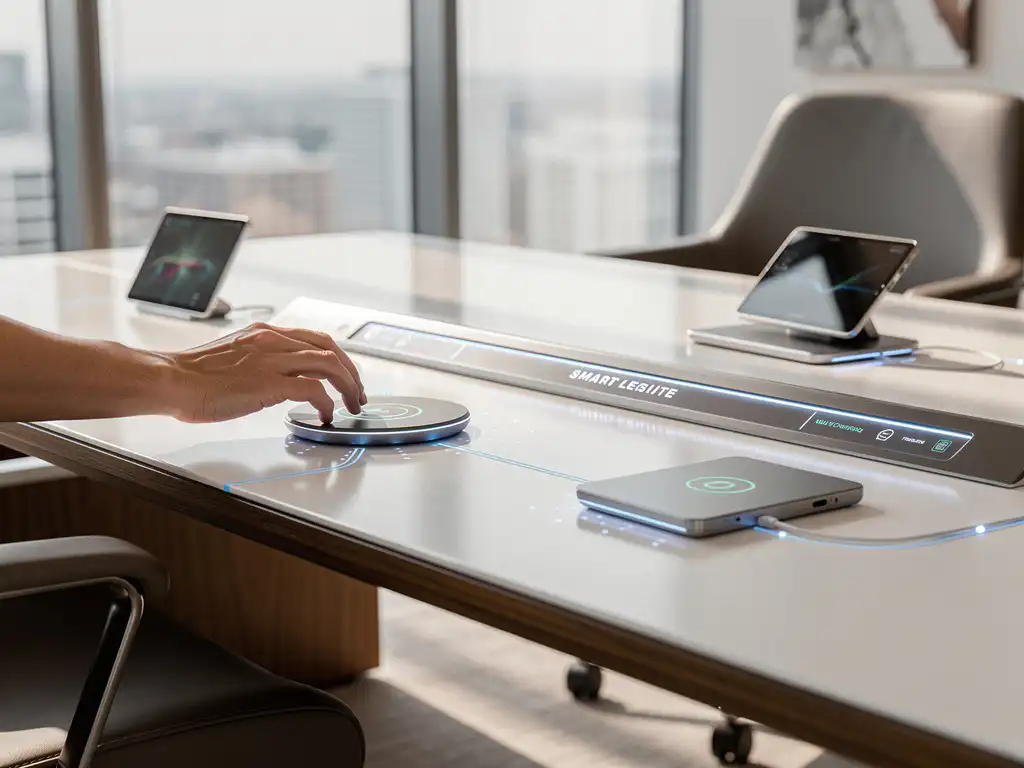
Smart office systems have transformed the modern workplace, but their value depends entirely on their availability. When a meeting room reservation system goes down or an automated desk system stops responding, it can seriously impact productivity and employee satisfaction. For organizations investing in smart office technology, it is crucial to understand which systems offer the best availability guarantees.
The costs associated with implementing a smart office system are significant, making reliability a critical factor in selecting vendors and systems. A well-functioning smart office system must be available 24/7 to support the modern hybrid work style.
What are smart office systems, and why is availability so important?
Smart office systems are integrated digital solutions that combine IoT sensors, AI-driven automation, and cloud-based platforms to make workspaces smarter and more efficient. These systems include desk booking tools, automated climate control, smart lighting, conference technology, and real-time space analytics.
Availability is crucial because modern employees have become completely dependent on these systems for their daily work. An outage in the desk booking system can lead to frustration and wasted time, while a malfunctioning conference system can disrupt important meetings. Research shows that every minute of downtime for business-critical systems costs an average of €300 to €1,500 in lost productivity.
Reliance on smart office technology is growing as hybrid work becomes the norm. Employees expect to be able to book spaces, hold meetings, and collaborate seamlessly, regardless of their location. This makes reliable systems with high uptime rates essential for organizational success.
What factors determine the availability of smart office systems?
The availability of smart office systems is determined by the quality of the cloud infrastructure, network stability, hardware reliability, and the quality of support services. Systems with redundant servers, automatic failover mechanisms, and proactive monitoring typically achieve uptime rates of 99.9% or higher.
Cloud infrastructure forms the backbone of modern smart office solutions. Vendors that use enterprise-grade cloud providers such as Microsoft Azure, Amazon Web Services, or Google Cloud Platform typically offer better availability guarantees. These platforms feature built-in redundancy and global data centers that enable automatic failover.
Network connectivity plays a crucial role, especially for real-time functions such as video conferencing and live desk booking updates. Systems that offer offline functionality for critical functions such as access control and basic reservations remain operational during temporary network outages.
Hardware quality and maintenance strategy influence overall system availability. Sensors, tablets, and other physical components must be robust enough to withstand heavy office use. Preventive maintenance and the prompt replacement of defective parts are essential for continuous availability.
How do you compare the reliability of different smart office providers?
Compare providers based on their Service Level Agreements (SLAs), uptime history, incident response times, and transparency regarding system performance. Reliable providers offer SLAs with a minimum 99.5% uptime guarantee and financial compensation for underperformance.
Evaluate the technical specifications of each system, including the cloud infrastructure used and backup procedures. Ask for references from existing customers and inquire about their experiences with system stability. Vendors who openly share their uptime statistics and provide real-time status dashboards demonstrate confidence in their services.
Pay close attention to the quality of technical support and response times for critical issues. The best providers offer 24/7 monitoring and can respond to urgent outages within a few hours. Check whether they use proactive monitoring to identify issues before they affect the user experience.
Also examine the supplier’s financial stability and track record. A young startup may offer innovative features, but established companies typically have more stable infrastructure and long-term support. Ask about their disaster recovery plans and how they handle large-scale outages.
Which smart office systems have the highest uptime scores?
Enterprise-grade smart office platforms from established vendors such as Microsoft, Cisco, and IBM typically achieve the highest uptime scores of 99.9% or higher. These systems utilize redundant cloud infrastructure, automatic failover mechanisms, and global data centers to ensure maximum availability.
Deskbooking systems integrated with Microsoft 365 or Google Workspace benefit from the reliable infrastructure of these tech giants. Their uptime rates consistently exceed 99.8%, thanks in part to automatic updates and proactive monitoring.
Cisco Webex and Microsoft Teams conferencing and communication systems have proven track records with uptime rates of 99.9%. These platforms invest heavily in redundant systems and have global support teams available 24/7.
IoT-based climate control and lighting systems from industrial suppliers such as Philips and Schneider Electric typically offer high reliability due to their focus on enterprise applications. Their systems often include local backup functionality that keeps critical functions running during cloud outages.
How Wout Monseurs helps with a reliable smart office implementation
At Wout Monseurs, we understand that the availability of smart office systems is crucial to your business operations. With over 60 years of experience in office solutions, we combine traditional expertise with modern smart office technology to create reliable, future-proof workspaces.
Our approach to smart office implementation includes:
- Thorough analysis of your infrastructure and reliability requirements
- Selection of enterprise-grade systems with proven uptime records
- Implementation of redundant systems and backup solutions
- Proactive monitoring and preventive maintenance
- 24/7 technical support through our partner network
As part of our comprehensive project design services, we seamlessly integrate smart office technology with your office design. From desk booking systems to automated meeting rooms, we provide a reliable digital infrastructure that supports your team.
Discover how we can transform your office into a smart, reliable workspace. Contact us for a no-obligation consultation on the best smart office solutions for your organization.
Frequently asked questions
What happens if my smart office system goes down during an important meeting?
Most enterprise-grade systems have automatic failover mechanisms that activate within seconds. For critical situations, we recommend always having a manual backup solution available, such as traditional conference calls or physical whiteboards. In the event of a complete system failure, employees can temporarily fall back on direct communication and manual bookings.
How can I measure the actual uptime of my current smart office systems?
Monitor your systems using the dashboards provided by most providers, or use third-party monitoring tools such as Pingdom or UptimeRobot. Document all outages and their duration to track your own uptime statistics. Compare these figures regularly with your provider’s SLA guarantees to verify that they are meeting their commitments.
What are the costs associated with increasing the availability of smart office systems?
Higher availability typically entails 10–30% additional costs for redundant systems, premium SLAs, and 24/7 support. This investment often pays for itself through reduced productivity losses and increased employee satisfaction. Calculate the cost of downtime for your organization (an average of €300–1,500 per minute) to determine the ROI of improved availability.
Can I combine different smart office systems from different vendors without compromising reliability?
Yes, but this requires careful planning and a robust integration strategy. Choose systems with open APIs and standard protocols to ensure seamless communication. Implement a centralized monitoring solution that monitors all systems and establish clear escalation procedures in case integrations fail. An experienced implementation partner can help design a reliable multi-vendor architecture.
How do I prepare my team for a smart office system outage?
Develop a clear contingency plan with alternative workflows for each critical function. Train employees on how to use backup methods and communicate clear escalation procedures. Conduct regular disaster recovery drills to test how quickly your team can switch to manual processes. Keep technical support contact information readily available at all times.
What are the first steps in implementing a reliable smart office system?
Start with a thorough analysis of your current infrastructure and identify critical systems that must be available 24/7. Establish clear uptime requirements and compare vendors based on their SLAs and track record. Begin with a pilot implementation in a limited area to test reliability before rolling out to the entire office. Ensure adequate training and support during the transition phase.