

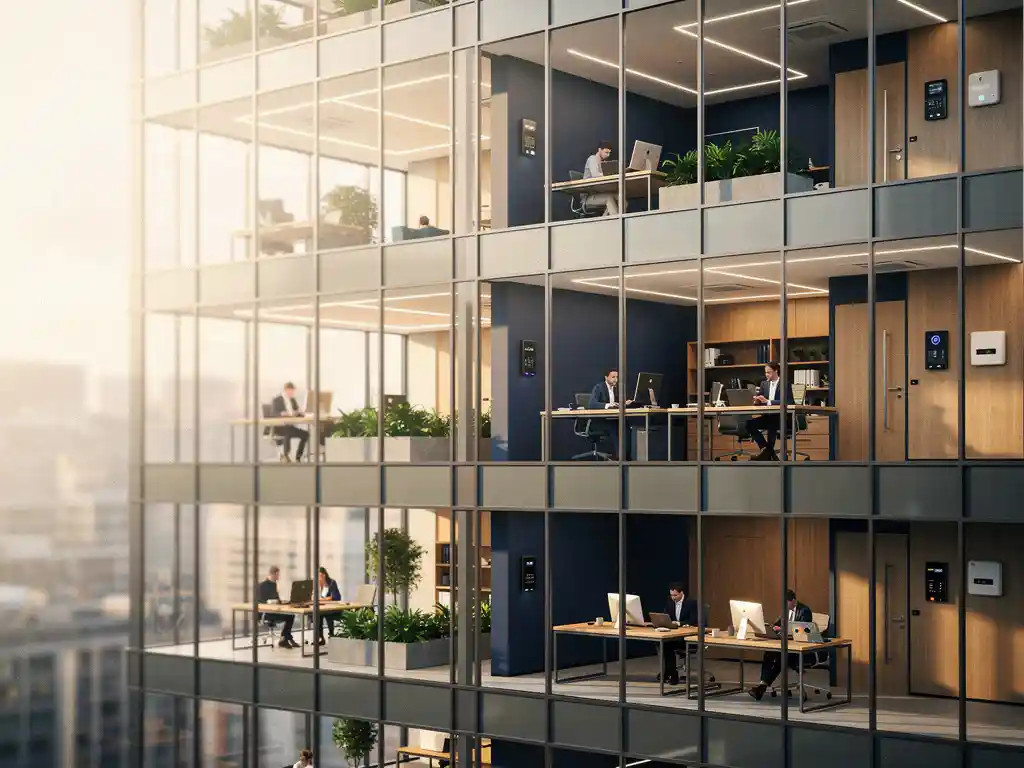
Smart office systems are becoming increasingly popular in modern office buildings, but multi-tenant buildings present unique challenges. Multi-tenant office buildings require smart technologies that can support both shared spaces and individual tenant needs.
Implementing smart office technology in such buildings requires a careful balance between functionality, privacy, and cost-efficiency. From automated climate control to intelligent access systems, every technology must be tailored to the complex needs of different tenants under one roof.
What are smart office systems for multi-tenant buildings?
Smart office systems for multi-tenant buildings are integrated technologies that intelligently manage both shared facilities and individual tenant zones. These systems combine IoT sensors, AI-driven automation, and cloud-based platforms to simultaneously optimize energy efficiency, security, and user comfort for all tenants.
The core components include intelligent HVAC systems that can be controlled on a zone-by-zone basis, access control systems that keep different tenants separate, and shared amenities such as smart meeting rooms and parking garages. Modern systems utilize wireless sensors that monitor motion, temperature, air quality, and occupancy.
A key benefit is the ability to bill each tenant individually based on actual usage. Smart meters track energy consumption by zone, while occupancy sensors help optimize cleaning and maintenance services. This data-driven approach ensures transparent cost allocation and encourages sustainable behavior.
What challenges do smart office systems present in multi-tenant buildings?
The biggest challenges are ensuring privacy between tenants, complex cost allocation, and balancing individual preferences with building-wide efficiency. Technical integration is complicated by differing IT infrastructures and security requirements for each tenant, while maintenance and updates must also be coordinated.
Privacy is a critical concern because sensors and systems collect data on work patterns, occupancy, and space utilization. Tenants want assurance that their sensitive business information is not accessible to other tenants or unauthorized individuals. This requires strict data segmentation and encryption.
Technical complexity arises from the need to integrate different systems that must be compatible with various IT environments. Each tenant may have its own software, networks, and security protocols. The smart office system must work seamlessly with these existing infrastructures.
The implementation costs of smart office systems pose another challenge, as upfront investments are required while the payback period depends on tenant occupancy and usage. Property owners must balance advanced features with affordability for tenants.
How do shared smart office facilities work in office buildings?
Shared smart office facilities operate through a central management system that controls access, monitors usage, and allocates costs among tenants. Reservation systems allow tenants to book meeting rooms, parking spaces, and other facilities via apps or web portals, while sensors automatically track occupancy and usage.
Smart meeting rooms are at the heart of shared facilities. These rooms automatically detect when a meeting begins and ends, adjust lighting and temperature, and integrate with popular video conferencing platforms. Reservation systems prevent double bookings and optimize space utilization.
Smart parking systems use sensors to detect available spaces and guide tenants to vacant parking spots via mobile apps. This reduces search time and traffic congestion in parking garages. Access control ensures that only authorized tenants can use reserved spaces.
Shared workspaces, such as flexible workstations and lounges, use smart office technology to automatically adjust desks to personal preferences. The desk automatically adjusts to the user’s personal preferences when they check in via an app or badge.
Which smart office systems are best suited for multi-tenant use?
The most suitable systems are modular, cloud-based platforms that can be configured on a per-tenant basis without compromising overall building functionality. Effective multi-tenant systems include zoned HVAC control, flexible access management, intelligent energy monitoring, and shared facility reservation systems.
Zoned climate control is at the top of the list, because different tenants often have different temperature preferences. Modern HVAC systems can be controlled by zone or even by room, with AI algorithms learning from user patterns and outdoor conditions to save energy.
Flexible access control systems are essential for security and privacy. These systems can assign different access levels to various tenants, guide visitors to the appropriate areas, and maintain detailed logs for security purposes. Integration with existing badge or biometric systems is crucial.
Smart lighting systems that respond to occupancy and natural light can reduce energy costs by up to 90%. These systems can be programmed for each tenant to support a variety of lighting scenarios, from focused work to presentations.
How are the costs of smart office systems divided among tenants?
Costs are allocated through a combination of fixed monthly fees for basic features and variable costs based on actual usage, as measured by smart meters and sensors. Typical allocation criteria include square footage, number of workstations, energy consumption, and use of shared facilities, with transparent reporting being essential for acceptance.
Fixed costs typically cover basic infrastructure, such as the central management system, network connectivity, and general maintenance. These costs are often allocated on a pro-rata basis based on the leased area or the number of workstations. Tenants pay a fixed monthly amount, regardless of their actual usage.
Variable costs are based on measurable parameters, such as energy consumption and the use of meeting rooms, parking spaces, and other facilities. Smart meters track exactly how much electricity, heating, or cooling each tenant uses. Reservation systems track how often shared spaces are used.
Transparent reporting via dashboards allows tenants to monitor their own consumption and costs. Monthly reports show energy consumption, facility usage, and comparisons with previous periods. This transparency increases acceptance and encourages energy-efficient use.
The implementation costs of smart office systems can be spread out using various financing models, ranging from outright purchase to lease arrangements or service subscriptions, in which the building owner makes the investment and passes on the costs through rent.
How Wout Monseurs assists with smart office implementation
We assist multi-tenant buildings with the full implementation of smart office systems, from consulting and design to installation and maintenance. Our expertise in project design enables us to solve complex multi-tenant challenges.
Our approach includes:
- Comprehensive analysis of tenant requirements and building specifications
- Custom smart office solutions that combine privacy and functionality
- Transparent cost models and implementation strategies
- Integration with existing building systems and IT infrastructure
- Ongoing support and system optimization
With over 60 years of experience in office design, we understand the complexities of multi-tenant buildings. Our family-owned business combines traditional expertise with cutting-edge technology to create workspaces that are both smart and people-centric. Contact us for a no-obligation consultation about your smart office implementation.
Frequently asked questions
How long does it take to implement a smart office system in a multi-tenant building?
The implementation period ranges from 3 to 12 months, depending on the size of the building and the complexity of the desired systems. A phased approach, in which basic functionalities are installed first and expanded later, can minimize disruption to tenants. Planning and coordination with all affected tenants is crucial for a smooth implementation.
What happens when a tenant moves out—can smart office systems be easily transferred?
Modern smart office systems are designed to offer flexibility when tenants change. Access rights can be revoked immediately, personal settings are erased, and new tenants receive a "clean" configuration. Cloud-based systems make it possible to complete a full handover within a few hours without affecting other tenants.
Can tenants integrate their own smart office devices with the building system?
Yes, most modern systems support API integrations that allow tenants to connect their own devices. This applies to smart thermostats, lighting, and office equipment, provided they meet the building’s security standards. A preliminary IT audit ensures that these integrations do not pose security risks to other tenants.
How is tenants' privacy protected when sensor data is shared?
Privacy is protected through strict data segmentation, ensuring that each tenant has access only to their own data. All sensor data is anonymized and stored in encrypted form, and shared statistics do not contain any personally identifiable information. GDPR compliance and regular security audits ensure transparency and trust among all parties.
What are the most common mistakes made when implementing smart office solutions in multi-tenant buildings?
Common mistakes include insufficient consultation with tenants beforehand, underestimating the complexity of IT integration, and unclear cost-sharing agreements. Another frequent oversight is failing to account for different user levels—from tech-savvy employees to those with fewer digital skills—in the design. A solid change management strategy helps prevent resistance and increases acceptance.
Can smart office systems also function when the building is only partially occupied?
Absolutely; smart office systems are particularly effective when occupancy rates fluctuate. These systems can automatically adjust energy consumption in unoccupied areas, optimize cleaning schedules based on actual usage, and provide tenants with real-time visibility into available facilities. This results in significant cost savings, which is especially relevant in the wake of COVID-19 and the rise of hybrid work.