

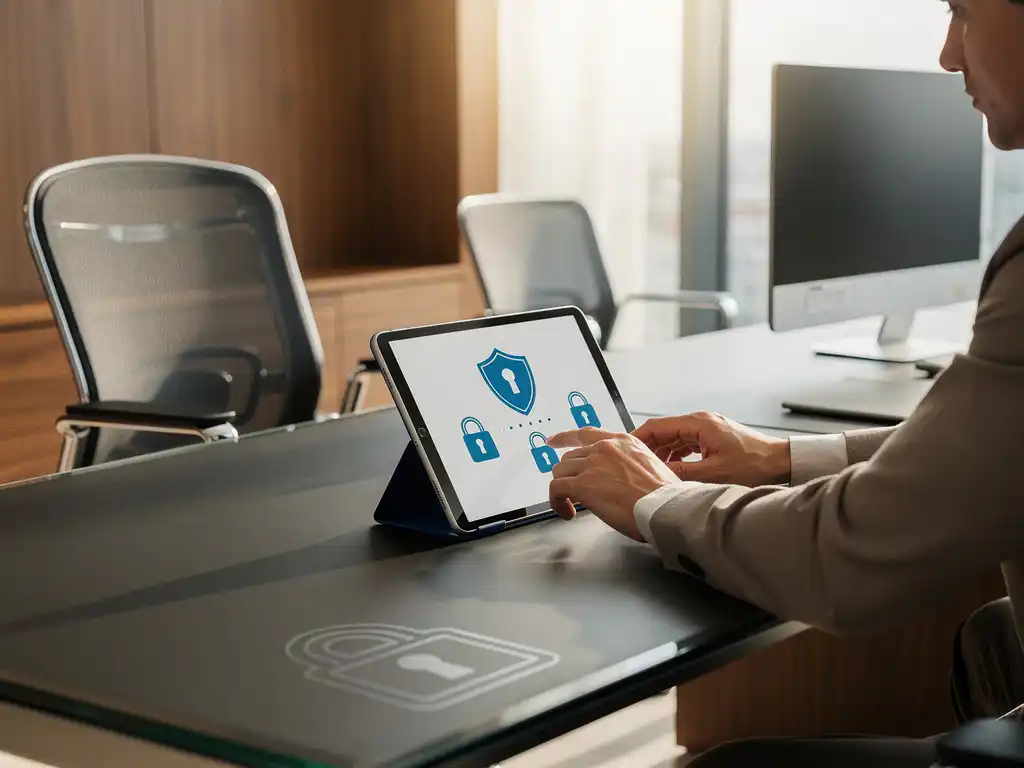
Smart office systems are becoming increasingly popular in Dutch offices, but they also raise important privacy concerns. With the implementation of the General Data Protection Regulation (GDPR), organizations must carefully consider which technologies they implement and how these handle employees’ personal data.
Choosing GDPR-compliant smart office solutions is crucial for companies that want to take advantage of modern technology without exposing themselves to legal risks. From smart booking systems to automated desk configurations, every smart office implementation requires a well-thought-out "privacy by design" approach.
What are GDPR-compliant smart office systems?
GDPR-compliant smart office systems are intelligent office solutions that process personal data in accordance with the strict requirements of the General Data Protection Regulation. These systems incorporate privacy-by-design principles and provide transparent control over data collection and use.
A compliant smart office system is characterized by several essential features. First, the system must apply data minimization, ensuring that only information necessary for the specific purpose is collected. In addition, users must always be able to explicitly consent to or refuse data collection.
Examples of GDPR-compliant smart office technologies include desk booking tools that only store workplace preferences and reservation times, smart lighting systems that detect movement without recording identities, and climate control systems that monitor room usage without tracking individuals. These systems provide functionality without unnecessarily infringing on privacy.
Compliance also requires technical security measures, such as encryption of stored data, regular security updates, and restricted access to collected information. Organizations must also have a clear privacy policy that explains what data is collected and why.
What personal data do smart office systems collect?
Smart office systems collect various categories of personal data, ranging from direct identifiers such as names and email addresses to indirect behavioral data such as workspace preferences and attendance patterns. The volume and sensitivity of the data collected vary significantly from system to system.
Direct personal data includes usernames, email addresses, employee ID numbers, and sometimes biometric data used for access control. This information is often used for authentication and to personalize the workplace experience, such as automatically configuring desks to reflect personal preferences.
Behavioral data constitutes a second category and may include location data, workspace usage, meeting room reservations, and movement patterns. Smart sensors track when workspaces are in use, how long meetings last, and which facilities are most popular.
Technical data such as IP addresses, device IDs, and network activity are often collected automatically by smart office infrastructure. This information is necessary for system functionality, but can also be used to analyze user behavior.
It is important to note that not all data collection carries the same level of risk. Anonymized usage statistics are less problematic than detailed individual tracking. Organizations should maintain a clear inventory of their data and regularly assess which data is truly necessary.
How do you choose a GDPR-compliant smart office provider?
Choosing a GDPR-compliant smart office provider requires a thorough evaluation of their privacy policy, technical security measures, and transparency regarding data processing procedures. Look for providers that implement privacy by design and offer clear documentation regarding compliance.
Start by reviewing the vendor’s privacy documentation. A reliable vendor will have a comprehensive privacy policy, data processing agreements (DPAs), and be able to demonstrate the technical and organizational measures that have been implemented. Specifically ask about their approach to data minimization and user controls.
Evaluate the technical security measures of potential suppliers. This includes encryption of data at rest and in transit, regular security audits, access controls, and incident response procedures. Ask for certifications such as ISO 27001 or SOC 2 Type II that demonstrate compliance with security standards.
Transparency is crucial when selecting a supplier. A GDPR-compliant supplier can clearly explain what data their systems collect, where it is stored, how long it is retained, and with whom it is shared. They also provide tools that allow users to view, correct, or delete their own data.
Check whether the vendor has experience with GDPR compliance in similar organizations. Ask for references and case studies that demonstrate how privacy challenges have been resolved. An experienced vendor can also advise on best practices for implementation and ongoing compliance.
Which smart office systems have the least impact on privacy?
Smart office systems with the least impact on privacy are those that operate without tracking individual users, such as anonymized sensor systems for space utilization, energy-efficient lighting with motion detection, and simple booking tools that store only basic preference information.
Anonymized sensor systems are the most privacy-friendly category. These systems detect presence and activity without identifying individuals. Examples include motion sensors for lighting, CO2 monitors for air quality, and noise sensors for acoustic optimization. These technologies improve the work environment without collecting personal data.
Simple reservation systems for workstations and meeting rooms can also be privacy-friendly if they apply data minimization. A system that records only the name, time, and room preference has a much smaller impact on privacy than comprehensive analytics platforms that analyze behavioral patterns.
Smart climate control and lighting systems that respond to general room usage rather than individual preferences strike a good balance between functionality and privacy. These systems optimize energy efficiency and comfort without creating detailed user profiles.
Avoid systems that use extensive biometric identification, continuous location tracking, or detailed behavioral analysis, unless they are absolutely necessary. The rule of thumb is: the more a system knows about individual users, the greater the impact on privacy and the greater the compliance challenges.
How Wout Monseurs Helps with GDPR-Compliant Smart Office Implementation
At Wout Monseurs, we understand that implementing a smart office involves more than just installing technology. Our approach combines over 60 years of experience in office design with modern privacy-by-design principles to deliver GDPR-compliant solutions.
Our smart office expertise includes:
- Privacy impact assessments prior to implementation
- Selection of suppliers with a proven track record of GDPR compliance
- Configuration of systems for minimal data collection
- Transparent documentation of all data processing procedures
- Ongoing support for compliance monitoring and updates
As a full-service project designer, we seamlessly integrate smart office technology into your overall office solution. From desk booking tools that automatically configure desks to match personal preferences to smart meeting room reservation systems, we ensure that all technology meets the highest privacy standards.
Would you like to learn more about GDPR-compliant smart office solutions for your organization? Contact us for a no-obligation consultation regarding your specific privacy requirements and technology needs.
Frequently asked questions
How do I know if my current smart office systems are GDPR-compliant?
Conduct a privacy audit by checking what personal data your systems collect, where it is stored, and whether you have valid data processing agreements in place. Ask your suppliers for documentation of their security measures and compliance certifications. If you don’t receive clear answers or have doubts about compliance, it’s time for a thorough evaluation.
What should I do if employees object to smart office monitoring?
Respect employees’ right to object and offer alternatives whenever possible. Implement opt-out options for non-essential systems and ensure transparent communication about what data is being collected and why. Consider anonymized systems that do not require individual tracking but still provide the desired functionality.
How much does it cost to make existing smart office systems GDPR-compliant?
Costs vary significantly depending on your current systems and compliance status. Budget for privacy impact assessments (€2,000–€10,000), potential system upgrades or replacements, new data processing agreements, and staff training. It is often more cost-effective to invest in compliant systems from the outset than to make adjustments later on.
What documentation do I need to ensure GDPR compliance for smart office systems?
At a minimum, you will need: a processing register listing all smart office data processing activities, data processing agreements with all suppliers, a privacy policy explaining the use of smart office technology, and procedures for handling requests from data subjects. You should also document your privacy impact assessments and security measures in preparation for any regulatory audits.
How long am I allowed to retain data from smart office systems?
Retain data only for as long as necessary for the specific purpose. For workplace preferences and reservations, this is typically up to 1–2 years after the end of employment. Anonymized usage statistics may be retained for longer periods for analysis. Establish clear retention periods and implement automatic deletion to ensure compliance.
Can I use smart office data for HR decisions or performance evaluations?
This is highly risky and is generally not permitted without explicit consent. Smart office data collected for workplace optimization should not be used for other purposes, such as performance evaluations. If you wish to conduct HR analyses, implement separate systems with clear consent and transparent objectives to avoid issues related to purpose limitation.