

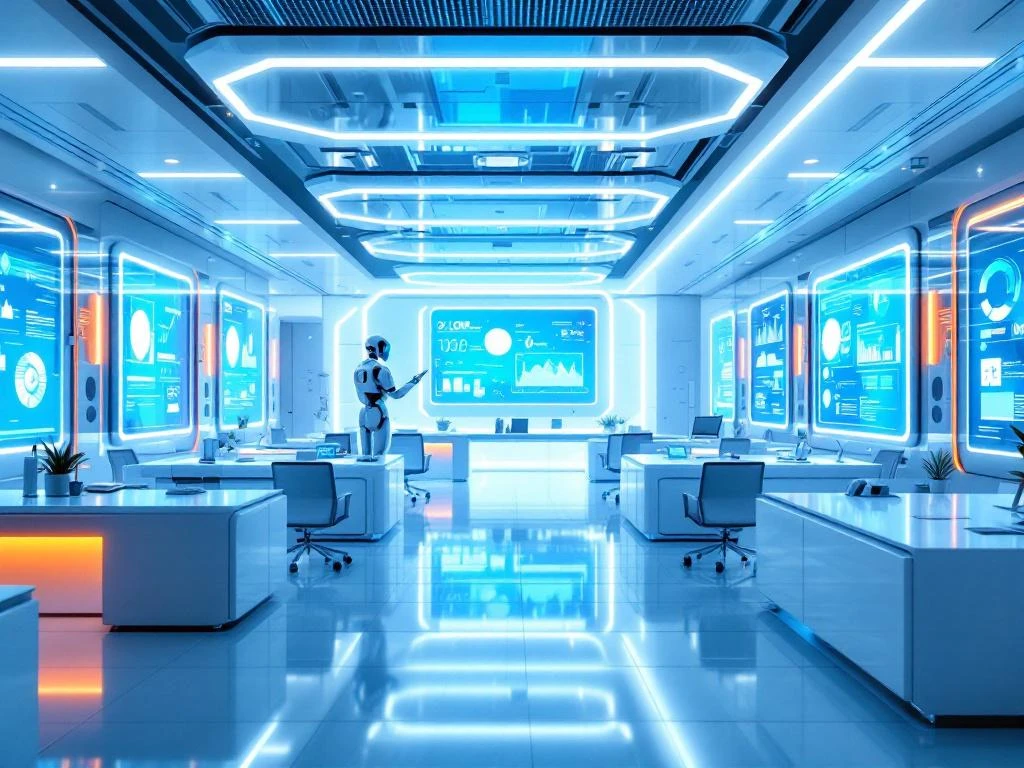
De smart office-trends van 2026 draaien om kunstmatige intelligentie, duurzaamheid en flexibiliteit. AI-gestuurde systemen regelen automatisch klimaat en ruimtebeheer, terwijl duurzame technologieën en circulaire meubeloplossingen de milieu-impact verlagen. Modulaire werkplekken passen zich aan hybride werkvormen aan, waardoor kantoren efficiënter en aangenamer worden.
Wat zijn de belangrijkste smart office-trends voor 2026?
De smart office-trends van 2026 concentreren zich rond AI-integratie, duurzame technologieën en flexibele werkplekoplossingen. Deze ontwikkelingen transformeren traditionele kantoren in intelligente omgevingen die zich aanpassen aan gebruikersbehoeften en automatisch optimaliseren voor comfort en productiviteit.
Slimme sensoren monitoren bezetting, luchtkwaliteit en energieverbruik in realtime. Deze data wordt gebruikt om verlichting, temperatuur en ventilatie automatisch bij te stellen. Boekingssystemen voor vergaderruimtes en werkplekken worden geïntegreerd met kalenderapplicaties, waardoor medewerkers naadloos hun werkdag kunnen plannen.
Voice-assistenten en touchscreeninterfaces vervangen traditionele schakelaars en bedieningspanelen. Medewerkers kunnen hun werkplek personaliseren door simpelweg te vragen om aanpassingen in verlichting of temperatuur. Deze technologieën maken kantoren gebruiksvriendelijker en verhogen de tevredenheid van werknemers.
Hoe verandert kunstmatige intelligentie de werkplek in 2026?
Kunstmatige intelligentie automatiseert routinematige kantoortaken en creëert gepersonaliseerde werkplekervaringen. AI-systemen leren van gebruikersgedrag en stellen werkplekken automatisch in op individuele voorkeuren voor temperatuur, verlichting en geluidsniveau.
Predictive analytics helpt bij ruimtebeheer door te voorspellen welke ruimtes wanneer gebruikt worden. Dit voorkomt overbezetting en zorgt ervoor dat faciliteiten efficiënt benut worden. AI-chatbots beantwoorden vragen over kantoorservices en helpen bij het reserveren van werkplekken of vergaderruimtes.
Slimme beveiligingssystemen herkennen medewerkers automatisch en passen toegangsrechten aan op basis van hun rol en planning. Deze systemen monitoren ook veiligheid door ongewone patronen te detecteren en waar nodig alerts te versturen naar beveiligingspersoneel.
Welke duurzame kantooroplossingen worden belangrijk in 2026?
Duurzame kantooroplossingen focussen op energiebesparing, circulaire materialen en CO2-reductie. LED-verlichting met slimme sensoren past zich automatisch aan het natuurlijke licht en de bezetting aan, waardoor het energieverbruik met tot 60% daalt ten opzichte van traditionele systemen.
Circulaire meubeloplossingen worden steeds populairder. Kantoormeubels worden ontworpen voor demontage en hergebruik, waardoor afval minimaal blijft. Refurbished en geleasede meubels bieden bedrijven flexibiliteit terwijl ze hun ecologische voetafdruk verkleinen.
Groene technologieën zoals zonnepanelen, warmtepompen en slimme energiemanagementsystemen maken kantoren energieneutraal. Luchtzuiveringssystemen met planten en natuurlijke materialen verbeteren de luchtkwaliteit, terwijl ze bijdragen aan een gezondere werkomgeving.
Waarom wordt flexibiliteit zo belangrijk voor moderne werkplekken?
Flexibiliteit wordt belangrijk omdat hybride werken de norm wordt en medewerkers verschillende werkstijlen hebben. Moderne werkplekken moeten zich snel aanpassen aan wisselende bezetting en diverse activiteiten, van geconcentreerd werk tot teamvergaderingen.
Modulaire kantoorinrichtingen maken het mogelijk om ruimtes binnen enkele minuten te herconfigureren. Verrijdbare wanden, in hoogte verstelbare bureaus en multifunctionele meubels zorgen ervoor dat één ruimte meerdere doelen kan dienen. Dit maximaliseert de benutting van de beschikbare vierkante meters.
Hotdesking en activiteitsgebaseerd werken vereisen flexibele werkstations die medewerkers kunnen personaliseren. Slimme lockers bewaren persoonlijke spullen veilig, terwijl draadloze technologie ervoor zorgt dat werknemers overal productief kunnen zijn zonder vaste werkplekken.
Hoe Wout Monseurs helpt met smart office-oplossingen
Wij begeleiden bedrijven bij de volledige transitie naar een smart office door persoonlijk advies, ontwerp en implementatie aan te bieden. Ons team analyseert jouw specifieke behoeften en creëert een smart office-oplossing die past bij jouw werkprocessen en budget.
We selecteren de juiste technologieën en meubeloplossingen die samen een geïntegreerd systeem vormen. Van AI-gestuurde klimaatbeheersing tot modulaire werkstations: we zorgen ervoor dat alle componenten naadloos samenwerken en gebruiksvriendelijk blijven voor je medewerkers.
Onze expertise in duurzame en ergonomische oplossingen helpt je een toekomstbestendig kantoor te realiseren dat zowel de productiviteit als het welzijn verhoogt. Neem contact met ons op voor een vrijblijvend gesprek over de smart office-mogelijkheden voor jouw bedrijf.
Veelgestelde vragen
Wat zijn de kosten voor het implementeren van smart office-technologie in een bestaand kantoor?
De kosten variëren sterk afhankelijk van de omvang en gewenste technologieën, maar rekenen op €500-1500 per werkplek voor een basisimplementatie met slimme sensoren en verlichtingssystemen. Een volledige smart office-transformatie kan €2000-5000 per werkplek kosten, maar levert binnen 2-3 jaar terugverdieneffecten op door energiebesparing en verhoogde productiviteit.
Hoe lang duurt de implementatie van een smart office-systeem?
Een gefaseerde implementatie duurt meestal 3-6 maanden, afhankelijk van de kantoorgrootte en complexiteit van de gewenste systemen. We adviseren om te beginnen met basiscomponenten zoals slimme verlichting en sensoren, waarna stap voor stap AI-systemen en geavanceerde automatisering worden toegevoegd om de verstoring van dagelijkse werkzaamheden te minimaliseren.
Kunnen bestaande kantoorsystemen geïntegreerd worden met nieuwe smart office-technologie?
Ja, de meeste moderne smart office-oplossingen zijn ontworpen voor integratie met bestaande systemen zoals HVAC, beveiliging en IT-infrastructuur. Door gebruik van standaard protocollen en API’s kunnen bestaande investeringen behouden blijven terwijl nieuwe functionaliteiten worden toegevoegd. Een grondige analyse vooraf bepaalt welke systemen compatibel zijn.
Hoe zorgen smart office-systemen voor privacy en databescherming van medewerkers?
Smart office-systemen werken met geanonimiseerde data en volgen strenge GDPR-richtlijnen. Sensoren detecteren aanwezigheid en beweging zonder persoonlijke identificatie, en alle data wordt lokaal verwerkt of versleuteld opgeslagen. Medewerkers hebben controle over hun persoonlijke instellingen en kunnen opt-out opties gebruiken voor bepaalde tracking-functies.
Wat gebeurt er als de smart office-technologie uitvalt of problemen heeft?
Alle kritieke systemen hebben handmatige back-up opties en failsafe mechanismen. Verlichting en klimaatbeheersing kunnen altijd handmatig bediend worden, en er zijn lokale overrides beschikbaar voor alle geautomatiseerde functies. We bieden 24/7 remote monitoring en ondersteuning, met gemiddelde responsetijden van minder dan 2 uur voor kritieke problemen.
Hoe kunnen medewerkers het beste wennen aan smart office-technologie?
Succesvolle adoptie begint met uitgebreide training en geleidelijke uitrol van nieuwe functies. We organiseren hands-on workshops en bieden gebruiksvriendelijke handleidingen en video-tutorials. Door medewerkers te betrekken bij de selectie van functies en hun feedback serieus te nemen, ontstaat draagvlak en enthousiasme voor de nieuwe technologieën.