

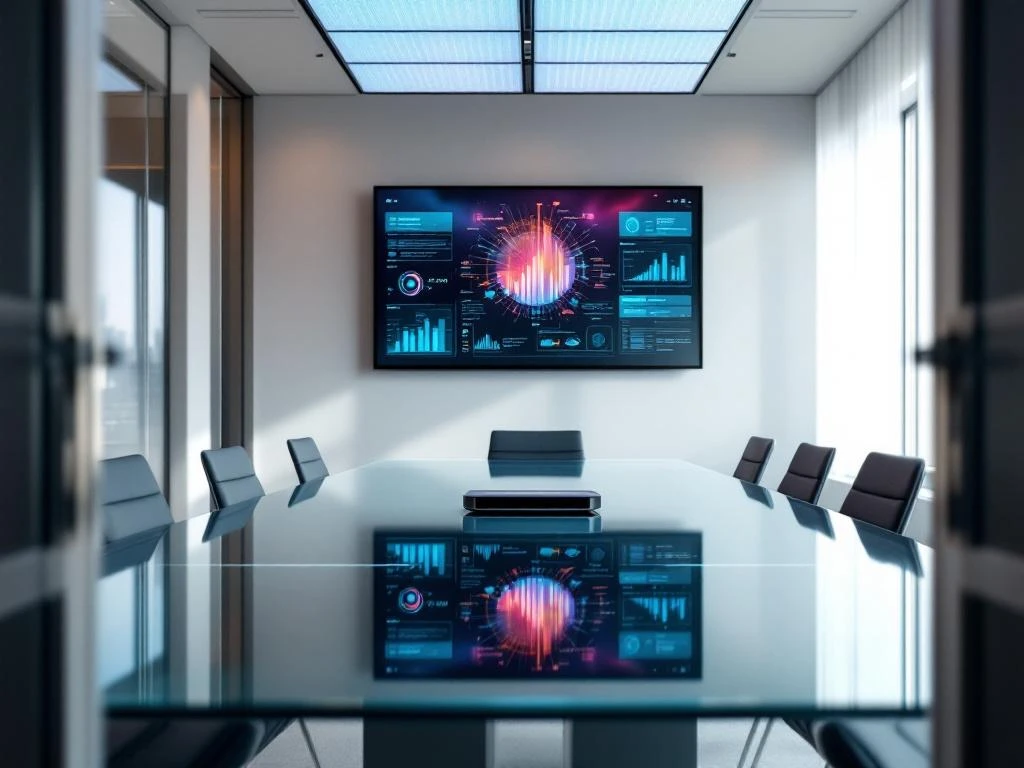
A smart office meeting room is an intelligent meeting space that integrates advanced technologies to enhance collaboration and boost efficiency. These spaces feature automated booking systems, wireless presentation tools, AI-driven climate control, and integrated audio-visual applications. The technology adapts to user needs and enables hybrid meetings.
What exactly is a smart office meeting room?
A smart office meeting room is a meeting space equipped with connected technologies that automatically respond to user needs. These intelligent spaces combine IoT sensors, artificial intelligence, and cloud-based systems to create a seamless meeting experience.
The key features of smart meeting rooms include automatic occupancy detection, intelligent lighting that adjusts to the number of people present, and climate control that optimizes energy consumption. These technologies transform traditional meeting rooms into responsive environments that anticipate user needs.
Smart office meeting rooms support both in-person and remote participants with integrated video conferencing solutions. The rooms learn from user behavior and automatically adjust their settings for optimal comfort and maximum productivity.
What basic components does every smart office meeting room need?
Every smart office meeting room requires four essential technical components: smart displays, wireless connectivity, integrated audio-video systems, and automated booking systems. Together, these elements form the technological foundation for intelligent collaboration.
Smart displays serve as central control panels and presentation screens. These touchscreen interfaces allow users to adjust room settings, start presentations, and manage video conferences. Modern displays support multiple input sources and can receive content wirelessly from various devices.
Wireless connectivity is the backbone of smart meeting rooms. Reliable Wi-Fi networks and Bluetooth connectivity enable seamless device pairing. Integrated audio-video systems ensure clear communication, while automated booking systems simplify room management and prevent double bookings.
How do AI and automation work in modern meeting rooms?
Artificial intelligence in modern meeting rooms analyzes user patterns and environmental data to automatically optimize room settings. AI algorithms learn from meeting habits and proactively adjust lighting, temperature, and audio settings for maximum comfort.
Automatic occupancy detection uses motion sensors and cameras to determine how many people are present. This information is used to adjust the climate control, minimize energy consumption, and monitor room occupancy. Intelligent systems can even predict when a meeting is likely to end.
Smart climate control and lighting systems respond in real time to changing conditions. Sensors measure air quality, temperature, and natural light to make automatic adjustments. These systems can significantly reduce energy costs while maintaining a comfortable working environment.
What are the benefits of wireless presentation and collaboration tools?
Wireless presentation and collaboration tools eliminate cables and enable instant content sharing from any device. These technologies boost meeting efficiency through seamless transitions between presenters and real-time document collaboration.
Wireless projector technology and screen-sharing solutions allow participants to present directly from laptops, tablets, or smartphones. This saves time that would otherwise be wasted connecting cables and resolving compatibility issues. Modern systems support multiple devices simultaneously.
Collaborative whiteboards and real-time document-sharing systems transform meetings from passive presentations into interactive work sessions. Participants can simultaneously contribute to digital whiteboards, edit documents, and visualize ideas. These tools enable hybrid collaboration, allowing both in-person and remote team members to actively participate.
How Wout Monseurs helps with the implementation of smart office meeting rooms
We offer a comprehensive approach to the design and implementation of smart meeting rooms, from initial consultation to ongoing maintenance. Our team analyzes your specific needs and integrates the right smart office technologies to align with your workflows and corporate culture.
Our smart office implementation includes:
- Comprehensive analysis of your current meeting rooms and user needs
- Custom design with integrated technology solutions
- Professional installation and configuration of all systems
- User training and ongoing technical support
With over 60 years of experience in office design, we combine traditional expertise with modern smart office technology. Our personalized approach ensures that every meeting room is perfectly tailored to your organization. Would you like to discover how smart meeting technology can transform your business? Please contact us for a no-obligation consultation.
Frequently asked questions
What are the typical costs associated with setting up a smart office meeting room?
Costs vary widely depending on the size of the room and the desired features, but typically range from €15,000 to €50,000 per meeting room. Basic setups with wireless presentation and smart displays start around €15,000, while fully automated rooms with AI-controlled climate control and advanced audio-video systems can cost up to €50,000. We always recommend a phased approach to spread out the investment.
How long does it take to set up a fully equipped smart office meeting room?
A typical implementation takes 2–4 weeks, depending on the complexity of the project and any structural modifications required. The first week involves preparing and installing the hardware, followed by configuring and integrating all systems. The final phase includes extensive testing, user training, and fine-tuning the automation settings.
What problems can arise with wireless presentation systems, and how do you solve them?
Common problems include connection drops, slow transfer speeds, and compatibility issues with various devices. These problems are usually caused by insufficient Wi-Fi bandwidth or outdated drivers. Set up a dedicated Wi-Fi network for presentation systems, update all drivers regularly, and keep a spare HDMI cable on hand for emergencies.
Can I gradually upgrade my existing meeting room into a smart office meeting room?
Yes, a phased upgrade is often the most practical approach. Start with wireless presentation tools and a smart display, then add automated booking systems, and finally implement AI-driven climate and lighting controls. This approach spreads out the costs and minimizes disruption to daily operations, while allowing employees to gradually get used to the new technologies.
How can I ensure that remote participants can fully participate in hybrid meetings?
Investeer in hoogwaardige 360-graden camera’s, richtmicrofoons en speakers die automatisch focussen op sprekers. Zorg voor stabiele internetverbindingen met minimaal 50 Mbps upload voor HD-video. Test altijd de audio-videokwaliteit vooraf en train vergaderleiders in het effectief modereren van hybride sessies, waarbij zowel fysieke als digitale deelnemers actief betrokken blijven.
What security measures are essential for smart office meeting rooms?
Implement network segmentation to separate smart office devices from mission-critical systems, use strong encryption for all wireless connections, and ensure regular firmware updates. Set up access controls for sensitive meetings and consider using privacy screens for confidential presentations. A sound security strategy combines technical measures with clear user guidelines.