

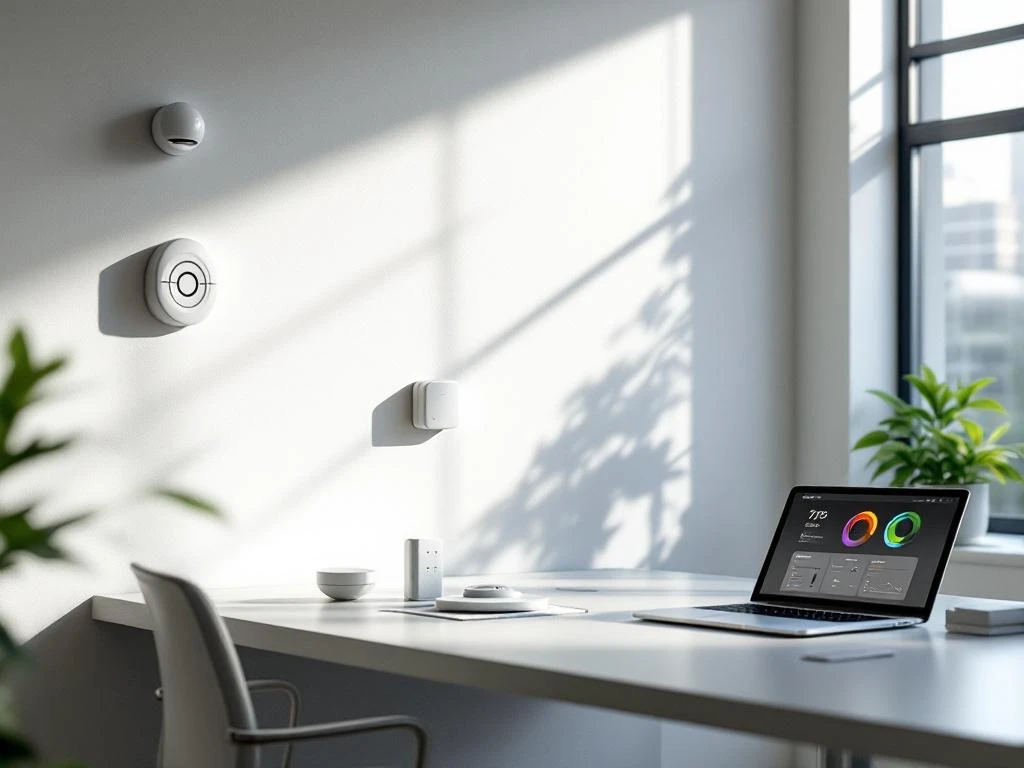
Smart office sensors are intelligent measuring instruments that monitor and automatically adjust various aspects of the office environment. These sensors collect real-time data on occupancy, air quality, temperature, noise, and energy consumption to make workplaces more efficient and comfortable. They form the basis of modern smart office technology that increases productivity and reduces costs.
What are smart office sensors and why are they important?
Smart office sensors are advanced measuring devices that automatically collect data on various aspects of the working environment. They detect movement, measure air quality, monitor temperature, and analyze noise levels to optimize office environments.
These sensors play a crucial role in modern offices because they provide real-time insights into how spaces are being used. Through continuous monitoring, building management systems can automatically respond to changing conditions, resulting in better working conditions for employees.
The main benefits are energy savings through smart climate control, improved productivity through optimal working conditions, and more efficient use of space through data-driven decisions. This enables companies to reduce operating costs while increasing employee comfort.
What types of occupancy and motion sensors are available?
Occupancy and motion sensors detect presence and movement in office spaces to control automatic systems. The most commonly used types are PIR (passive infrared) sensors, ultrasonic sensors, microwave sensors, and camera-based systems.
PIR sensors respond to body heat and are ideal for automatically switching lights on and off. They are energy efficient and cost effective, but may be less sensitive to small movements.
Ultrasonic sensors emit sound waves and detect movement through changes in the reflection. These sensors are highly sensitive and can detect even small movements, making them perfect for workplaces where people sit still for long periods of time.
Camera-based systems offer the most advanced capabilities by not only detecting presence, but also counting the number of people and analyzing movement patterns. This data helps optimize space layout and improve security.
How do air quality and climate sensors work in offices?
Air quality and climate sensors continuously monitor the air composition and climate conditions in office spaces. They measure parameters such as CO2 concentration, temperature, humidity, and particulate matter to ensure a healthy working environment.
CO2 sensors are essential because elevated carbon dioxide levels lead to reduced concentration and drowsiness among employees. These sensors automatically activate ventilation systems when CO2 concentrations become too high, ensuring fresh air and improved cognitive performance.
Temperature and humidity sensors work together with HVAC systems to maintain the ideal indoor climate. The optimal office temperature is between 20 and 24 degrees Celsius, while humidity should ideally remain between 40 and 60%.
Particulate matter meters detect harmful particles in the air that can be caused by printers, cleaning products, or outdoor air pollution. These sensors can activate air purification systems to improve air quality and minimize health risks.
What are the benefits of sound and light sensors in the workplace?
Sound and light sensors optimize the acoustic and visual environment in the workplace by automatically adjusting sound levels and light intensity. These sensors ensure ideal working conditions that promote concentration and prevent eye strain.
Sound level meters continuously monitor ambient noise and can alert you when noise levels become too high for productive work. In open-plan offices, they help identify noisy areas and implement noise control strategies.
Light sensors detect natural light and automatically adjust artificial lighting to maintain optimal light levels. This prevents eye strain, headaches, and reduced productivity that can result from light that is too bright or too dim.
The combination of both sensor types creates a dynamic working environment that adapts to the needs of employees throughout the day. This results in increased well-being, improved concentration, and less stress in the workplace.
What energy management and safety sensors are available?
Energy management and safety sensors combine cost savings with employee protection by intelligently monitoring energy consumption and detecting potential hazards. These systems include smart energy meters, fire and smoke detectors, and advanced access sensors.
Smart energy meters analyze the electricity consumption of various devices and systems in real time. They identify energy waste, optimize the use of office equipment, and can reduce total energy consumption by significant percentages.
New-generation fire and smoke detectors use multiple detection methods to minimize false alarms while responding more quickly to real hazards. They can distinguish between different types of smoke and steam, which is particularly important in office environments with kitchen facilities.
- Access sensors with RFID or NFC technology for secure and efficient access control
- Motion sensors that automatically activate security outside office hours
- Water leak detectors that prevent damage to expensive office equipment
- Vibration sensors that can detect break-in attempts or structural problems
How we help with smart office systems
We support companies in the complete implementation of smart office sensors, from advice and design to installation and maintenance. Our experience with modern office design combines traditional expertise with advanced technology to transform workplaces into intelligent, efficient environments.
Our team analyzes your specific office environment and work processes to select the most suitable sensor technologies. We seamlessly integrate smart office systems with your existing infrastructure and ensure optimal collaboration between different sensor types.
- Comprehensive analysis of your current office environment and needs
- Customized advice for the most effective sensor combinations
- Professional installation and configuration of all systems
- Ongoing support and maintenance for optimal performance
Discover how smart office technology can improve your workplace and contact us for a no-obligation consultation about the possibilities for your organization.
Frequently asked questions
How much do smart office sensors cost on average, and what is the payback period?
The costs vary from €50-200 per basic sensor to €500-1500 for advanced systems. The average payback period is between 12-24 months due to energy savings of 20-30% and increased productivity. Larger offices often see faster payback periods due to economies of scale.
Can smart office sensors be integrated with existing building management systems?
Yes, modern smart office sensors support standard protocols such as BACnet, Modbus, and KNX, enabling integration with existing HVAC and BMS systems. Many sensors also operate wirelessly via WiFi or LoRaWAN, simplifying installation in existing buildings without major infrastructure changes.
How do smart office sensors handle employee privacy?
Privacy is protected by data anonymization, whereby sensors only collect aggregated information without identifying individual employees. Camera-based systems can be configured to detect movement patterns only without storing images. Transparent communication about data collection and GDPR compliance are essential.
What are the most common implementation problems and how can you prevent them?
Common problems include incorrect sensor placement, network connectivity issues, and employee resistance. Prevent this by conducting a thorough site survey, setting up redundant network connections, and involving employees in the implementation process at an early stage. Start with a pilot project in a small area.
What maintenance work is required for smart office sensors?
Smart office sensors require minimal maintenance: monthly battery checks for wireless sensors, semi-annual calibration of air quality sensors, and annual firmware updates. Dust-free environments and regular cleaning of sensor lenses significantly extend service life. Most systems have a service life of 5-10 years.
How do you measure the success of a smart office sensor implementation?
Succes wordt gemeten aan de hand van KPI’s zoals energiereductie (streef naar 20-30%), verbeterde werknemerstevredenheid (via enquêtes), verhoogde ruimtebenutting (occupancy rates) en verminderde klachten over luchtkwaliteit of temperatuur. Dashboard-rapportages geven realtime inzicht in deze metrics voor continue optimalisatie.