

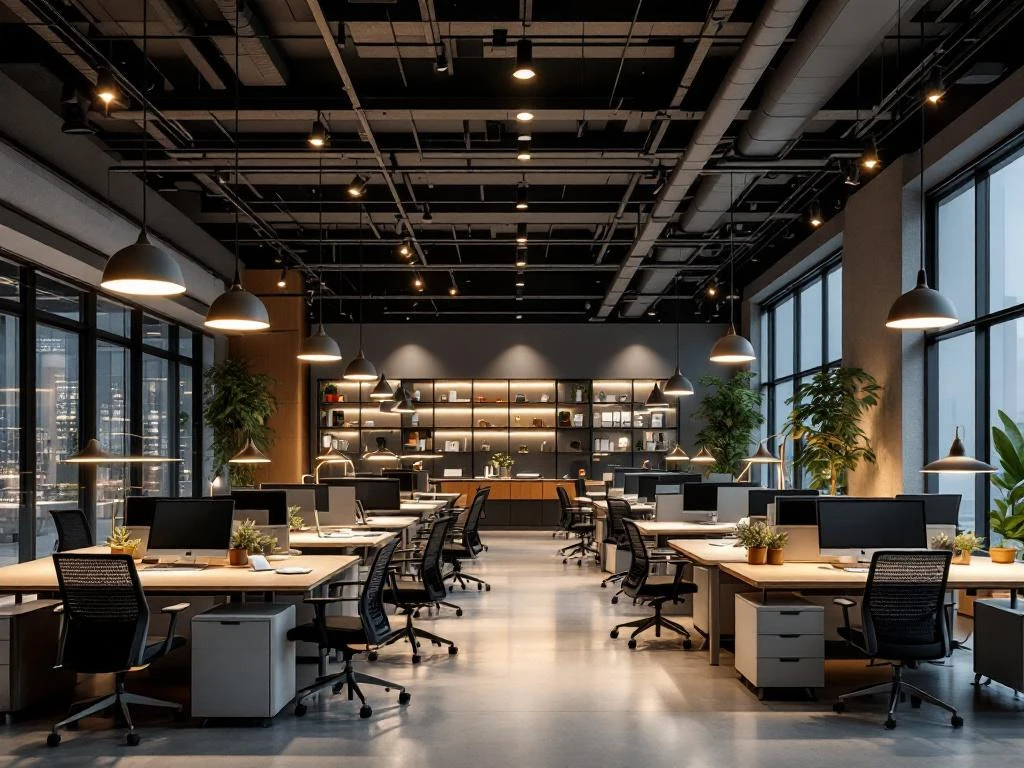
De beste verlichting voor projectinrichting combineert LED-technologie met natuurlijk licht en aangepaste kleurtemperaturen. Kies voor 500-750 lux werkplekverlichting met een kleurtemperatuur van 4000K voor optimale productiviteit. Vermijd schittering en zorg voor een gelijkmatige verdeling. Goede verlichting verhoogt de concentratie, vermindert oogvermoeidheid en verbetert het welzijn van werknemers.
Waarom is goede verlichting zo belangrijk voor je werkplek?
Verlichting heeft een directe impact op de productiviteit, gezondheid en het welzijn van werknemers. Slecht licht veroorzaakt oogvermoeidheid, hoofdpijn en een verminderde concentratie. Goed licht daarentegen stimuleert alertheid, verbetert de stemming en verhoogt de werkprestaties aanzienlijk.
Je ogen moeten zich constant aanpassen aan verschillende lichtniveaus wanneer de verlichting onvoldoende is. Dit leidt tot vermoeide ogen, wazig zien en spanning in nek en schouders. Werknemers die onder slecht licht werken, maken meer fouten en zijn sneller afgeleid.
Natuurlijk licht reguleert ook je biologische klok. Wanneer je kantoor te weinig daglicht heeft, kan dit je slaap-waakritme verstoren. Dit resulteert in vermoeidheid overdag en slaapproblemen ’s nachts. Goede kunstverlichting kan dit compenseren door het natuurlijke lichtpatroon na te bootsen.
De juiste verlichting creëert een prettige werkomgeving waarin mensen zich energiek en gemotiveerd voelen. Het draagt bij aan een positieve werksfeer en kan zelfs de samenwerking tussen collega’s verbeteren.
Welke soorten verlichting kun je gebruiken in kantoren?
LED-verlichting is de beste keuze voor moderne kantoren vanwege de energiebesparing, lange levensduur en flexibiliteit in kleurtemperatuur. TL-verlichting is goedkoper in aanschaf, maar verbruikt meer energie. Halogeen wordt steeds minder gebruikt vanwege de hoge energiekosten en warmteontwikkeling.
LED-lampen gaan 15-20 jaar mee en verbruiken tot 80% minder energie dan traditionele verlichting. Je kunt de kleurtemperatuur aanpassen van warm wit (2700K) tot koel wit (6500K), afhankelijk van het gewenste effect. LED’s produceren ook minder warmte, wat bijdraagt aan een comfortabel kantoorklimaat.
TL-verlichting (fluorescentie) is nog steeds populair vanwege de lage aanschafkosten. Moderne TL-lampen hebben een betere kleurweergave dan oudere types, maar kunnen nog steeds flikkeren. Dit is vooral merkbaar bij mensen die gevoelig zijn voor lichtveranderingen.
Natuurlijk licht blijft de gouden standaard. Combineer kunstlicht altijd met zoveel mogelijk daglicht via ramen, dakramen of lichtkoepels. Dit zorgt voor de meest natuurlijke en gezonde lichtomgeving.
Hoe kies je de juiste lichtsterkte en kleurtemperatuur?
Voor kantoorwerk heb je 500-750 lux nodig op je werkplek. Gebruik een kleurtemperatuur van 4000K voor algemene kantoorverlichting: dit geeft helder, wit licht dat de concentratie bevordert. Voor vergaderruimtes kun je kiezen voor warmere 3000K om een ontspannen sfeer te creëren.
Lux meet de hoeveelheid licht die op een oppervlak valt. Te weinig lux (onder 300) maakt werken vermoeiend, terwijl te veel lux (boven 1000) voor verblinding zorgt. Meet de lichtsterkte op verschillende plekken in je kantoor om donkere hoeken te identificeren.
Kleurtemperatuur wordt gemeten in Kelvin (K). Warm wit (2700-3000K) voelt gezellig, maar kan slaperig maken. Koel wit (5000-6500K) is zeer activerend, maar kan koud aanvoelen. Neutraal wit (3500-4500K) biedt de beste balans voor productief werken.
Je biologische ritme reageert op lichtveranderingen gedurende de dag. Idealiter start je met warmer licht in de ochtend, schakel je over naar helder wit licht overdag en dim je naar warmer licht aan het eind van de werkdag. Dit ondersteunt je natuurlijke energieniveau.
Wat zijn de meest voorkomende verlichtingsfouten in kantoren?
De grootste fouten zijn onvoldoende lichtsterkte, een verkeerde plaatsing van lampen, schittering op computerschermen en een gebrek aan variatie. Ook uniforme verlichting zonder zones voor verschillende activiteiten zorgt voor een saaie, oncomfortabele werkomgeving.
Schittering ontstaat wanneer licht direct in je ogen schijnt of weerkaatst op glanzende oppervlakken. Plaats lampen nooit direct boven computerschermen en gebruik matte afwerkingen voor bureaus en wanden. Jaloezieën of gordijnen helpen om fel zonlicht te temperen.
Veel kantoren hebben slechts één type verlichting voor alle ruimtes. Vergaderruimtes hebben andere behoeften dan werkplekken, en ontspanningsruimtes weer andere. Creëer verschillende lichtzones met dimbare verlichting voor maximale flexibiliteit.
Flikkerende TL-buizen zijn niet alleen irritant, maar kunnen ook hoofdpijn veroorzaken. Vervang defecte lampen direct en overweeg een upgrade naar LED-verlichting. Zorg ook voor voldoende onderhoud: stoffige lampen geven tot 30% minder licht.
Hoe Wout Monseurs helpt met projectinrichting
Wij integreren verlichtingsoplossingen volledig in onze projectinrichting en zorgen voor het juiste licht op elke werkplek. Ons team analyseert je ruimte, werkactiviteiten en natuurlijke lichtinval om een verlichtingsplan te maken dat productiviteit en welzijn maximaliseert.
Bij onze projectinrichting kijken we naar de complete werkomgeving. Verlichting werkt samen met ergonomische meubelen, kleuren en indeling om de ideale werkplek te creëren. We zorgen voor de juiste luxwaarden, voorkomen schittering en creëren verschillende lichtzones.
Van ontwerp tot installatie regelen we alles. Je krijgt een gedetailleerd 3D-ontwerp waarin je precies ziet hoe de verlichting eruitziet. We werken met hoogwaardige LED-systemen die energiezuinig zijn en jarenlang meegaan. Wil je weten hoe wij jouw kantoor kunnen transformeren met de juiste verlichting? Neem contact met ons op voor een vrijblijvend gesprek.
Veelgestelde vragen
Hoe meet ik de huidige lichtsterkte in mijn kantoor?
Gebruik een luxmeter (verkrijgbaar vanaf €20) of een smartphone-app zoals Light Meter. Meet op verschillende momenten van de dag en op verschillende plekken, vooral op bureaus en werkplekken. Houd rekening met seizoensverschillen in natuurlijk licht.
Kan ik bestaande TL-verlichting eenvoudig vervangen door LED?
Ja, er zijn speciale LED-buizen die direct in bestaande TL-armaturen passen (retrofit oplossing). Let wel op dat je eventueel de ballast moet omzeilen of vervangen. Voor optimale prestaties is het beter om complete LED-armaturen te installeren.
Wat kost een complete verlichtingsupgrade voor een gemiddeld kantoor?
Voor een kantoor van 100m² reken je op €3.000-€6.000 voor kwalitatieve LED-verlichting inclusief installatie. De investering verdient zich terug door lagere energiekosten (60-80% besparing) en minimaal onderhoud gedurende 15-20 jaar.
Hoe voorkom ik verblinding van computerschermen bij raamplekken?
Plaats bureaus parallel aan ramen in plaats van er tegenover. Gebruik verstelbare jaloezieën of screens om direct zonlicht te weren. Overweeg anti-reflectie coating op monitoren en zorg voor voldoende kunstlicht om contrast te verminderen.
Is dimbare verlichting de extra investering waard?
Absoluut, dimbare LED-verlichting biedt flexibiliteit voor verschillende taken en momenten van de dag. Het helpt bij het reguleren van je biologische ritme en bespaart energie. De meerkosten (10-20%) verdienen zich snel terug door verhoogde productiviteit.
Welke verlichtingseisen gelden er wettelijk voor kantoren?
In Nederland geldt minimaal 500 lux voor kantoorwerk volgens de Arbeidsomstandighedenwet. Voor gedetailleerd werk is 750 lux vereist. Ook zijn er eisen voor gelijkmatige verdeling en het voorkomen van verblinding. Controleer altijd de actuele normen bij de Arbeidsinspectie.
Hoe onderhoud ik LED-verlichting voor optimale prestaties?
Reinig LED-armaturen elke 6 maanden met een vochtige doek om stofophoping te voorkomen. Controleer regelmatig of alle LED’s nog functioneren en vervang defecte units direct. Bij kwaliteits-LED’s is verder onderhoud minimaal door de lange levensduur.