

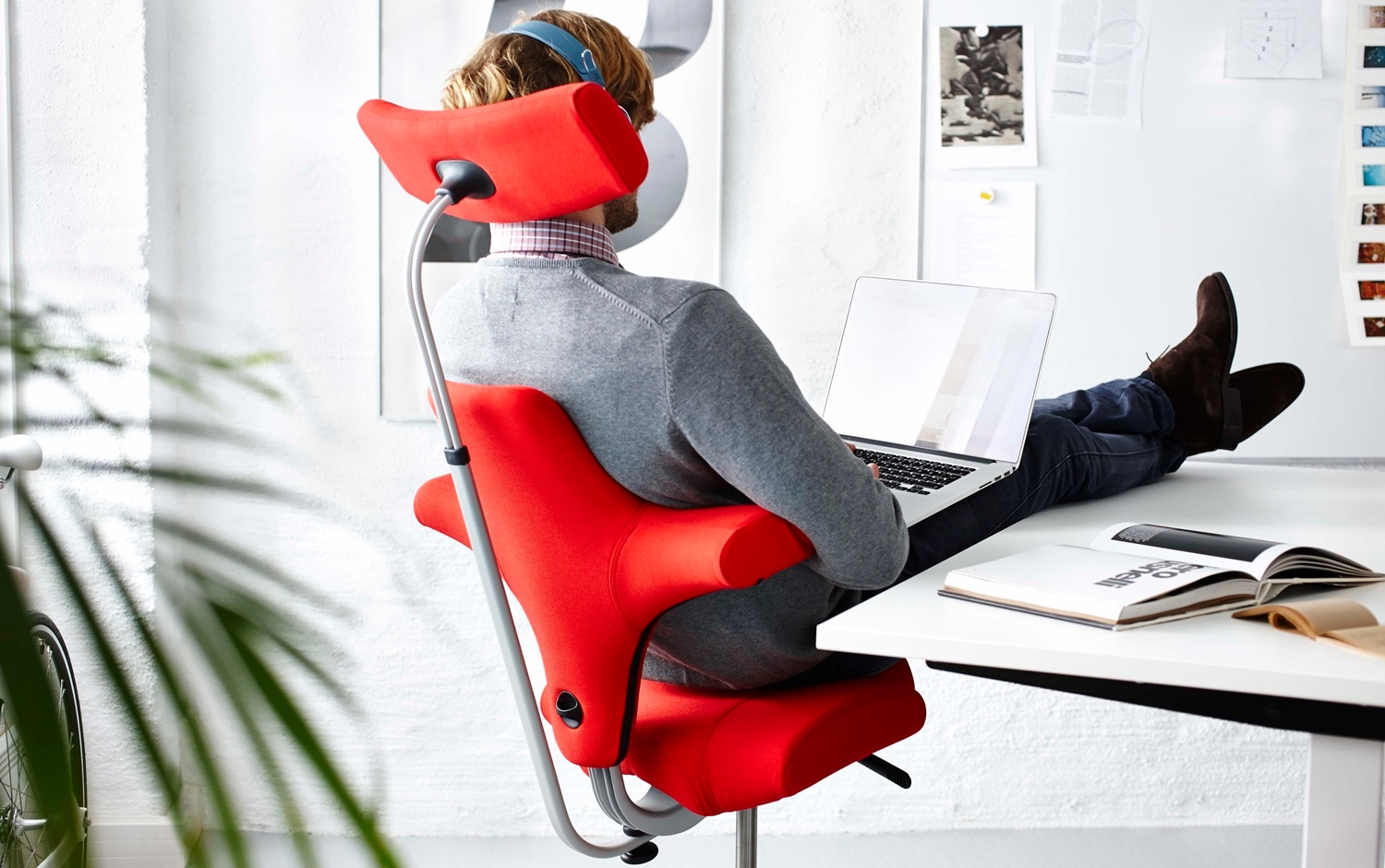
Waarom een goede houding belangrijk is
Doordat we op ons werk steeds meer te maken krijgen met computerwerk, hebben we de neiging om te gaan hangen in onze bureaustoel of blijven we bijvoorbeeld te lang in dezelfde houding zitten. Waar we ons vaak niet van bewust zijn is dat deze slechte houdingen veel invloed hebben op ons lichaam. Een slechte zithouding kan op zijn tijd resulteren in ernstige lichamelijke klachten als rugpijn, verslapte spieren of zelfs krimp van de lichaamslengte!
Goede stoel en zithouding
Maar wat is dan de juiste manier om op een bureaustoel te zitten? Ten eerste is het belangrijk dat je je schouders ontspant en recht houdt en je voeten plat op de grond (of voetensteun) zet. Als je op deze manier zit hoort je rug drie normale curves te hebben en wordt hij op de juiste manier ondersteund door de rugleuning van de stoel. Stel dat je echt heel lang op dezelfde stoel moet zitten vanwege bepaalde werkzaamheden, vraag dan naar een goede ergonomische stoel die daar speciaal voor ontworpen is. Neem hiervoor een kijkje bij onze ergonomische bureaustoelen.
6 tips rondom zitten achter uw bureau
Goede ergonomische bureaustoelen hebben diverse afstelmogelijkheden waarmee je een betere zithouding kunt aannemen. We geven je graag enkele tips om beter achter jouw bureau te kunnen zitten:
1. Zithoogte instellen
Stel de bureaustoel in op de juiste zithoogte voor jouw lichaam. Wanneer je zit, dienen jouw knieën een hoek van ongeveer 90 graden te maken. Zo staan jouw benen in een rechte hoek op de grond en voorkom je afknelling van spieren en bloedvaten in de onderbenen.
2. Zitdiepte instellen
Vaak kun je ook de juiste zitdiepte instellen. De zitdiepte is minstens net zo belangrijk als de zithoogte! Een te korte zitting is oncomfortabel, en een te lange zitting kan zorgen voor afknelling bij de onderbenen, doordat deze te veel op de rand van de zitting rusten.
Maak gebruik van deze letterlijke vuistregel: er moet een vuist ruimte zitten tussen het zitvlak en jouw onderbenen. Zo voorkom je afknelling en zit je optimaal.
3. Rugleuning instellen
Afhankelijk van jouw lichaamslengte zal ook de rugleuning op de ideale hoogte afgesteld moeten worden. Door deze op de juiste hoogte in te stellen zal de lendensteun zo gepositioneerd staan dat de bolling ongeveer ter hoogte van de broekband begint. Zo vult de bolling precies de holling van jouw ruggengraat op en biedt deze de benodigde ondersteuning.
4. Rugleuning los zetten
Veel ergonomische bureaustoelen bieden de mogelijkheid om de rugleuning los te zetten. De rugleuning beweegt dan mee met jouw lichaam wanneer je naar voren of achteren beweegt bij het verzitten. Dankzij deze dynamische ondersteuning krijg je in elke zitpositie een goede ondersteuning.
Ook zal jouw lichaam zo enigszins moeten meehelpen om de balans te bewaren. Deze lichte activiteit is gunstig voor jouw lichaam, zeker wanneer je dagelijks lang achtereen aan het zitten bent.
5. Armleggers gebruiken
Maak gebruik van de armleggers van jouw bureaustoel! In de juiste positie bieden de armleggers ondersteuning aan jouw armen, en voorkom je klachten aan jouw nek, schouders en polsen.
Stel de armleggers zo in dat jouw onderarmen net de armleggers raken wanneer je met ontspannen schouders op de bureaustoel zit. Zorg er ook voor dat ze zo ingesteld staan dat je goed aan kunt schuiven aan jouw bureau.
6. Blijf letten op jouw zithouding
Blijf aandacht besteden aan jouw zithouding. Een goed afgestelde bureaustoel draagt veel bij, maar je doet de positieve effecten teniet wanneer je toch steeds onderuit gezakt gaat zitten op de stoel. Blijf rechtop zitten zodat jouw bureaustoel je optimaal kan blijven ondersteunen. Door rechtop te zitten voorkom je bovendien dat jouw lichaam in elkaar zakt en de longen en darmen samengedrukt worden, wat een negatief effect op jouw gezondheid zal hebben.
Lichaamsbeweging & de werkomgeving
Naast het letten op jouw zithouding en ervoor zorgen dat de bureaustoel aangepast is aan jouw lichaam en de werkzaamheden, kun je zelf nog meer doen om lichamelijke klachten te voorkomen. Onderzoekers raden aan om de kernspieren van het lichaam te trainen, door bijvoorbeeld pilates of weerstandstraining. Hierdoor wordt het makkelijker en minder inspannend om rechtop te zitten. Ook is het goed om af en toe op te staan, te rekken of even rond te lopen. Een goed excuus om nog eens een kop koffie te halen!
Daarnaast kun je ook aandacht besteden aan de rest van de kantoorinrichting. Een ergonomisch bureau kan jouw zithouding verder verbeteren, doordat deze op de ideale zithoogte in te stellen is.
Nog beter is het om überhaupt minder te gaan zitten. Door zitten regelmatig af te wisselen met staan blijf je in beweging en varieert jouw houding meer door de dag heen. Zit-sta bureaus bieden hiervoor uitkomst. Hiermee beschik je over een dynamische werkplek waarmee je jouw lichamelijke gezondheid verder stimuleert. Zo beschik je over een echte ergonomische werkplek, met alle voordelen van dien!